

Home PA Historic Places Exploring Curtin Village in Centre County

Exploring Curtin Village in Centre County

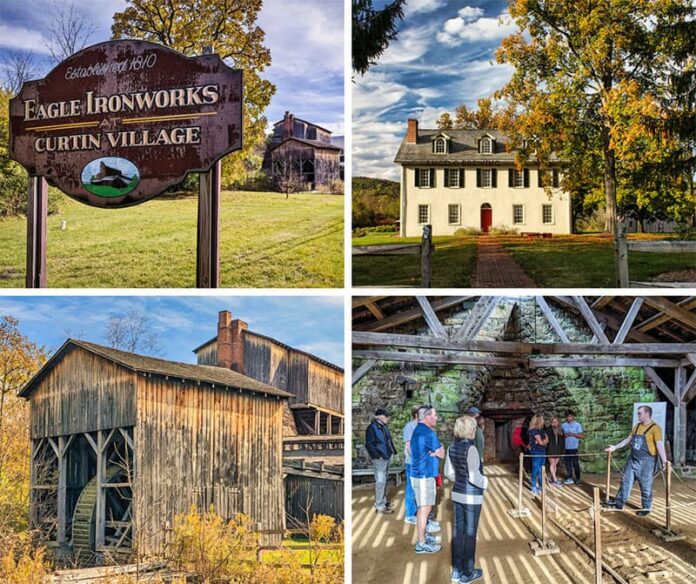
Exploring Curtin Village in Centre County Pennsylvania.

If you’re looking for information about Curtin Village and Eagle Ironworks in Centre County, you’re in the right place!
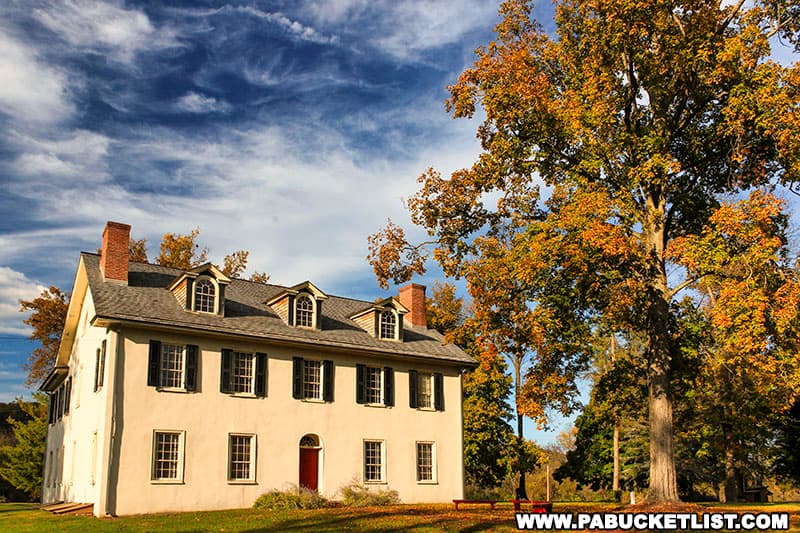
The Curtin Mansion at Curtin Village was built between 1830 -1831.

Curtin Village is a beautifully-preserved and restored 19th century iron plantation, composed of the iron master’s mansion, the iron furnace, and the workers village.
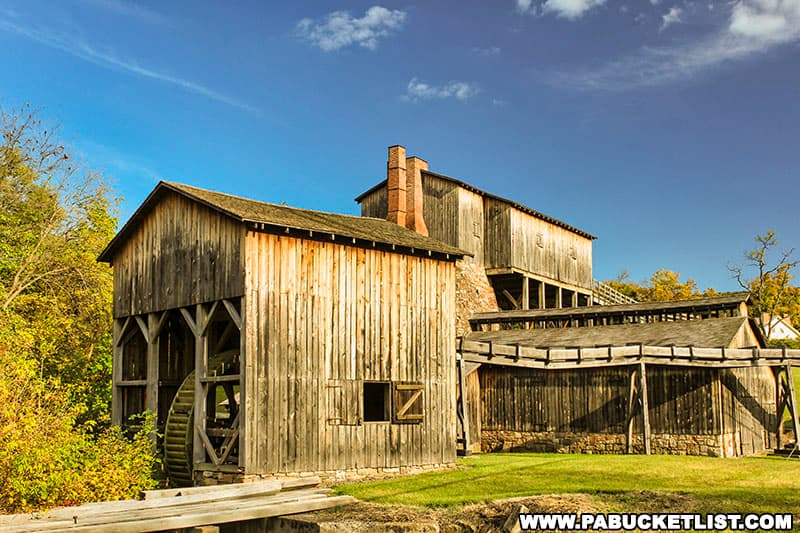
Eagle Ironworks was reconstructed in the 1970s as a detailed replica of the original.

The grounds at Curtin Village are open for self-guided tours year-round.
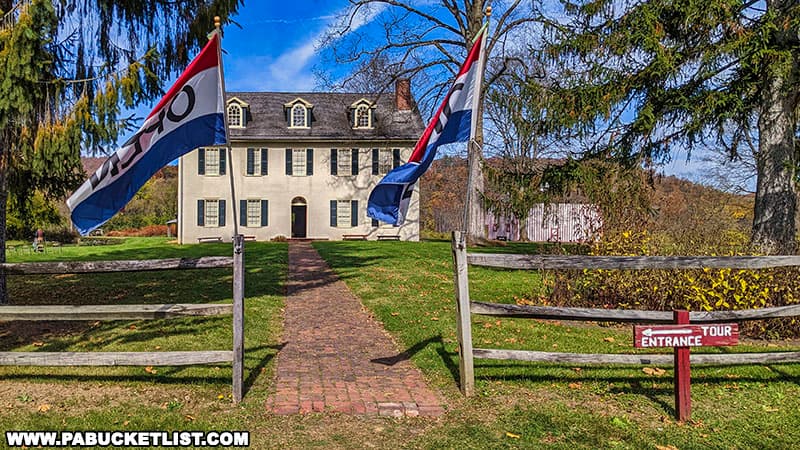
Entrance to the grounds at Curtin Village near Bald Eagle State Park in Centre County Pennsylvania.
Entrance to the grounds at Curtin Village.

On the 2nd and 4th Sundays of each month from June through September , you can tour the insides of both the mansion and the iron works with docents who provide a wealth of information about the iron-making process, the Curtin family, and life in this company town in the 1800s.
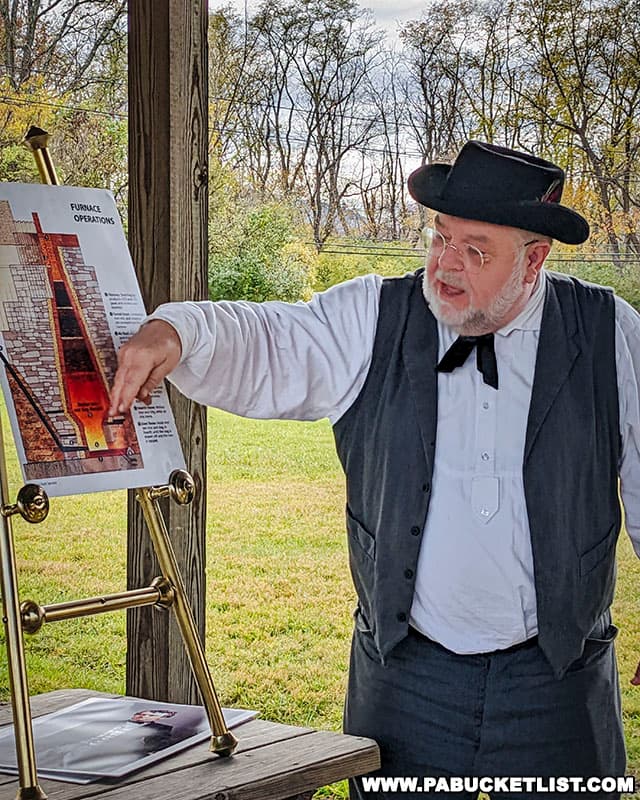
A docent portraying Roland Curtin explaining how the blast furnace works at Curtin Village.
A docent portraying Roland Curtin explaining how the blast furnace works.

Iron Making in Centre County

Centre County was home to all the raw materials necessary to produce iron in the 19th century – iron ore, limestone, and wood to produce charcoal.
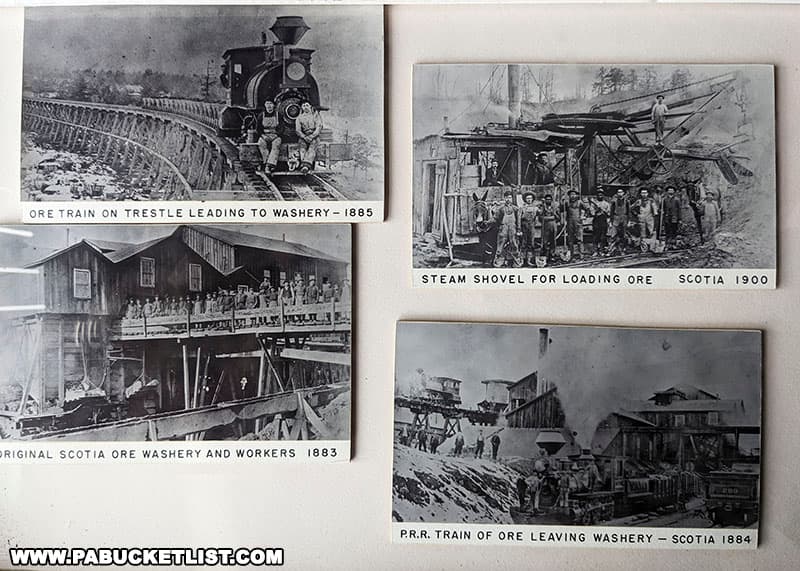
Iron ore was mined at places like Scotia in Centre County.

As a result, many iron furnaces were built in Centre County during that time period, but all that remains of most of them is the stone portion of the blast furnace.
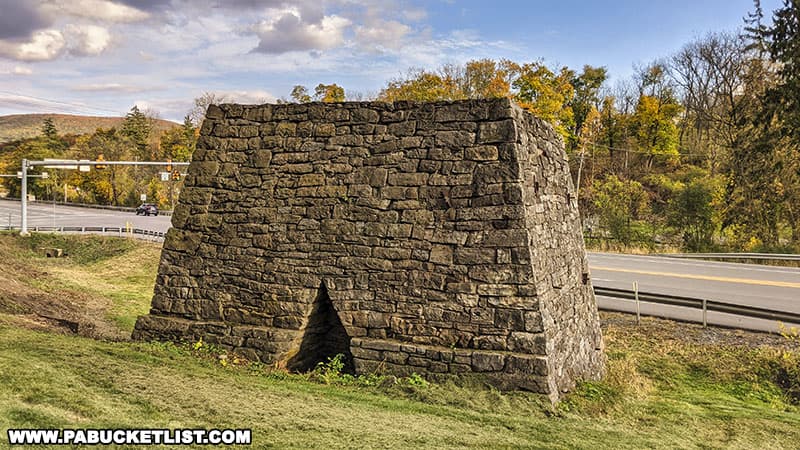
Centre Furnace along East College Avenue next to Centre Furnace Mansion.
Remains of Centre Furnace outside State College in Centre County.

What makes Eagle Ironworks at Curtin Village special is that you can see the vast array of wooden structures that existed around those stone stacks when the furnace was in operation, allowing you to gain a better understanding of how iron was actually produced.
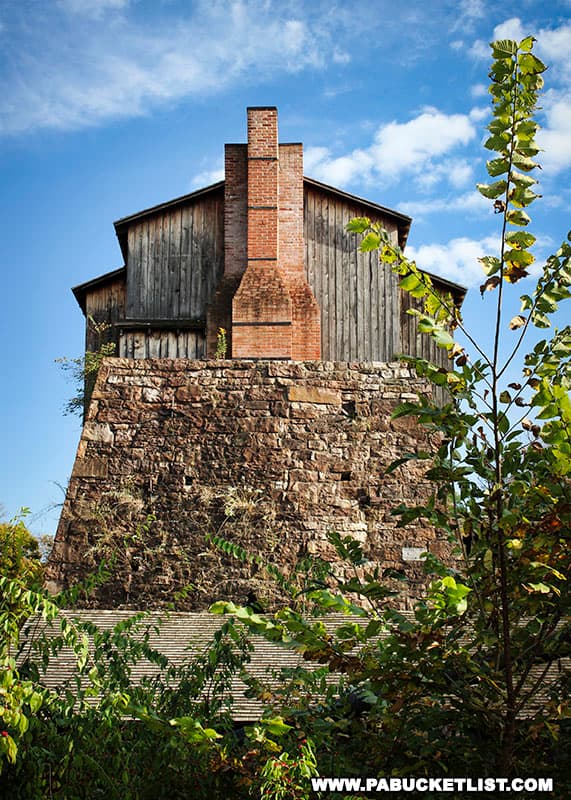
Looking up at the furnace and charging house at Eagle Ironworks at Curtin Village.

Exploring Eagle Ironworks

Roland Curtin was an Irish immigrant who set out to make his fortune in America in the iron business.
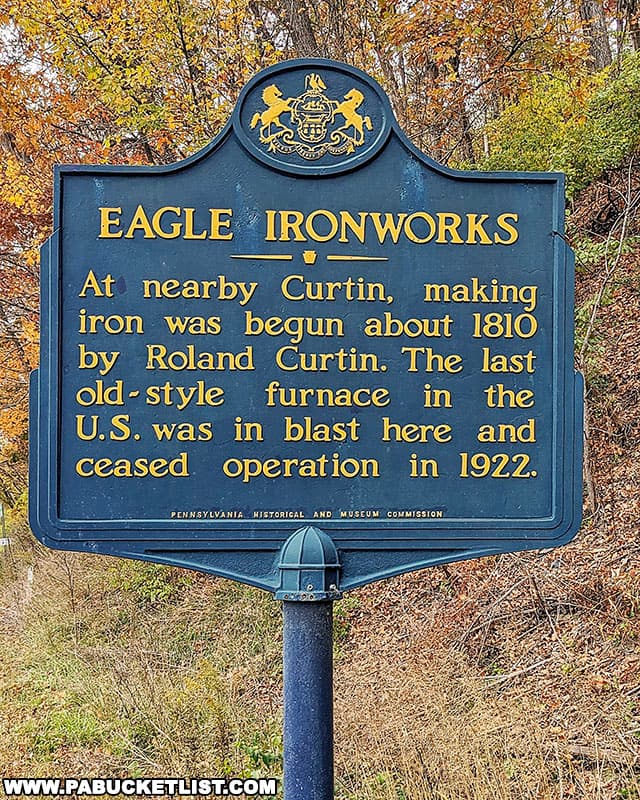
Eagle Ironworks historical marker along Route 220 near Curtin Village.

Between 1810 and 1922, Roland and his descendants made iron here using the “charcoal blast furnace” method.
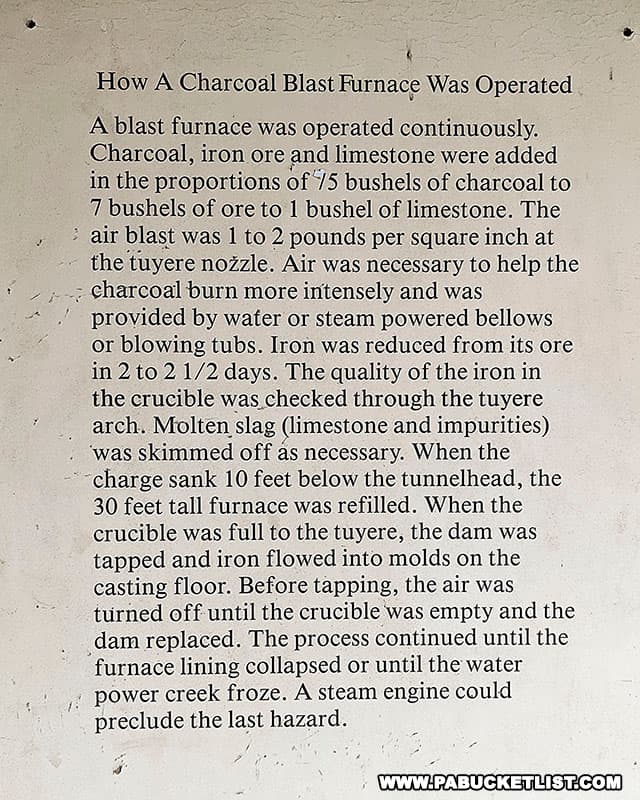
Information on how a charcoal blast furnace like the one at Eagle Ironworks at Curtin Village operated.

The raw ingredients (iron ore, limestone, and charcoal) would be transported up a ramp to the charging house which sat above the furnace.
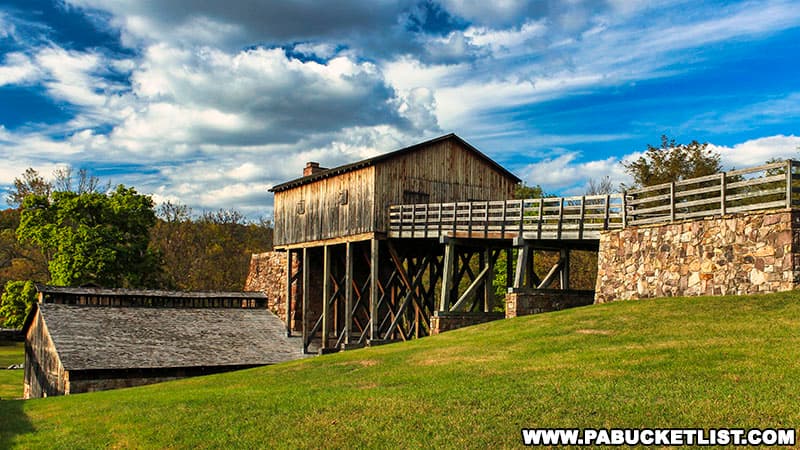
A ramp leading to the charging house where the raw materials were loaded into the blast furnace at Curtin Village.
A ramp leading to the charging house where the raw materials were loaded into the blast furnace.

Workers would then shovel the raw ingredients into the top of the furnace in the correct ratios.
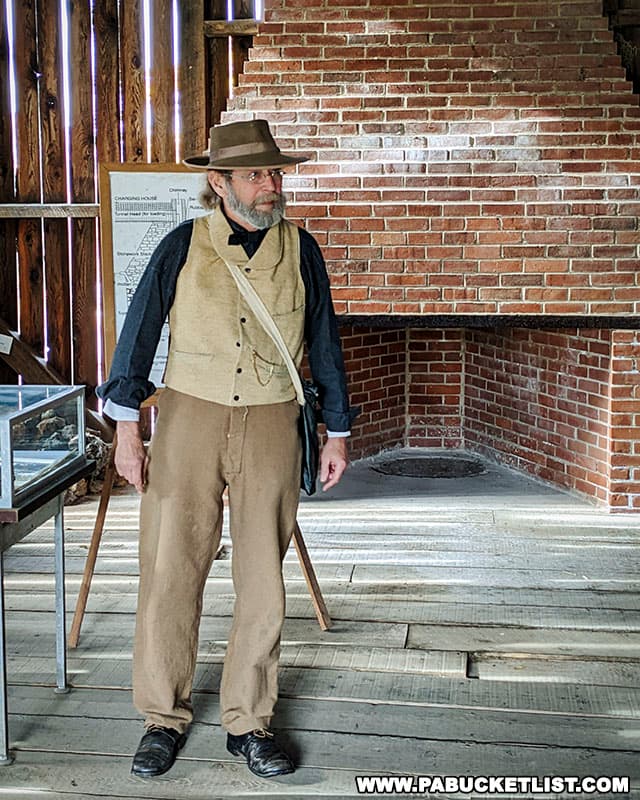
Docent explaining how the ingredients used to produce cast iron are loaded through the top of the blast furnace at Curtin Village.
Docent explaining how the ingredients used to produce cast iron are loaded through the top of the blast furnace.

Bellows attached to a waterwheel would “blast” cold air into the furnace, creating a fire hot enough to melt the ion ore.
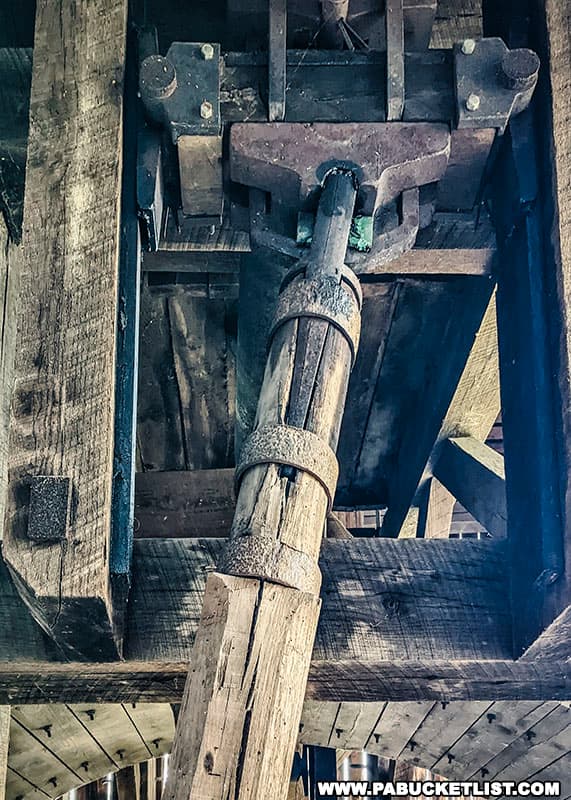
A shaft attached to the waterwheel powered bellows which forced air into the blast furnace at Curtin Village.

When enough molten iron was contained inside the “crucible” of the blast furnace, the furnace would be “tapped” at the bottom, and the molten iron would flow out into “casts” on the casting house floor (thus the term, “cast iron”).
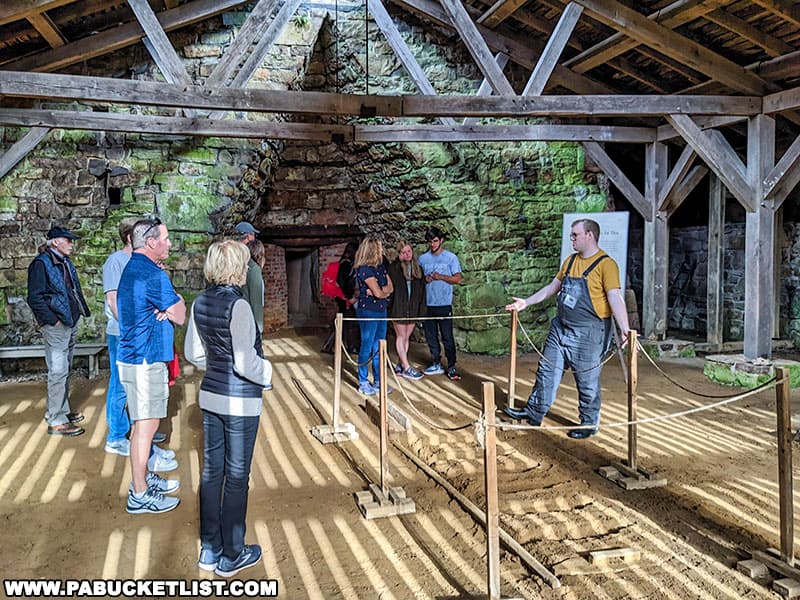
The casting house at Eagle Ironworks where the molten iron flowed from the bottom of the furnace into casts on the floor.

This cast iron was sometimes called “pig iron”, because the rows of iron casts looked like piglets lined up to suckle.
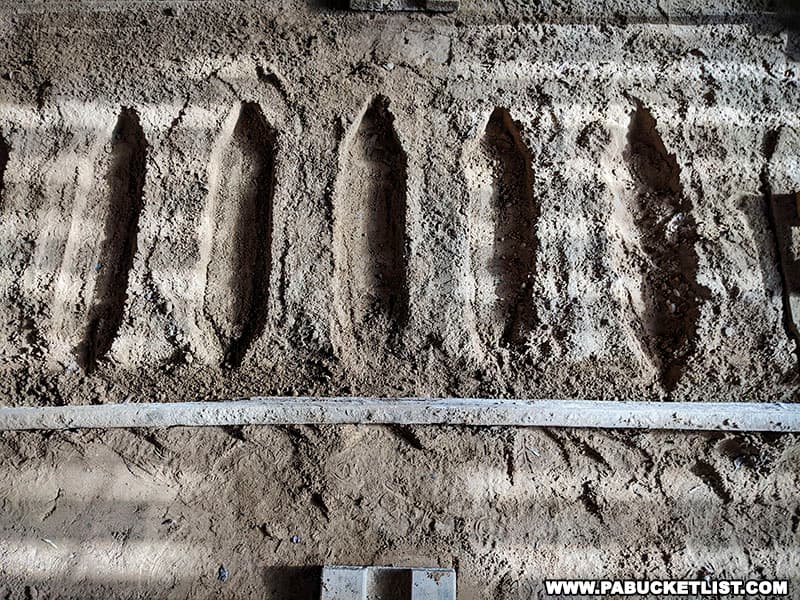
Pig iron was called that because the lines of iron casts looked like piglets lined up to suckle.
The term “pig iron” came about because the rows of iron casts looked like piglets lined up to suckle.

Outside the casting house you’ll find what was likely the last piece of cast iron produced at Curtin Village, salvaged from the bottom of the furnace during restoration.
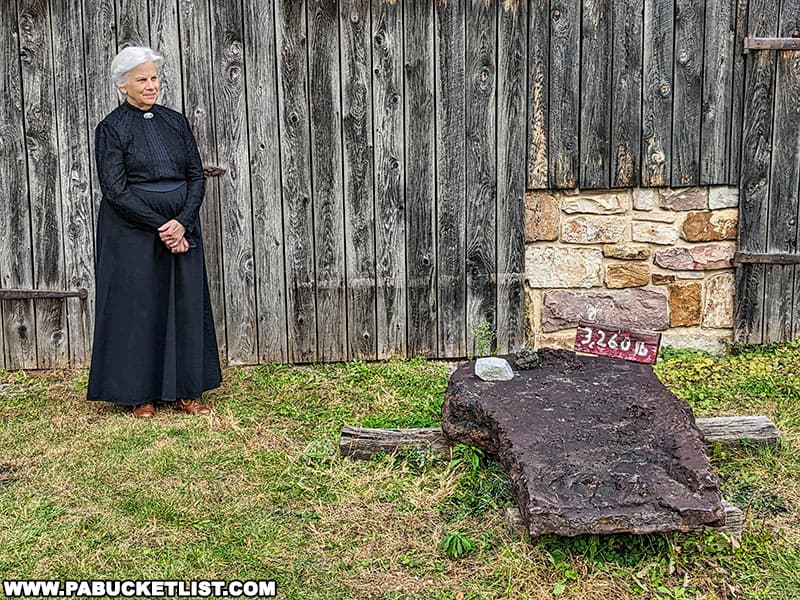
A docent in period costume standing next to what was the last piece of cast iron produced at Curtin Village.

At it’s peak, the ironworks at Curtin Village produced approximately 600 tons of cast iron per year.
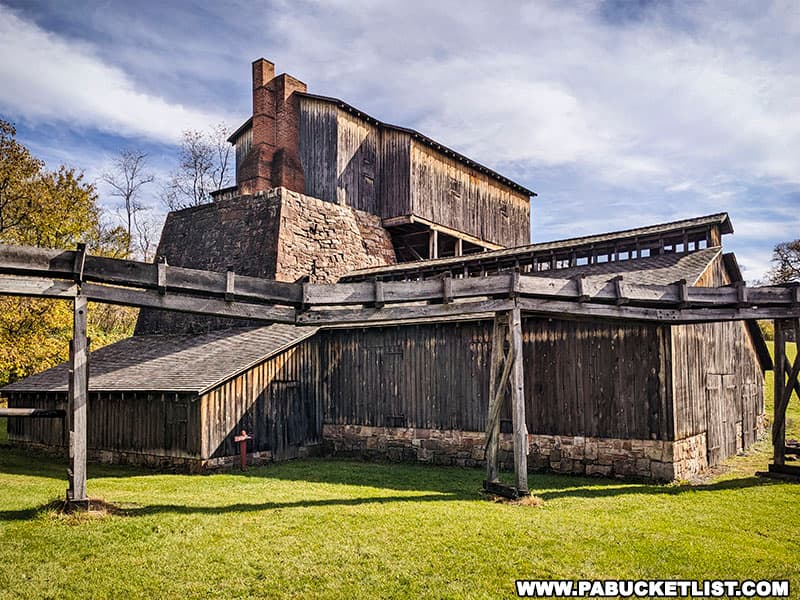
Eagle Ironworks at Curtin Village was the last surviving charcoal-fueled iron furnace in Pennsylvania.
Eagle Ironworks was the last surviving charcoal-fueled iron furnace in Pennsylvania.

Exploring the Curtin Mansion

The Curtin Mansion was built between 1830 and 1831 by Ironmaster Roland Curtin .
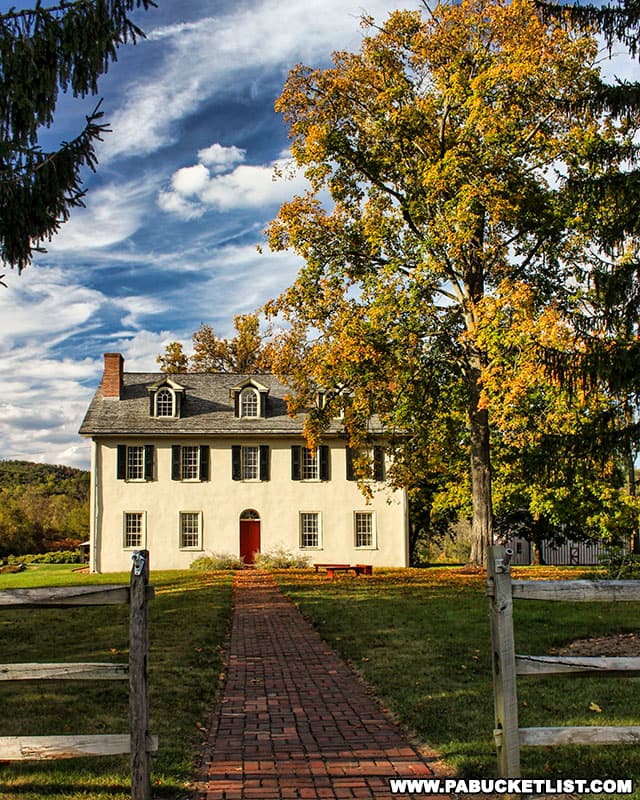
The Curtin Mansion at Curtin Village is an example of symmetrical Federalist-style architecture.
The Curtin Mansion at Curtin Village is an example of symmetrical, Federalist-style architecture.

The home is an example of Federalist-style architecture, and retains its original woodwork, staircases, and floors.
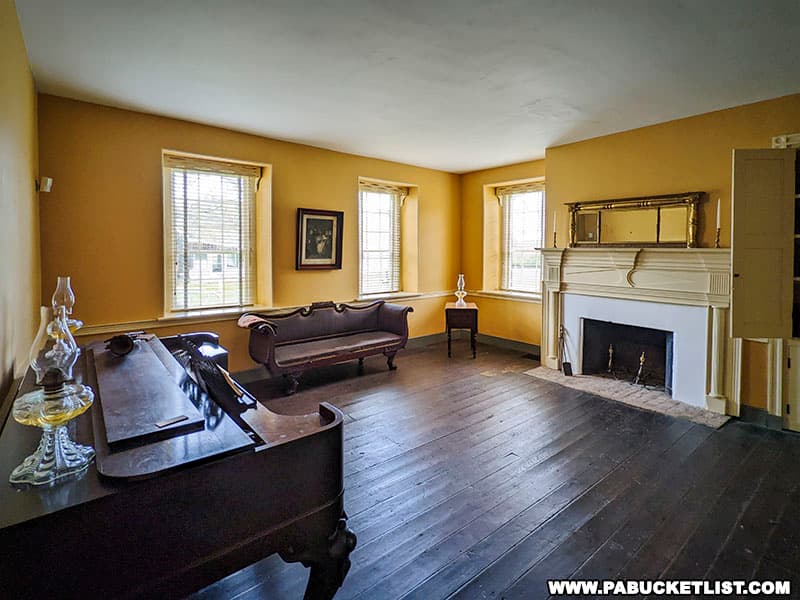
Living room inside the Curtin Mansion at Curtin Village.
Living room inside the Curtin Mansion.

There are 15 rooms, decorated with original and donated pieces of period-correct furniture.
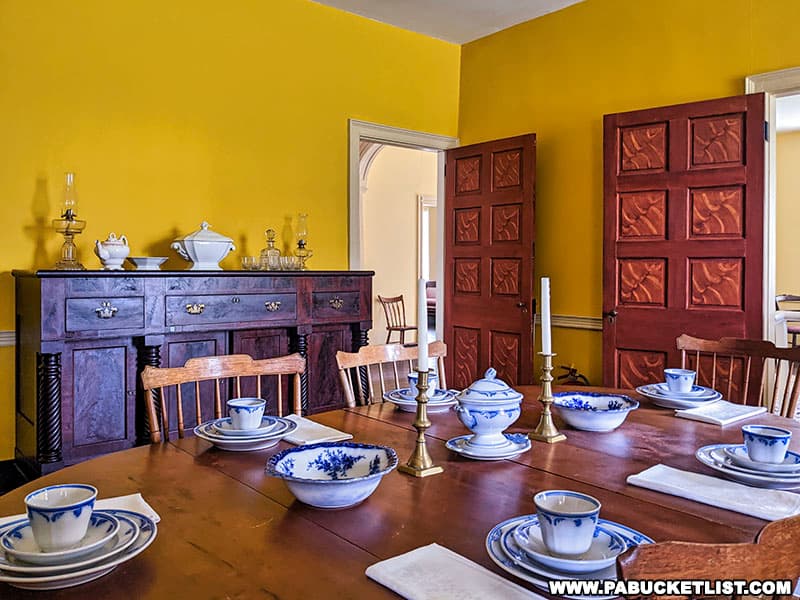
Dining room inside the Curtin Mansion at Curtin Village.
Dining room inside the Curtin Mansion.

There are ten operable fireplaces in the mansion.
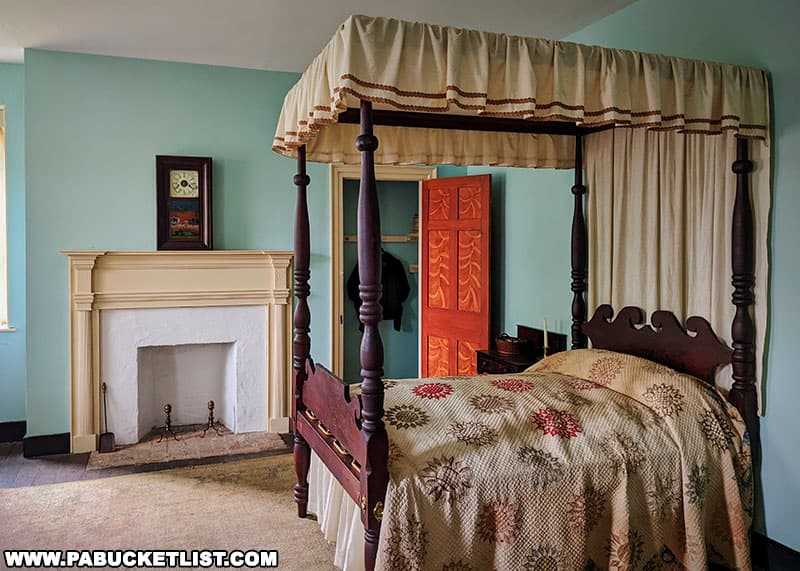
A bedroom inside the Curtin Mansion at Curtin Village in Centre County Pennsylvania.
A bedroom inside the Curtin Mansion contains one of the ten fireplaces in the home.

The mansion was occupied continuously by the Curtin family from 1830 until the early 1950’s.
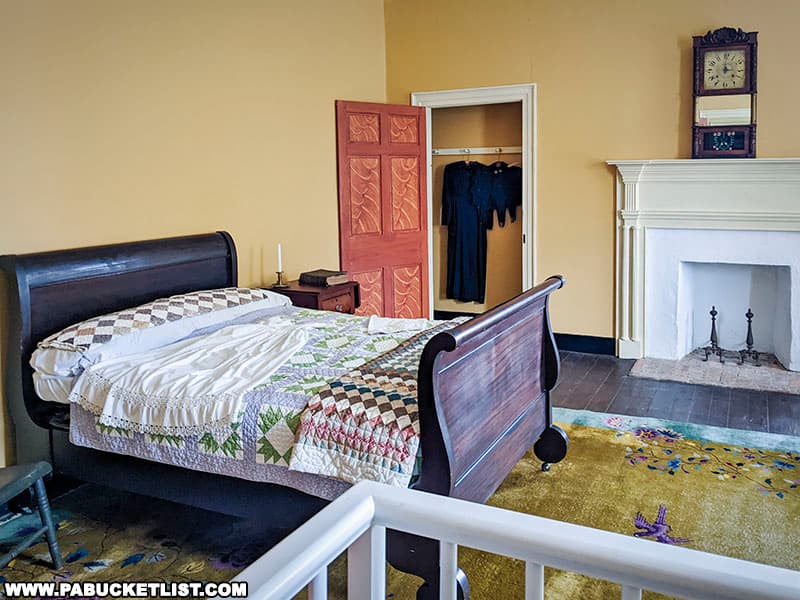
There are 15 rooms inside the Curtin Mansion at Curtin Village.
There are 15 rooms inside the Curtin Mansion.

If you take the guided tour, your docent will highlight both the architectural features of the mansion and daily life in the home.
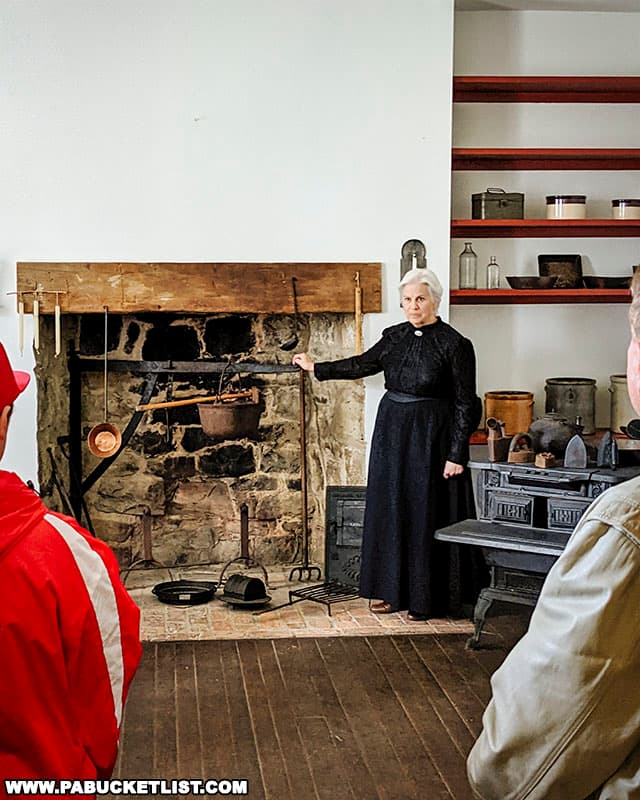
Docent explaining how meals were prepared in the Curtin Mansion.

The Workers Village

To attract and keep workers, the Curtins offered them free housing in the workers’ village.
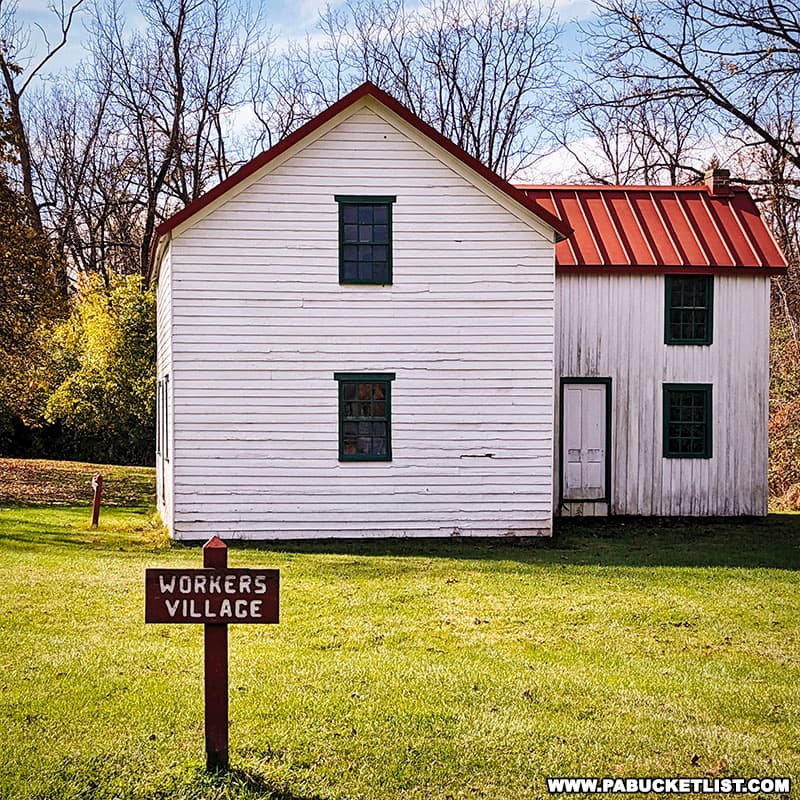
The workers village across the road from the iron furnace at Curtin Village.
The workers village across the road from the iron furnace.

Miners, charcoal makers, furnace workers, blacksmiths, carpenters, masons – these were just some of the craftsmen necessary to operate this iron plantation.
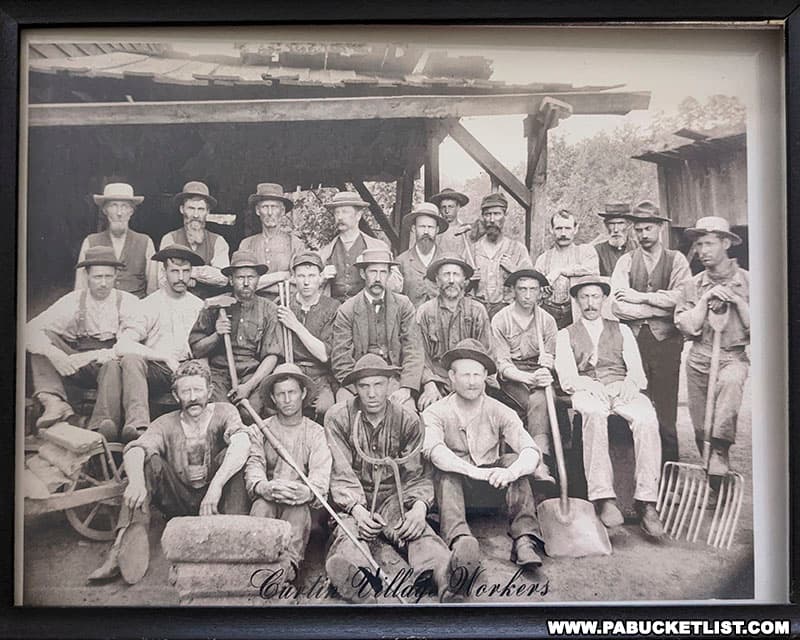
A photo of workers who lived at Curtin Village, on display at the Curtin Mansion.

There was a pecking order to the housing arrangements, with more tenured workers getting the nicer houses.
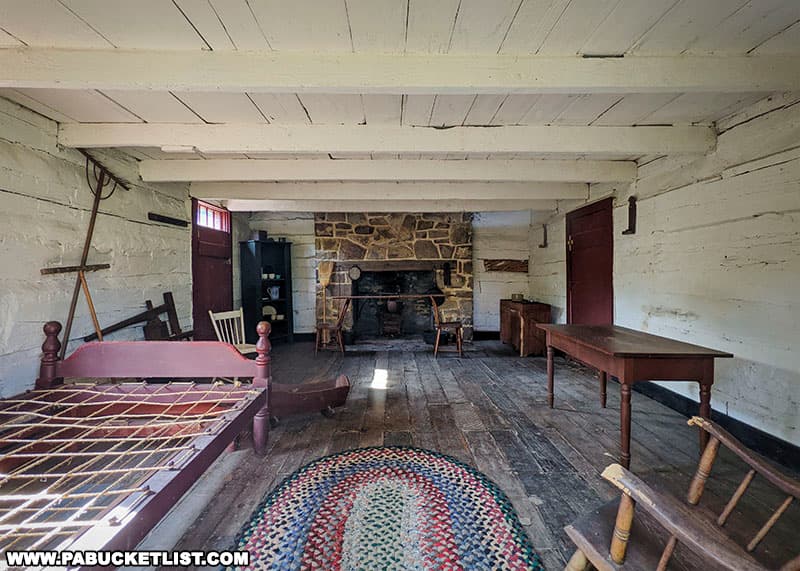
Inside a workers home at Curtin Village.

In its heyday, the village contained over a dozen structures arranged around a communal “village green”.
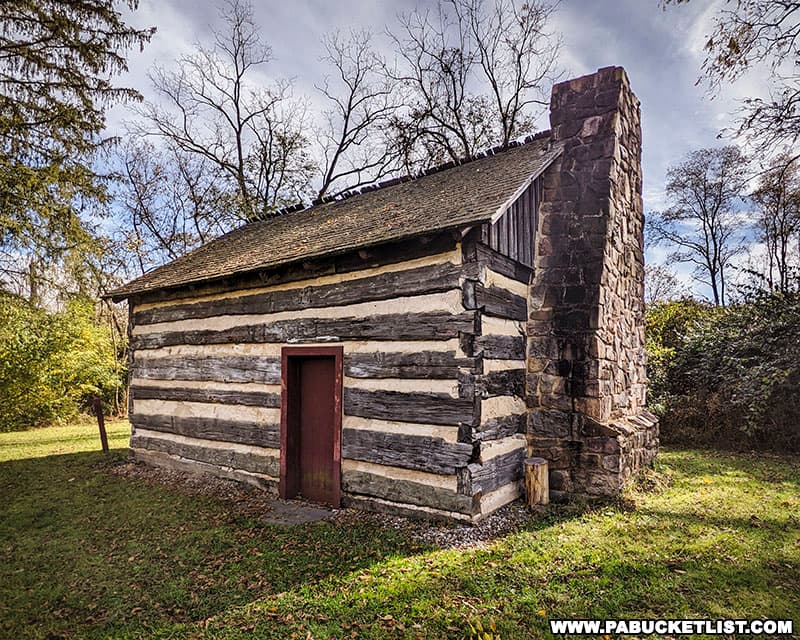
A workers cabin at Curtin Village in Centre County Pennsylvania.
A workers cabin at Curtin Village.

Hours and Tour Information

In 2024, guided tours will occur on the 2nd and 4th Sundays of each month from June through September – these tours are your chance to go inside the mansion and ironworks.
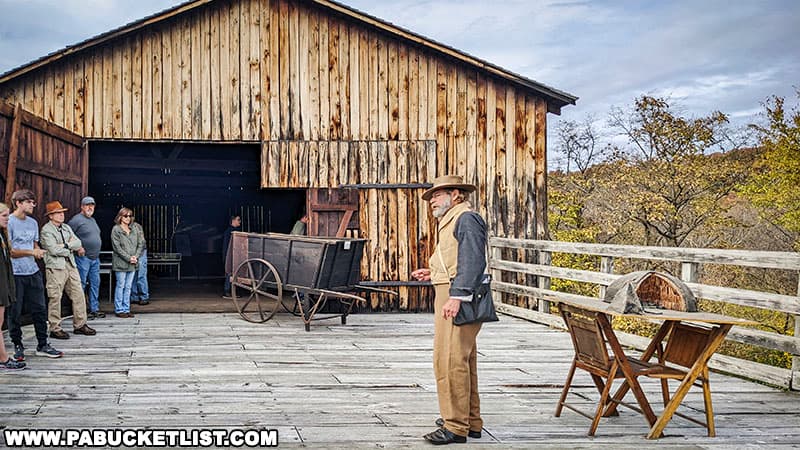
A docent explains how charcoal was produced to fuel the blast furnace at Curtin Village.

The tours begin at 2:00 PM and last 75-90 minutes; there are no fees for the guided tour but donations are gratefully accepted.
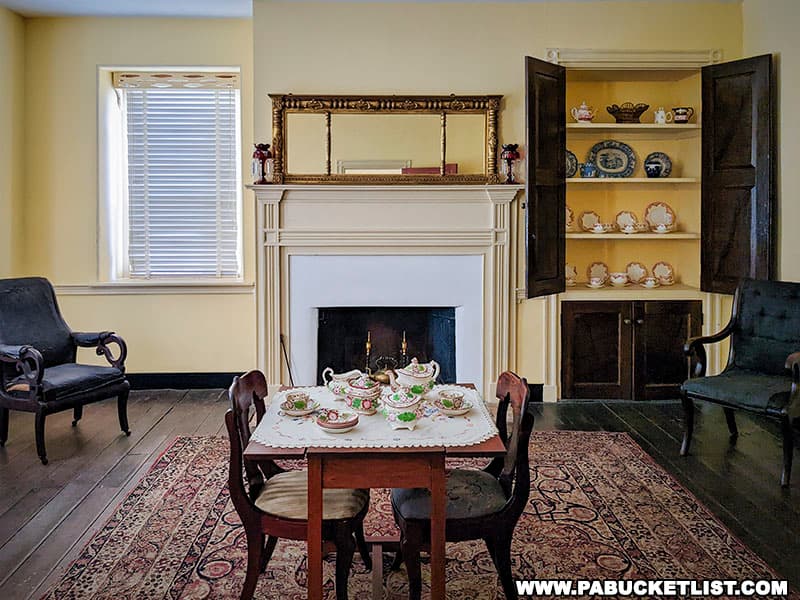
The Curtin Mansion features Empire-style furniture from the latter part of the 19th century.

If you want to explore the grounds on your own, you can do this any day year-round, but please note – the mansion and ironworks can only be viewed from the outside on self-guided tours.
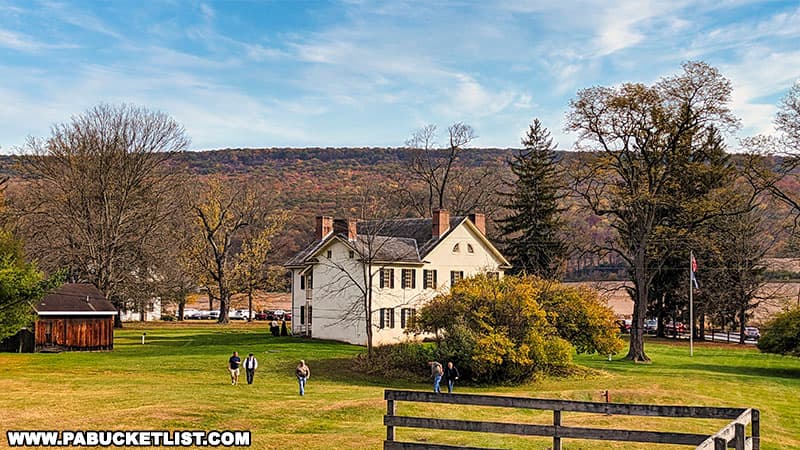
A view of the backside of Curtin Mansion from the ironworks at Curtin Village.
A view of the backside of Curtin Mansion from the ironworks.

For more information about hours and tours, check out Curtin Village’s OFFICIAL WEBSITE.
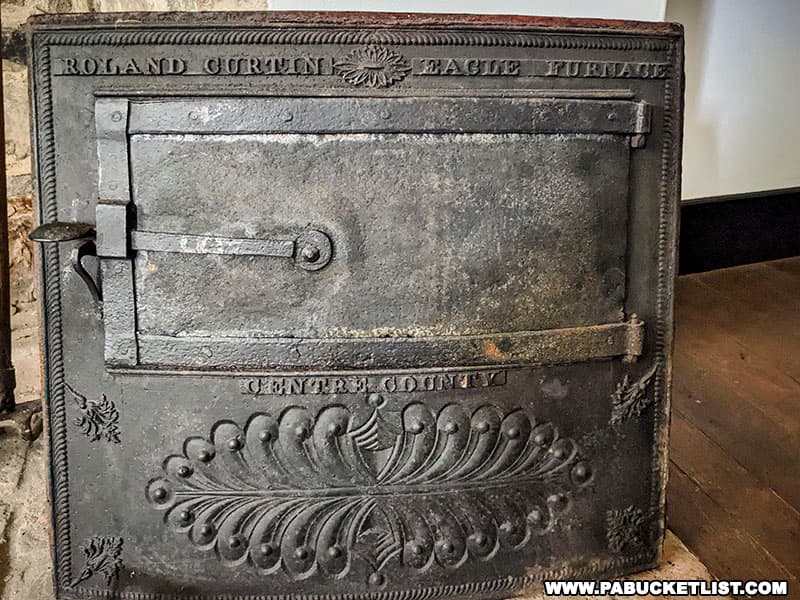
An original stove door stamped Roland Curtin Eagle Furnace inside the Curtin Mansion.
An original stove door stamped “Roland Curtin Eagle Furnace” inside the Curtin Mansion.

Directions to Curtin Village

Curtin Village is located approximately 3 miles north of Exit 158 off I-80, just south of Bald Eagle State Park.


If navigating to Curtin Village by GPS, use 251 Curtin Village Road, Howard, PA 16841 as the street address.
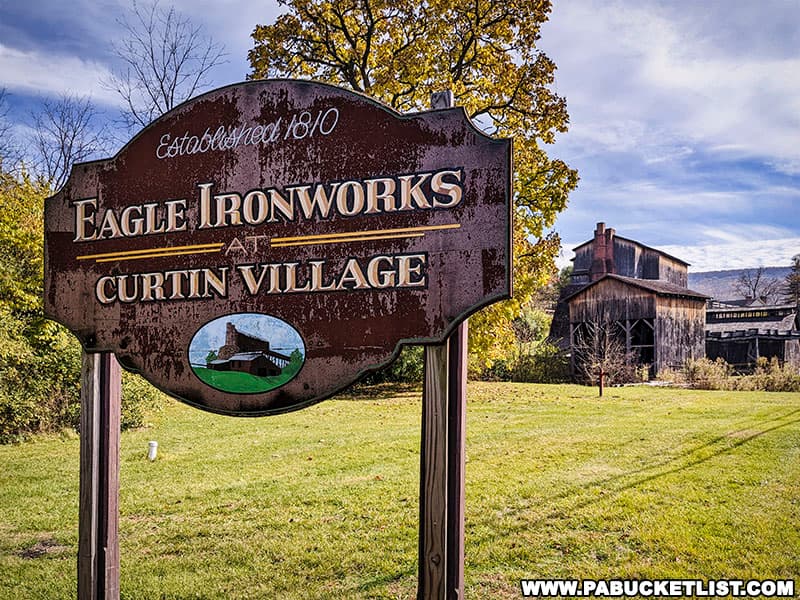
Eagle Iron Works was in operation for 112 years in Centre County.

For a closer look at more lavish homes built by Pennsylvania’s industrial pioneers, check out 18 Pennsylvania Mansions That Host Public Tours.

A collage of four stunning historic mansions in Pennsylvania, each open for public tours. The top-left image showcases a brick castle-like mansion with arched windows and a turret. The top-right image features a grand stone estate with intricate architectural details and multiple levels. The bottom-left image highlights a Victorian-style mansion with ornate gables and a wraparound porch. The bottom-right image presents a stately stone mansion with a steep red roof and symmetrical design.

Nearby Attractions

38 Must-See Attractions in Centre County showcases more remarkable sights and experiences near Curtin Village.
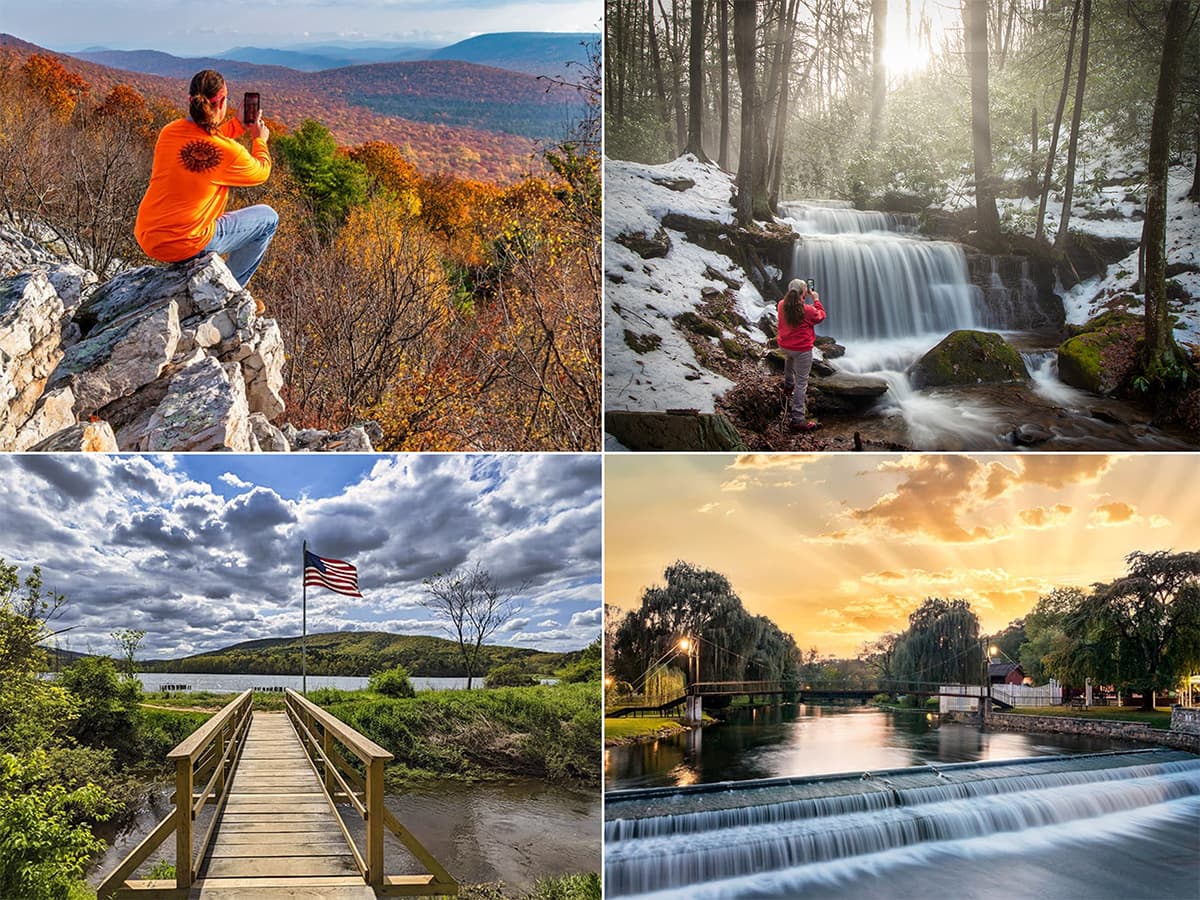
The best things to see and do in Centre County PA.
Scenes from Centre County.

A Smarter Way to Explore Pennsylvania

Explore Pennsylvania like a pro with the interactive PA Bucket List Travel Map, showcasing over 1,000 memorable destinations I’ve personally visited across the Keystone State.


Did you enjoy this article?

If so, be sure to like and follow PA Bucket List on Facebook, Instagram, and/or Pinterest to stay up-to-date on my latest write-ups about the best things to see and do in Pennsylvania!

Click on any of the icons below to get connected to PA Bucket List on social media.


PA Bucket List 2022 Sasquatch Logo

Pennsylvania’s Best Travel Blog!

Rusty Glessner
Rusty Glessner is a professional photographer, lifelong Pennsylvanian, and a frequently-cited authority on PA's best travel destinations.