

Exploring Eisenhower National Historic Site in Gettysburg

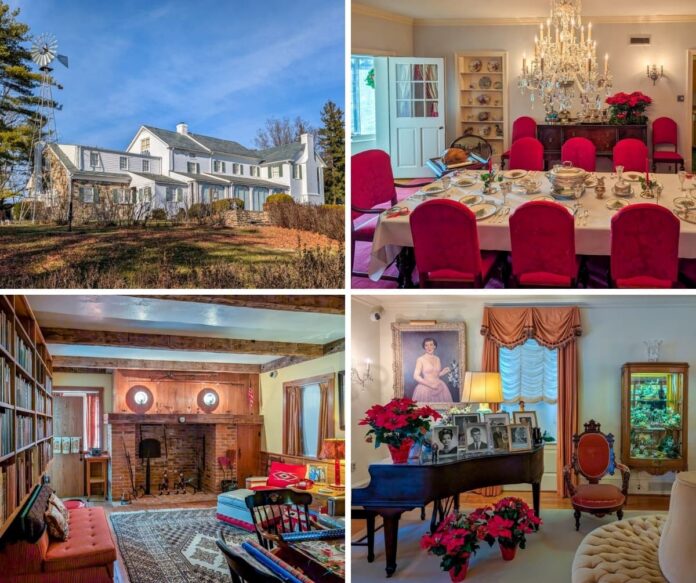
Collage featuring the Eisenhower farm’s white farmhouse exterior, the elegant dining room set for a formal meal, the cozy library with brick fireplace and bookshelves, and the family room showcasing a grand piano, portraits, and period décor inside the Eisenhower National Historic Site in Gettysburg.

Visiting Eisenhower National Historic Site in Gettysburg offers a rare look into the private world of America’s 34th President.
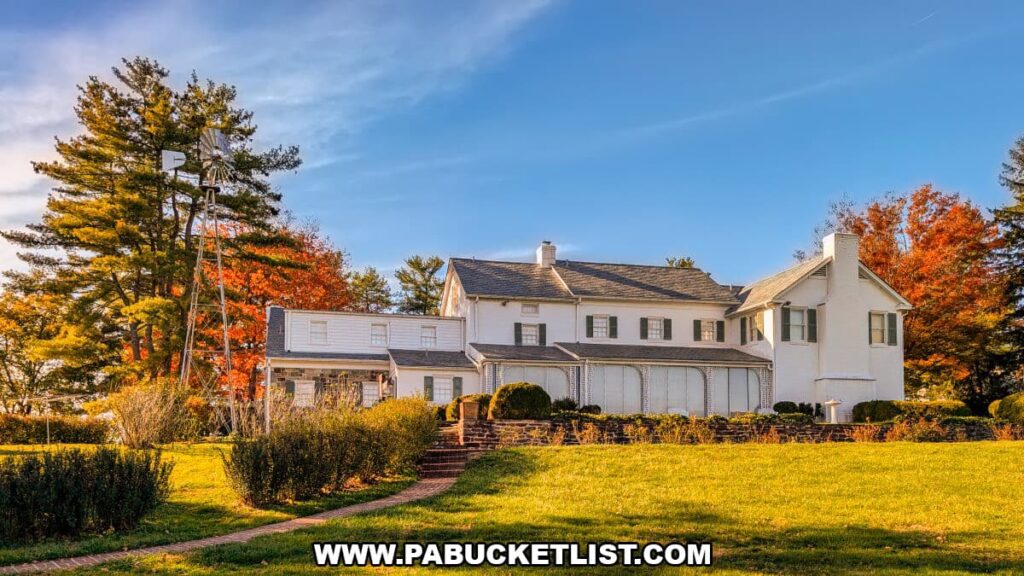
White-painted farmhouse at the Eisenhower National Historic Site in Gettysburg, framed by manicured shrubs, a towering windmill, and vibrant fall foliage under a bright blue October sky.

Adjacent to the Gettysburg Battlefield, the Eisenhower National Historic Site is the only home Dwight and Mamie Eisenhower ever owned, after a lifetime of moving between Army posts and eight years in the White House.
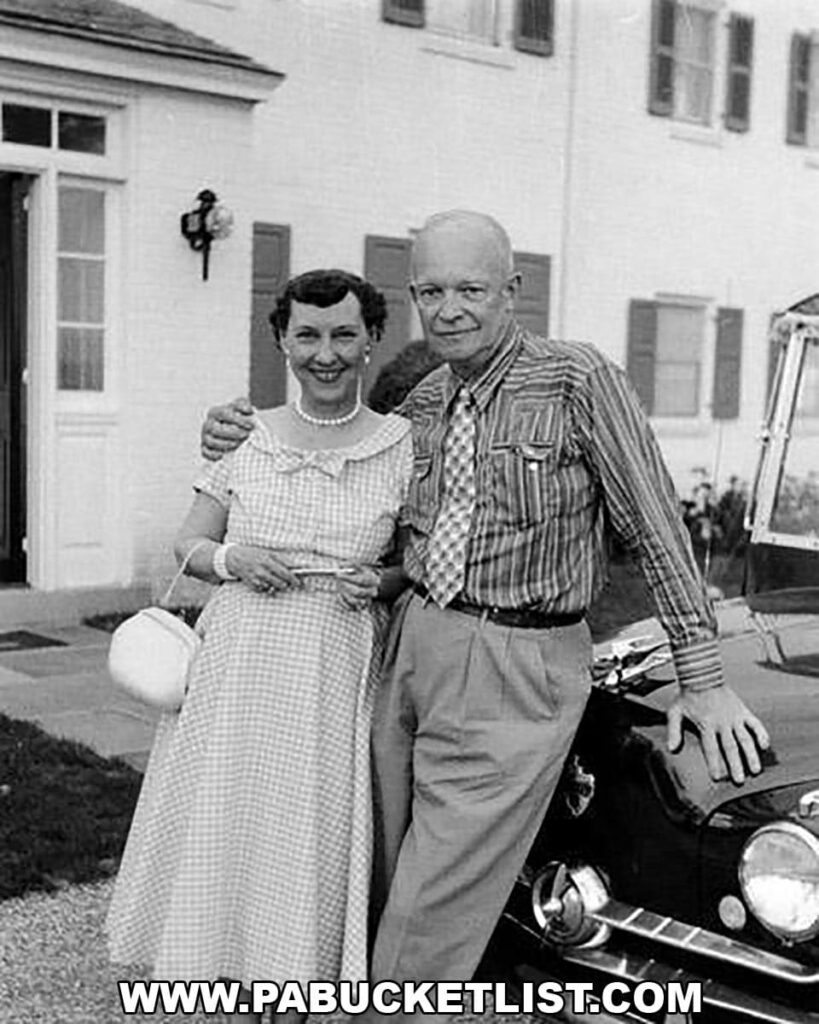
Black-and-white photo of Dwight D. Eisenhower and Mamie Eisenhower smiling beside a classic car in front of their Gettysburg farmhouse at the Eisenhower National Historic Site.

Stepping onto the property feels like entering a peaceful retreat, framed by views of South Mountain to the west and Seminary Ridge to the east.
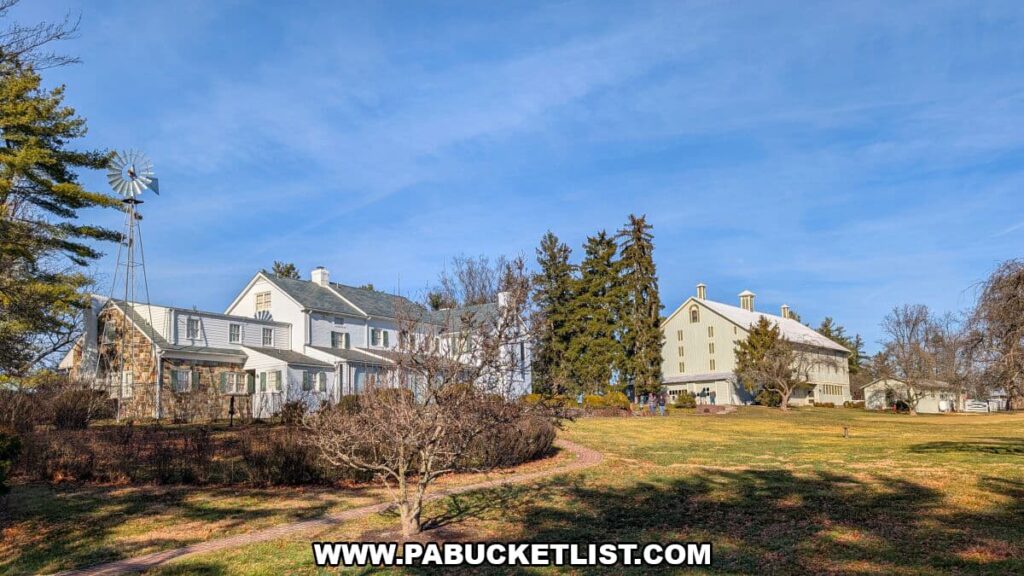
Wide view of the Eisenhower National Historic Site showing the white farmhouse and large barn set amid rolling fields, dormant winter landscaping, tall evergreens, and a towering metal windmill under a bright blue Pennsylvania sky.

Directions | Hours | Admission Fees

The entrance to Eisenhower National Historic Site is located at 250 Eisenhower Farm Road, Gettysburg, PA 17325.


The grounds of Eisenhower National Historic Site are open daily, sunrise to sunset.
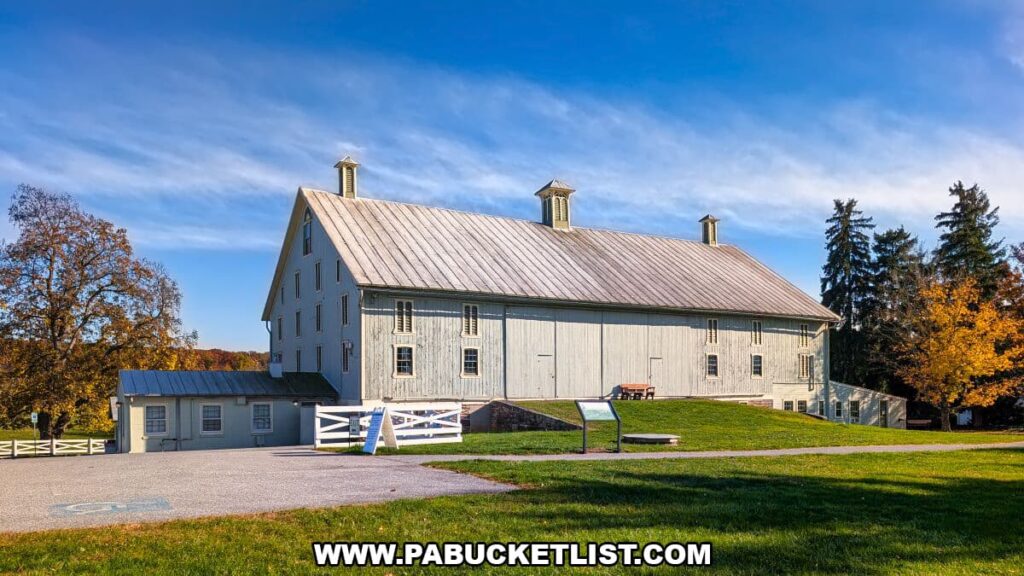
Large white barn at the Eisenhower National Historic Site set against a bright blue sky, with cupolas on the roof, a white fence, informational sign, and surrounding fields and autumn trees in Gettysburg.

Home tours are offered on select dates throughout the year – please check HERE to view the official NPS schedule.
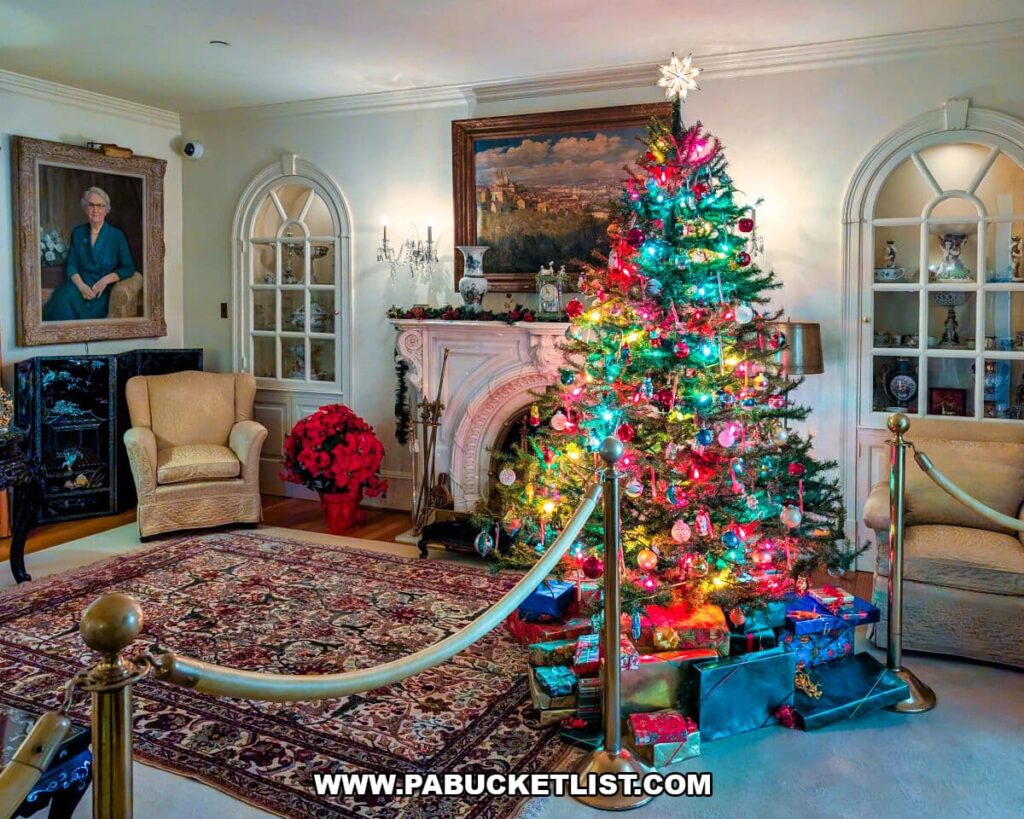
Festively decorated living room at the Eisenhower National Historic Site featuring a glowing Christmas tree with wrapped presents beneath it, a grand carved fireplace, elegant furniture, poinsettias, and portraits adorning the walls behind roped-off barriers.

There is no fee for visiting Eisenhower National Historic Site – all home tours and ranger programs are free of charge.
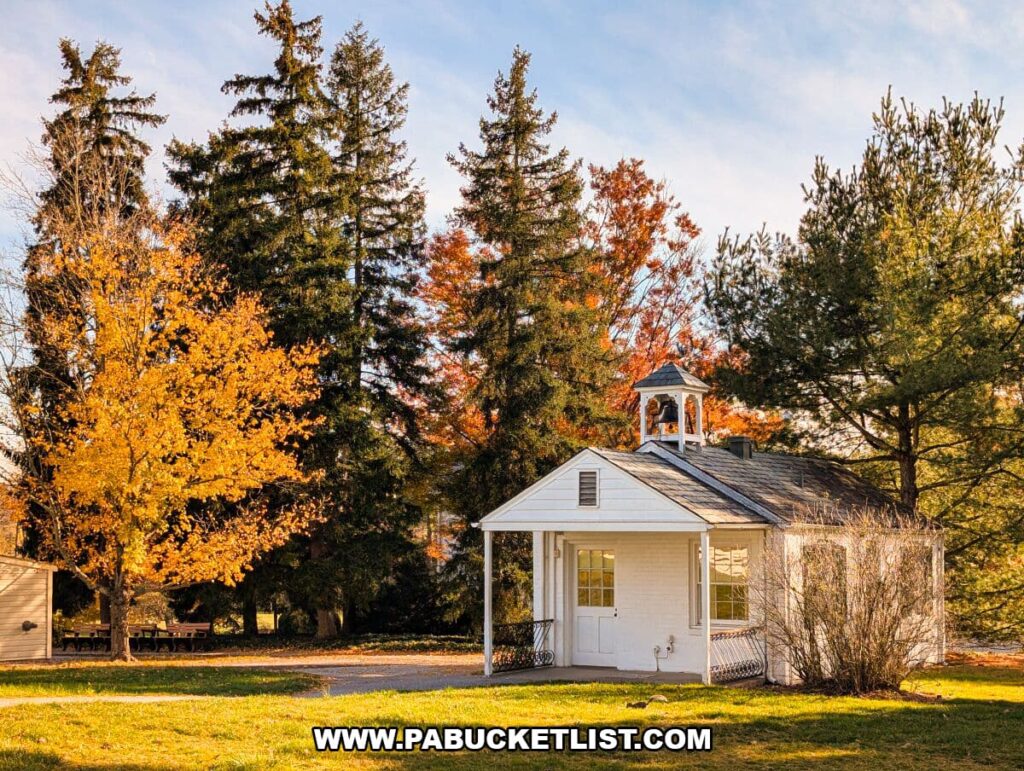
Small white guest house with a cupola at the Eisenhower National Historic Site, surrounded by tall evergreens and vibrant fall foliage under a clear blue sky.

History of the Eisenhower Farm

Purchased by then-General Dwight D. Eisenhower and his wife Mamie in 1950, the 189-acre farm originally contained several dilapidated buildings dating to the 18th and 19th centuries.
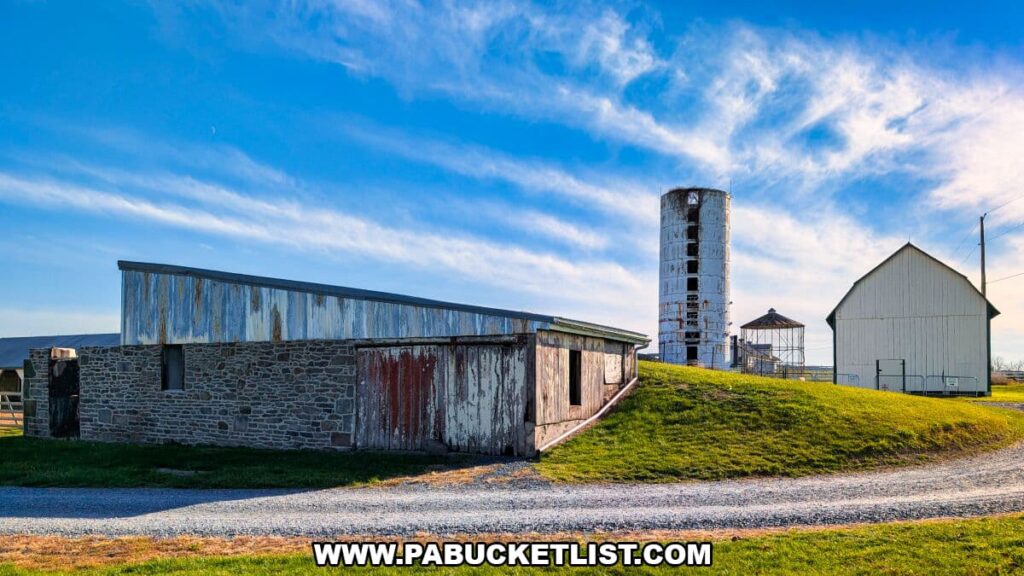
Stone and wood barn structures, a weathered silo, and outbuildings on the historic Eisenhower farm under a bright blue sky.

Renovation of the property was delayed when Eisenhower became supreme commander of NATO in 1951.
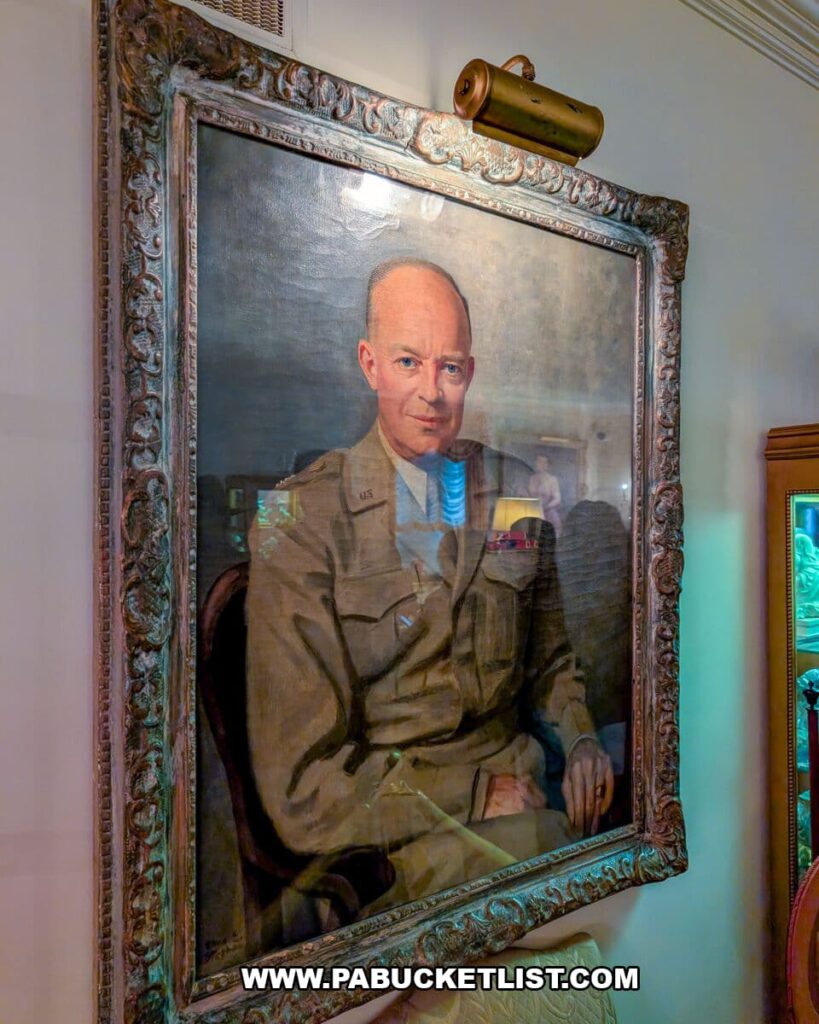
Framed portrait of Dwight D. Eisenhower in military uniform displayed on the wall inside the Eisenhower National Historic Site, illuminated by a brass picture light above.

After being elected President in 1953, Mamie insisted that the old house be rebuilt, and much of the original structure had to be torn down due to its poor condition.
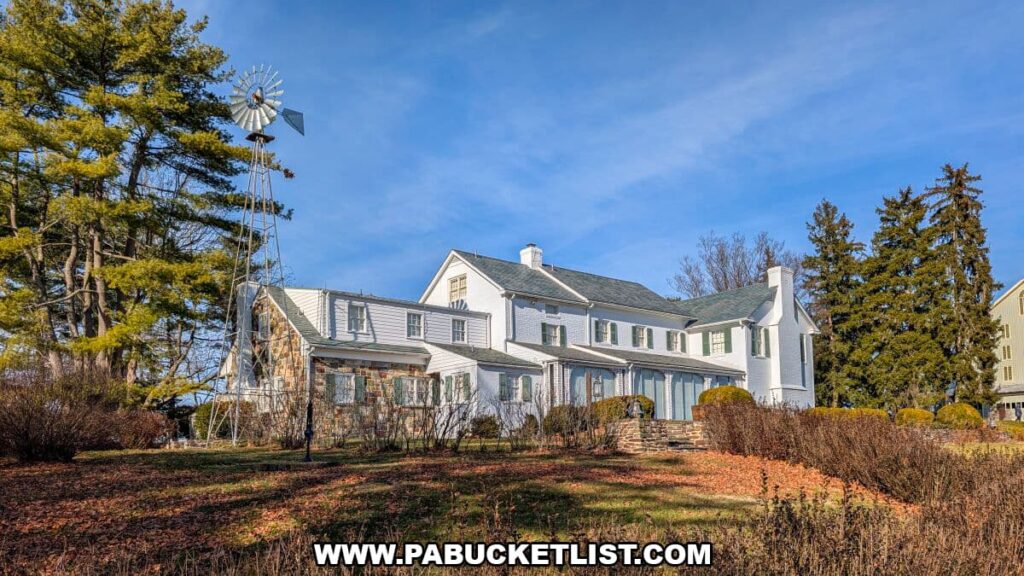
Exterior view of the white-painted farmhouse at the Eisenhower National Historic Site in Gettysburg, surrounded by winter-bare landscaping and tall evergreens, with a metal windmill rising beside the stone and wood structure under a bright blue sky.

The total renovation cost was $250,000—nearly $3 million today—and Eisenhower even paid $65,000 (nearly $800,000 today) to use union workers who commuted daily from Washington, D.C.
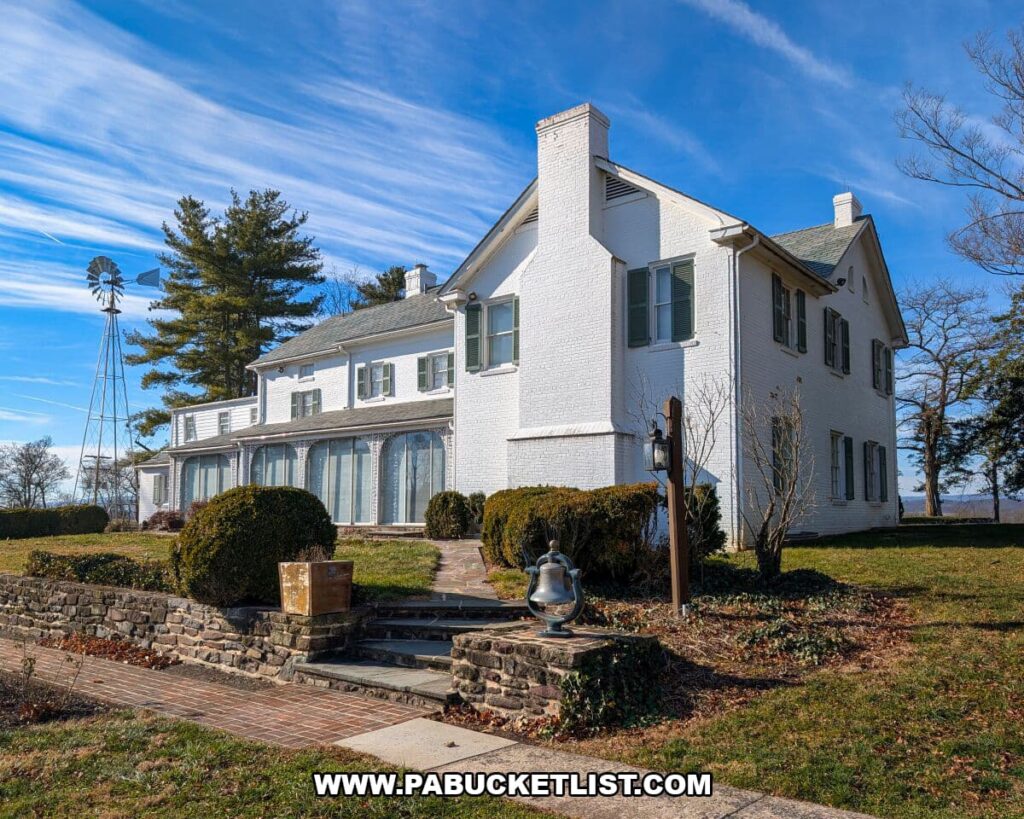
Back view of the white-painted farmhouse at the Eisenhower National Historic Site, showing its long porch, stone walkway, manicured shrubs, a metal windmill, and expansive blue-sky landscape in Gettysburg.

The home later became so iconic that it was featured on the reverse of the 1990 Eisenhower Centennial silver dollar, cementing its place in national memory.
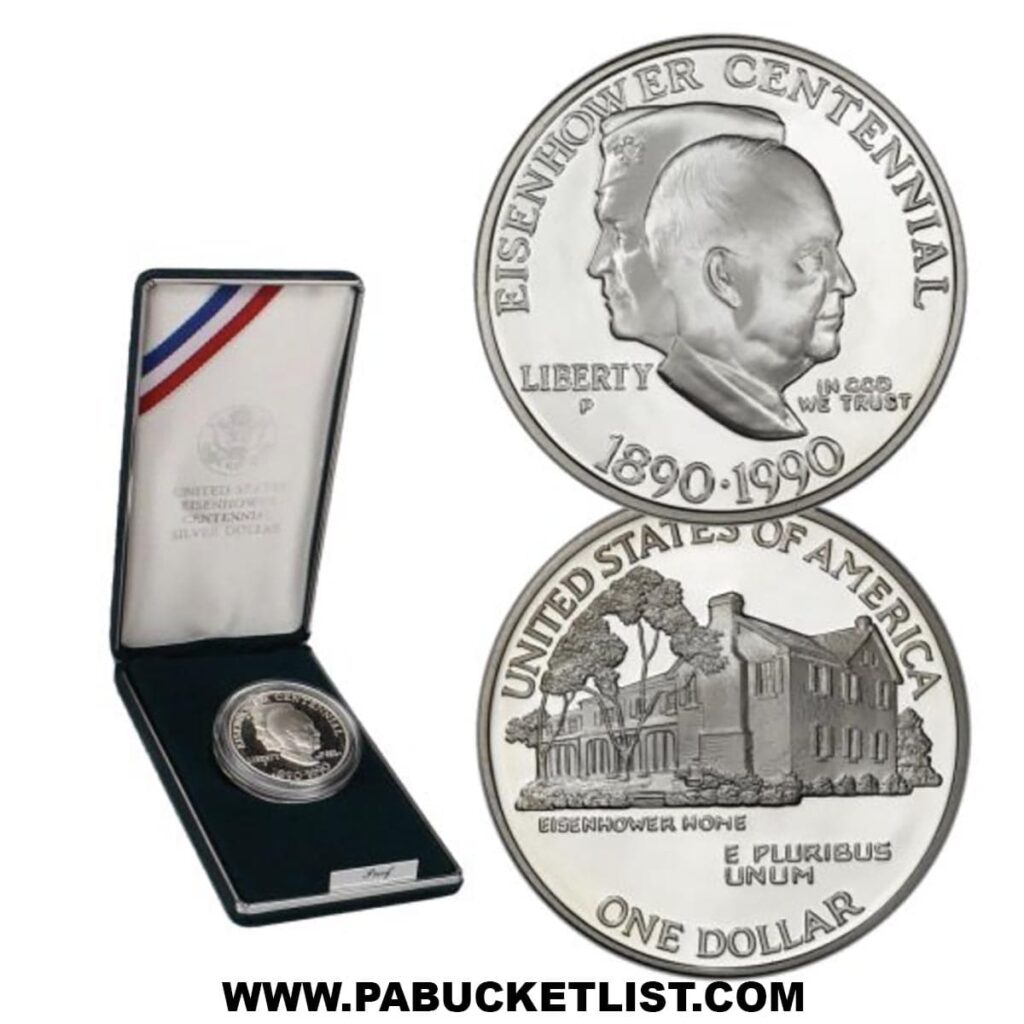
1990 Eisenhower Centennial silver dollar coin displayed in a presentation case, featuring portraits of Dwight D. Eisenhower on the obverse and an engraving of Eisenhower’s Gettysburg home on the reverse.

On their 1955 wedding anniversary, the Eisenhowers celebrated completion of the home with a large party.

Autumn view of the Eisenhower farmhouse in Gettysburg, with its white exterior and green shutters framed by a large vibrant orange tree and expansive grassy lawn beneath a clear blue sky.

From 1955 to the end of Eisenhower’s second presidential term in 1961, he spent a total of 365 days at the Gettysburg farm.
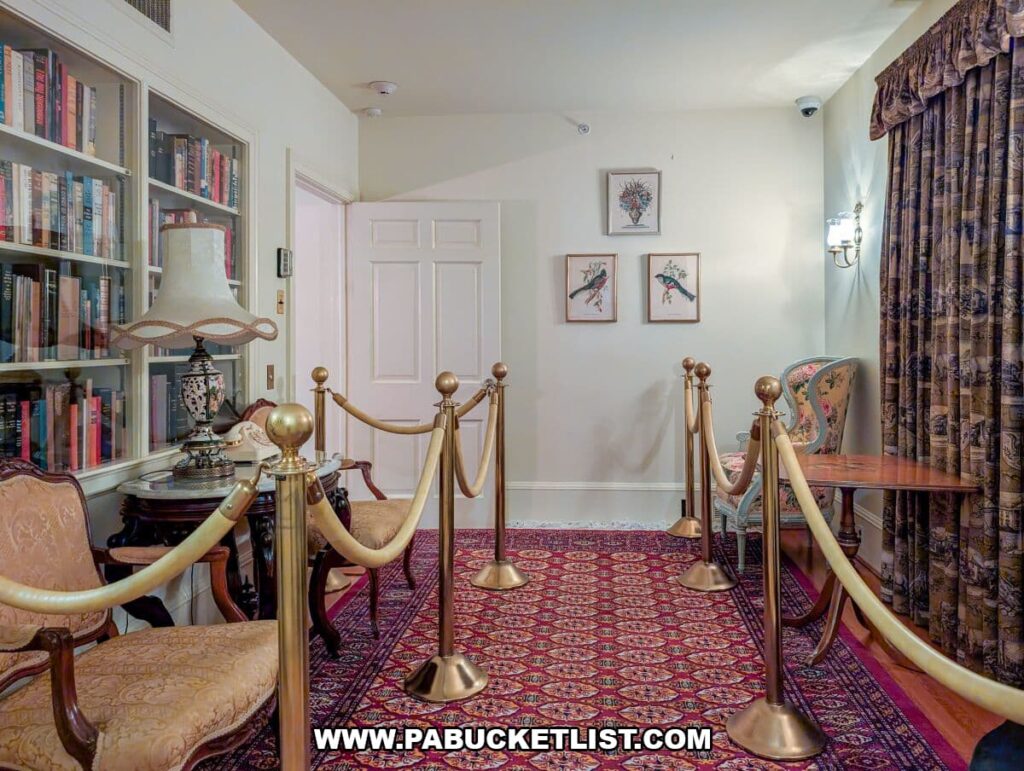
Elegant hallway at the Eisenhower National Historic Site lined with a glass-front bookcase, antique upholstered chairs, floral artwork on the wall, patterned rug, and decorative table lamp, with rope barriers guiding visitors through the historic home.

The longest of these stays lasted 38 days in late 1955 while he recovered from a heart attack.
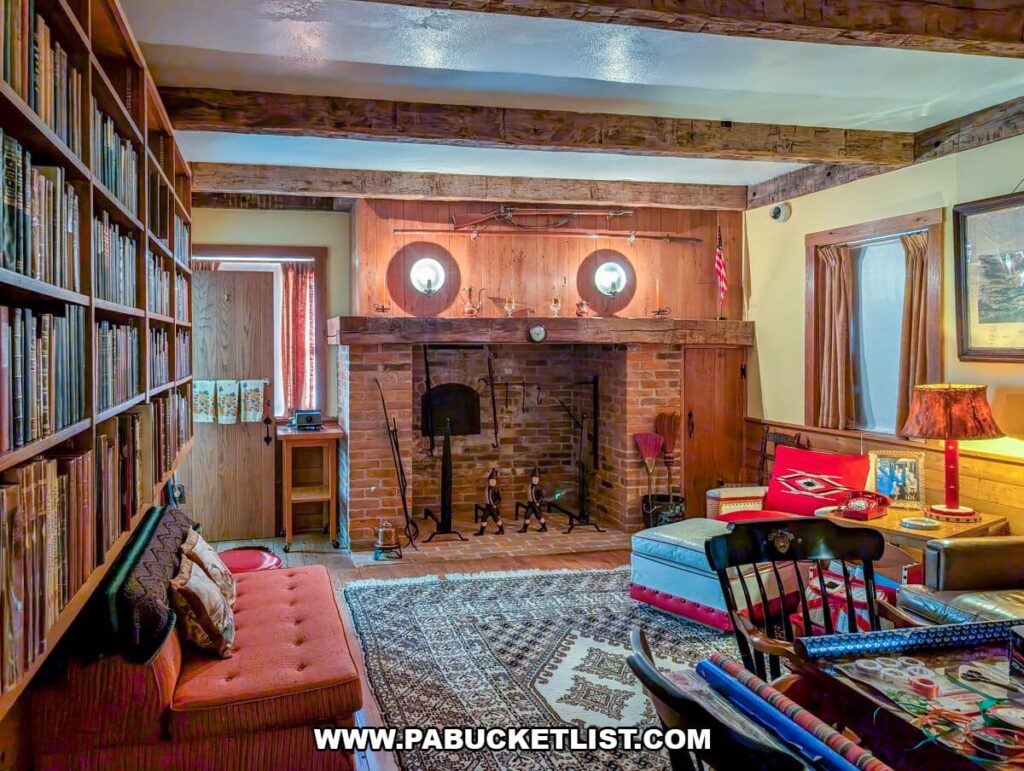
Warm, wood-paneled den at the Eisenhower National Historic Site featuring a brick fireplace with tools and décor, exposed wooden ceiling beams, shelves filled with books, cozy seating, a patterned rug, and vintage lamps creating a homey retreat atmosphere.

After 1955, the Eisenhowers spent most weekends and summer breaks here, using the farm as a much-needed respite from the pressures of Washington.
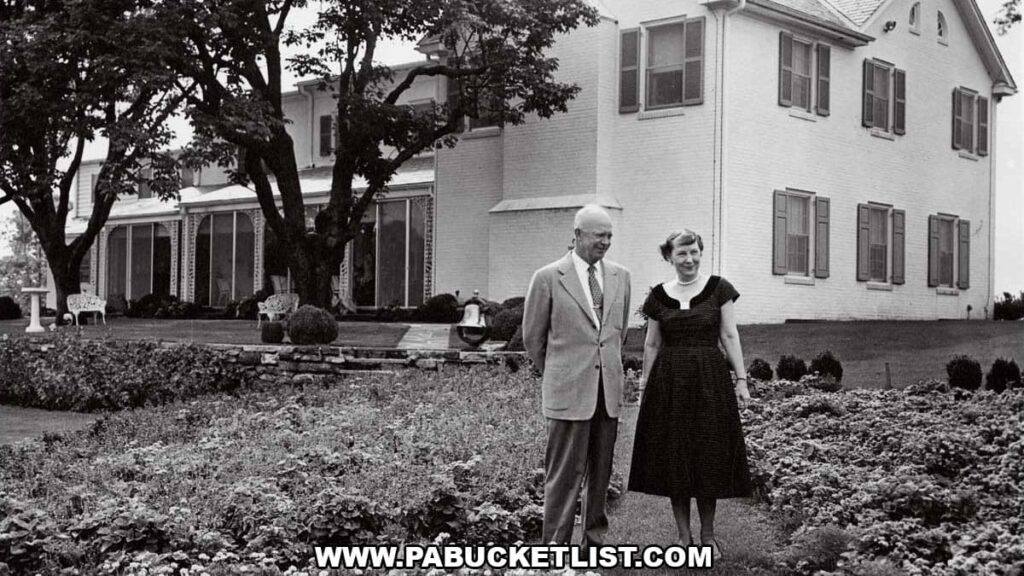
Black-and-white photo of Dwight and Mamie Eisenhower standing together in the garden behind their Gettysburg farmhouse at the Eisenhower National Historic Site.

The home also became a diplomatic setting where informal meetings were held with notable world leaders including Soviet Premier Nikita Khrushchev, French President Charles de Gaulle, British Prime Minister Winston Churchill, and future U.S. President Ronald Reagan.
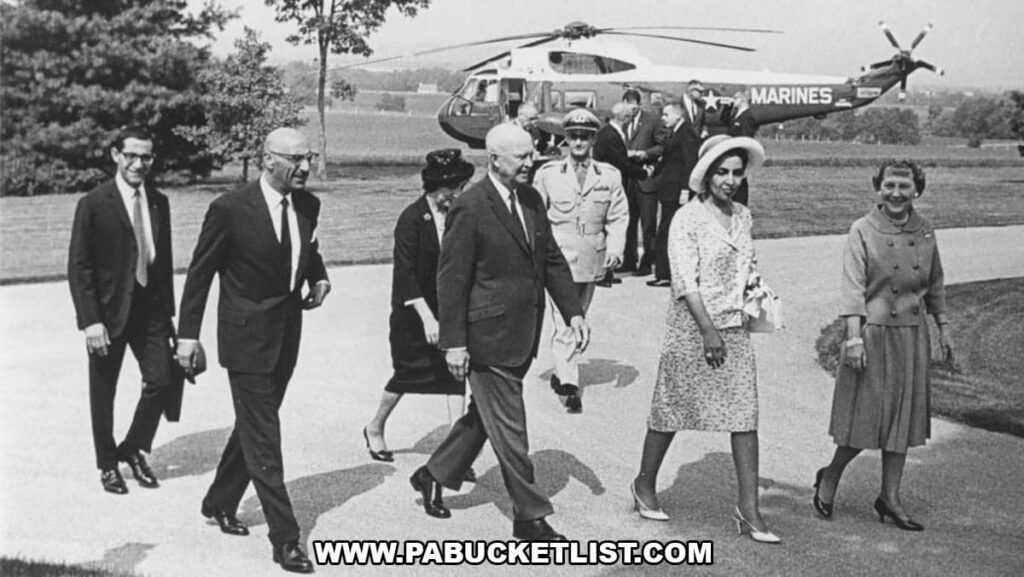
Historic black-and-white photo showing Dwight D. Eisenhower walking with dignitaries and guests on the driveway of his Gettysburg farm, with a Marine helicopter parked in the background.

The property was donated to the National Park Service in 1967, with the Eisenhowers retaining lifetime living rights.
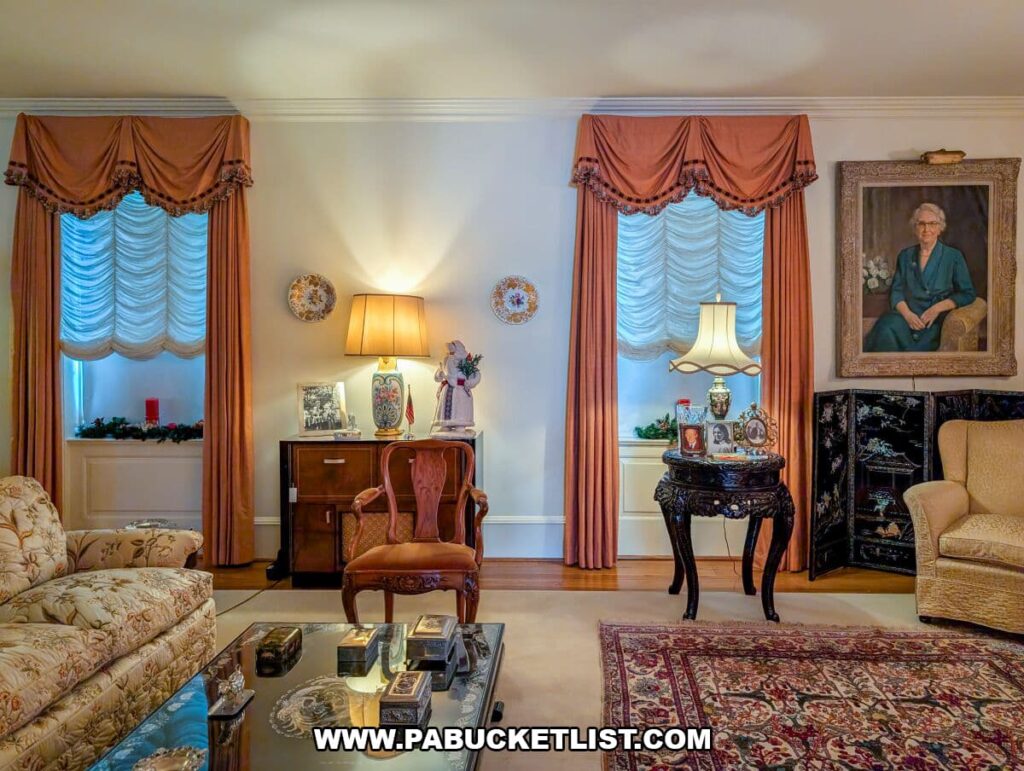
Cozy formal sitting room at the Eisenhower National Historic Site featuring patterned sofas, antique side tables with lamps and framed photographs, peach-colored drapes, a portrait of Mamie Eisenhower, and holiday greenery accenting the windowsills.

Dwight died in 1969, and Mamie continued living here until her death in 1979, after which the NPS opened the site to the public in 1980.
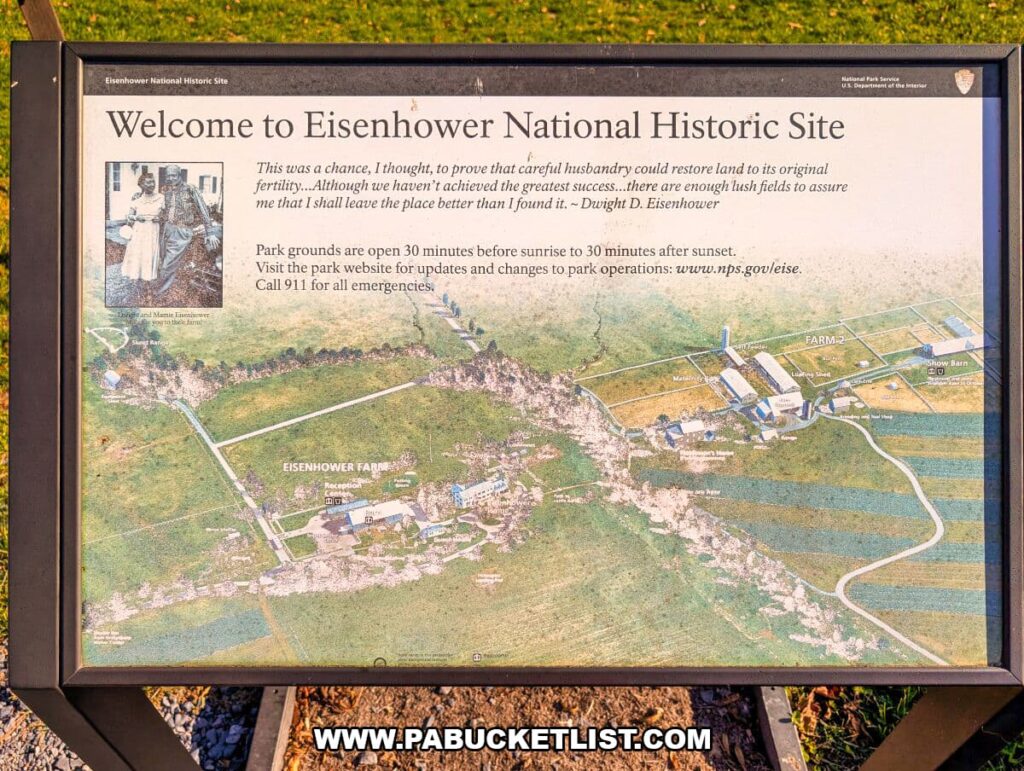
Interpretive sign at Eisenhower National Historic Site welcoming visitors, featuring a quote from President Eisenhower and a map of the Gettysburg farm layout.

What You’ll See at the Eisenhower National Historic Site

The interior of the Eisenhower home looks almost exactly as it did when the couple lived here.

Elegant bedroom at the Eisenhower National Historic Site featuring a pink-patterned bedspread, vintage vanity and floral décor, a marble fireplace with framed family portrait above it, ornate drapes, and a mid-century television with wooden cabinet doors.

Many visitors are surprised to learn that the sun porch was Eisenhower’s absolute favorite room.
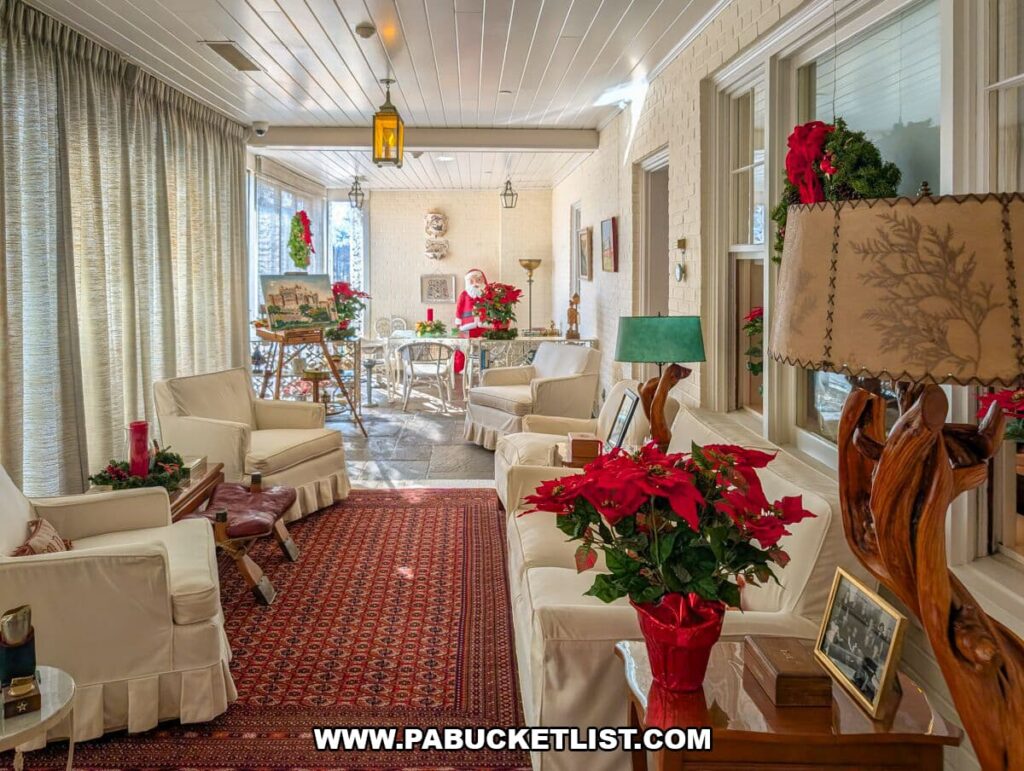
Cozy enclosed porch at the Eisenhower National Historic Site in Gettysburg decorated for Christmas, featuring white armchairs, poinsettias, holiday wreaths, vintage lamps, framed photos, and a Santa figure standing near a small dining table with winter sunlight streaming through large windows.

Here, he loved to play cards, paint, and watch westerns on his personal TV, often surrounded by family, friends, and piles of reading material.
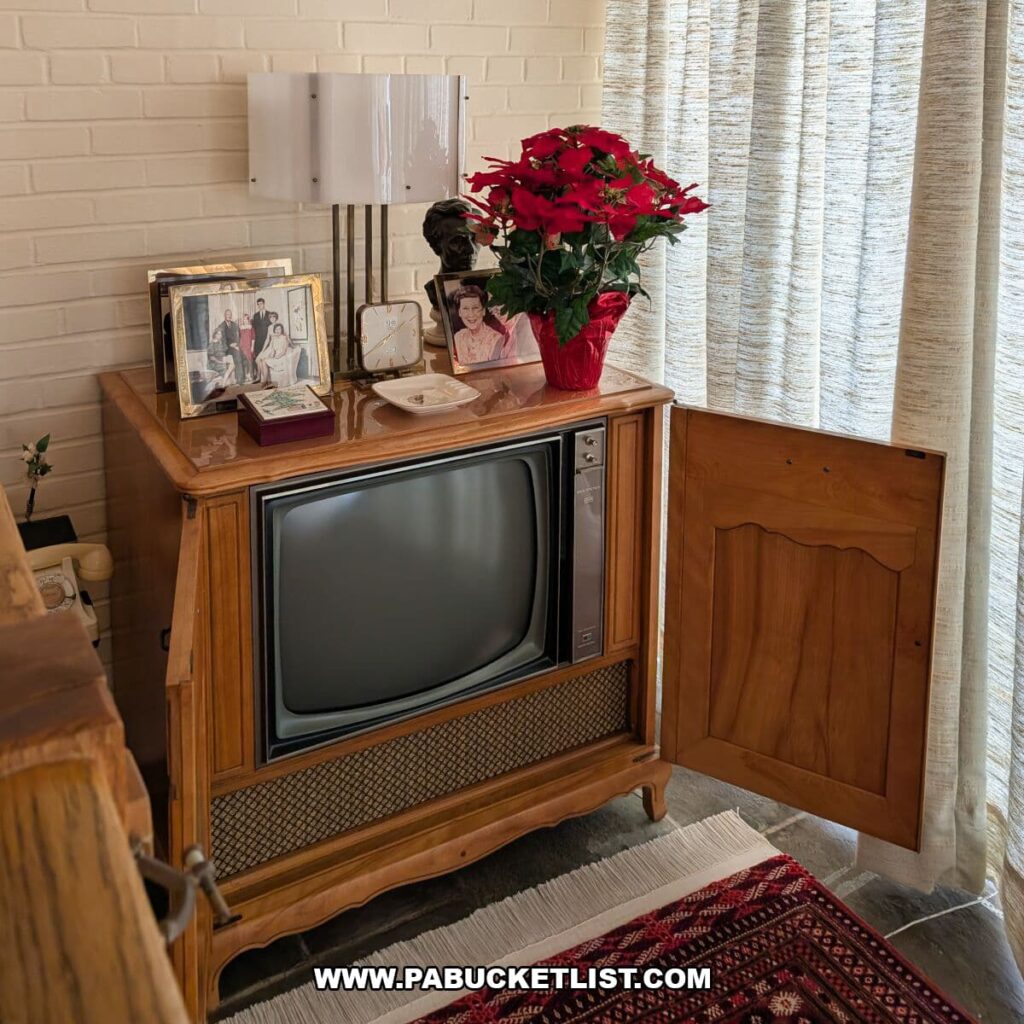
Vintage wooden-cabinet television on the sun porch at the Eisenhower National Historic Site, topped with framed family photos, a table lamp, a clock, and a festive poinsettia next to patterned curtains.

The formal living spaces reflect Mamie’s taste for elegance, including a dazzling chandelier in the dining room and impeccably set dinner table.
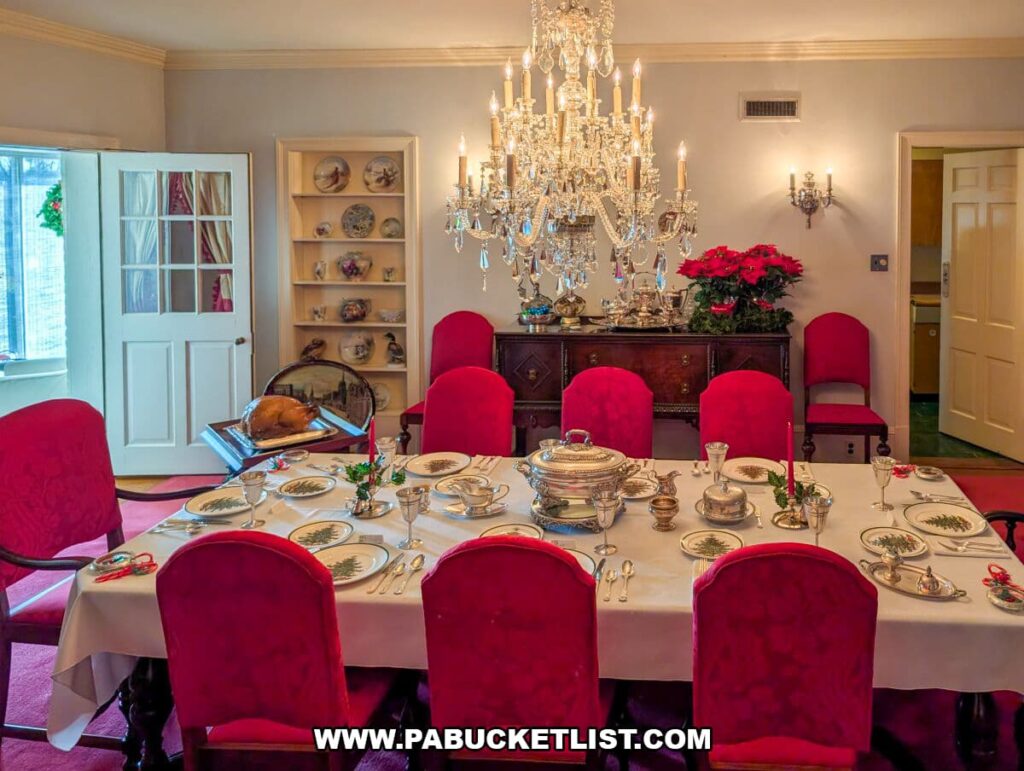
Elegant dining room at the Eisenhower National Historic Site set for a formal holiday meal, featuring red upholstered chairs around a long table with fine china, silver serving pieces, a roasted turkey on a side cart, poinsettias, and a sparkling crystal chandelier overhead.

Family portraits, a grand piano, and curated keepsakes showcase a life that balanced public pressure with domestic comfort.
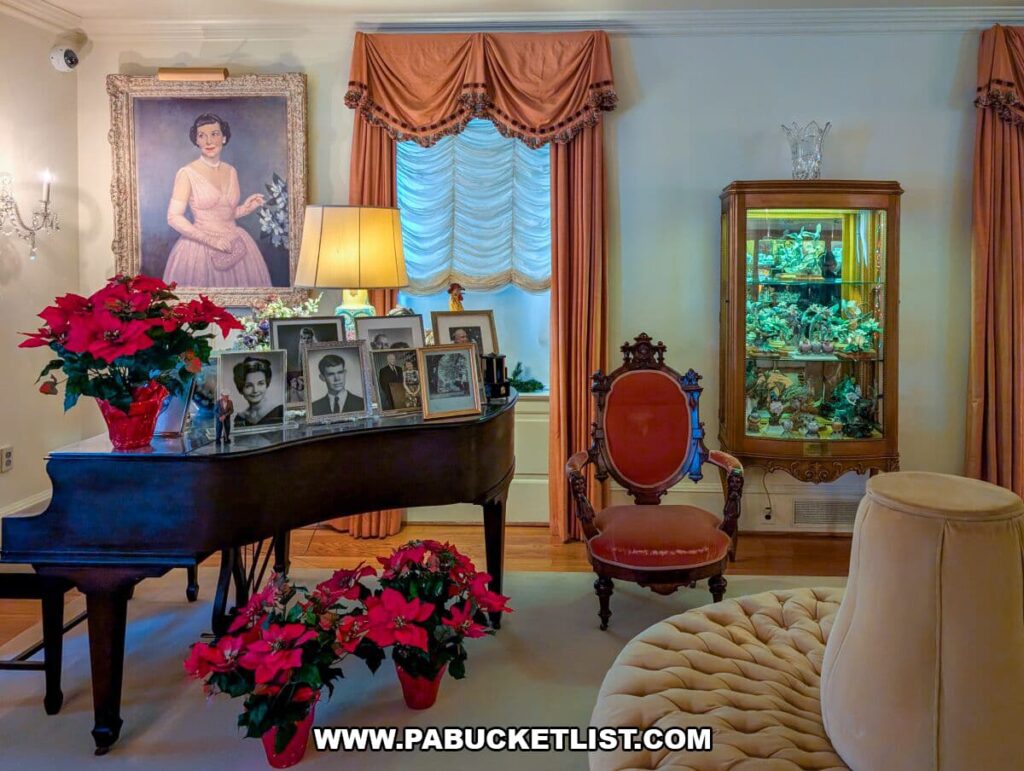
Elegant family room at the Eisenhower National Historic Site featuring a grand piano topped with framed family photographs and poinsettias, a portrait of Mamie Eisenhower on the wall, vintage red velvet chairs, and a glass curio cabinet filled with collectibles.

The house remains a powerful visual record of private presidential life during the Cold War era.
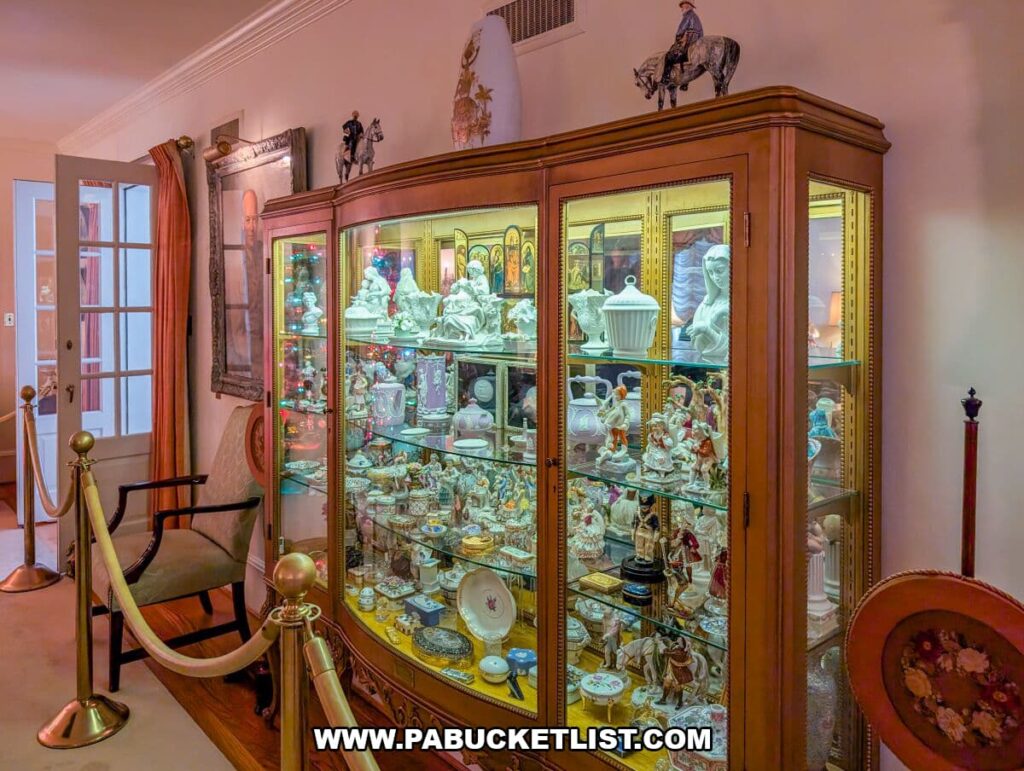
Ornate glass-front curio cabinet at the Eisenhower National Historic Site filled with delicate porcelain figurines, dishes, and collectibles, flanked by roped barriers, a vintage armchair, framed artwork, and a portrait hanging on the wall behind it.

Exploring the Farm

The exterior of the property is just as memorable, beginning with the stately white farmhouse perched above rolling fields.
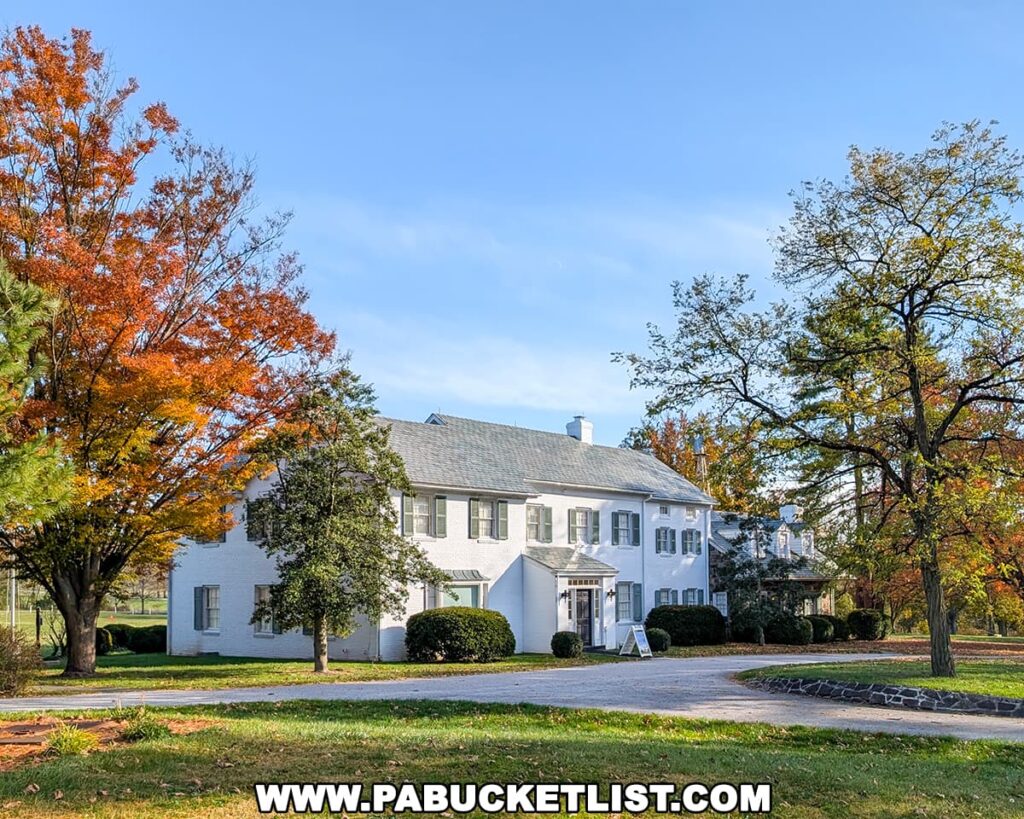
White two-story Eisenhower farmhouse framed by colorful fall foliage, sitting along a circular driveway at Eisenhower National Historic Site in Gettysburg.

One of the most dramatic features of the farm is the field that once served as Eisenhower’s personal helicopter landing pad.
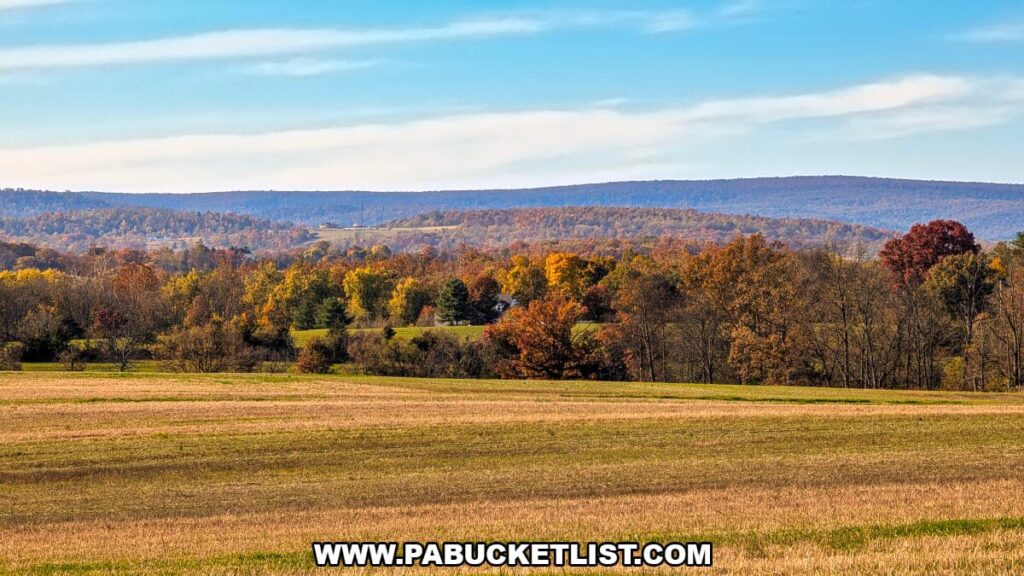
Rolling farmland at the Eisenhower farm in Gettysburg with autumn foliage and a distant view of South Mountain under a blue sky.

As the first President to travel by helicopter, Marine One would drop him onto the farm in about 35 minutes—far faster than the two-hour drive from Washington, D.C.
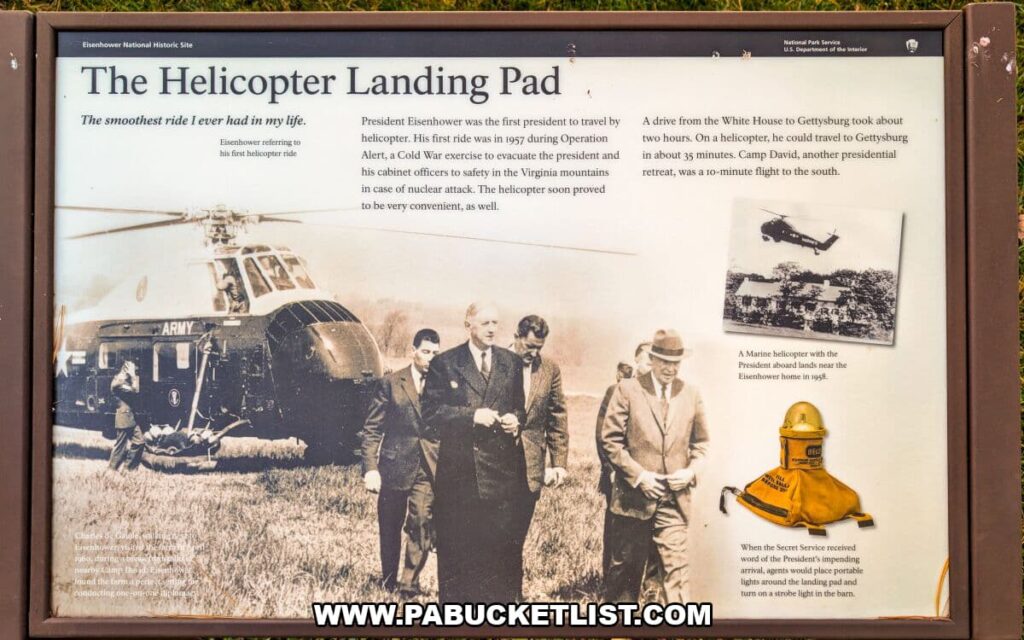
Interpretive sign at the Eisenhower National Historic Site titled “The Helicopter Landing Pad,” featuring historic photos of Eisenhower arriving by helicopter and text explaining that he was the first president to travel by helicopter and frequently flew to his Gettysburg farm.

The surrounding farmland remains a working cattle operation, home to the black Angus herd that Eisenhower personally took great pride in developing.
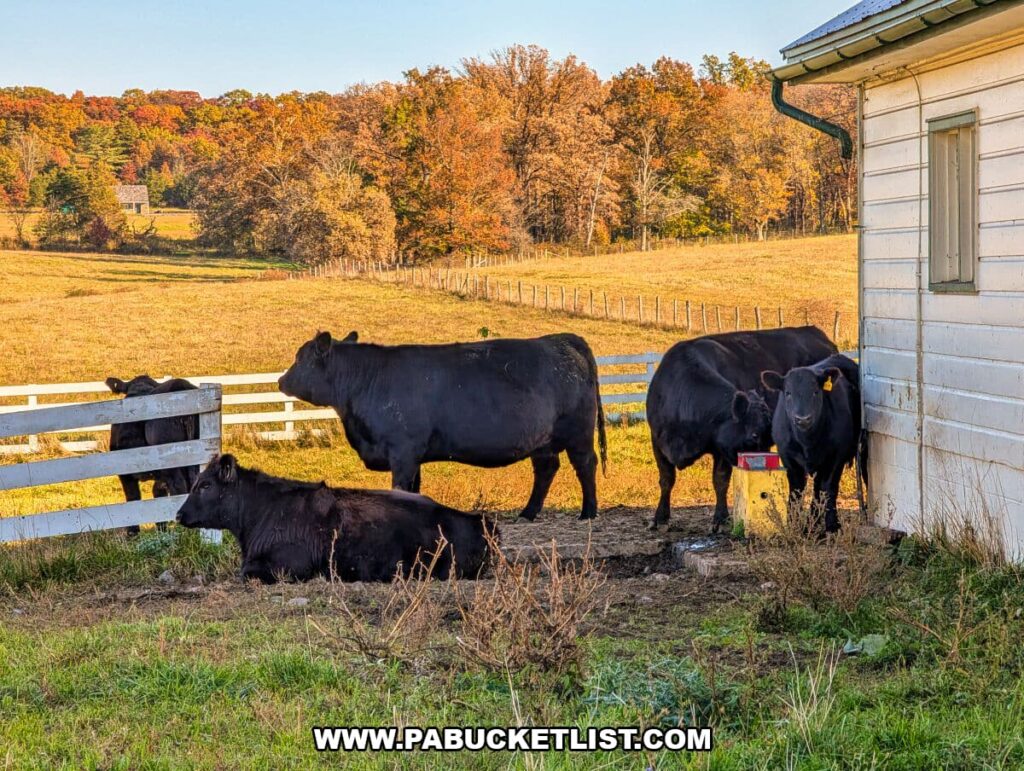
Black Angus cattle resting and grazing beside a white farm building at the Eisenhower National Historic Site, with rolling pastures and autumn-colored trees in the background.

Visitors can walk the grounds and imagine the Eisenhowers strolling together past the barnyard or sitting outdoors enjoying the quiet Pennsylvania air.
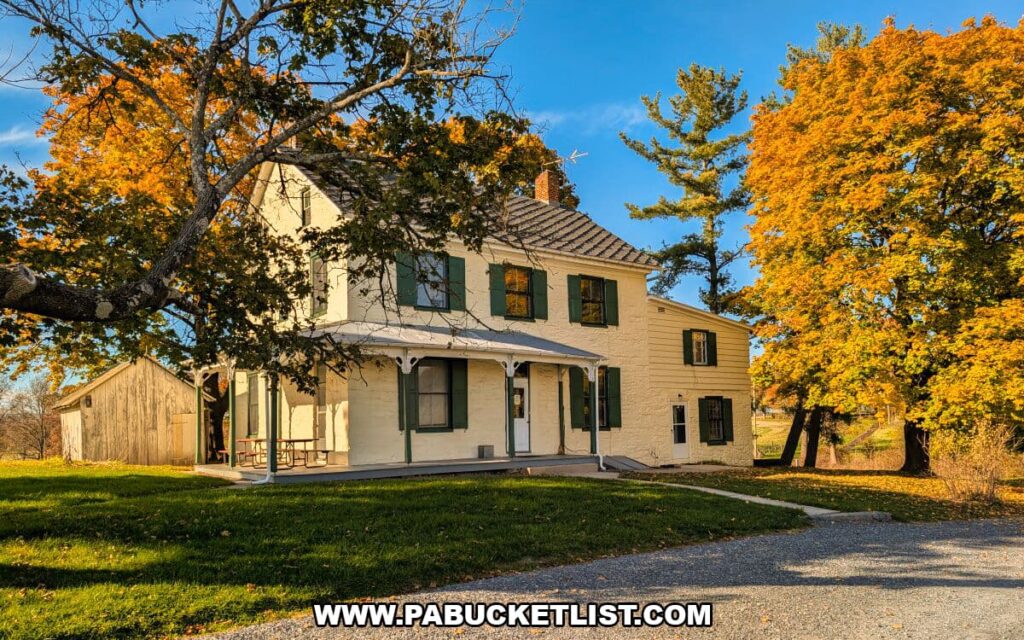
Herdsman’s house at the Eisenhower National Historic Site, a cream-colored two-story home with green shutters and a porch, surrounded by golden autumn trees and a nearby wooden shed under a blue sky.

Whether exploring the fields or standing beside the historic dinner bell engraved with the presidential seal, the connection to America’s past feels close and personal.
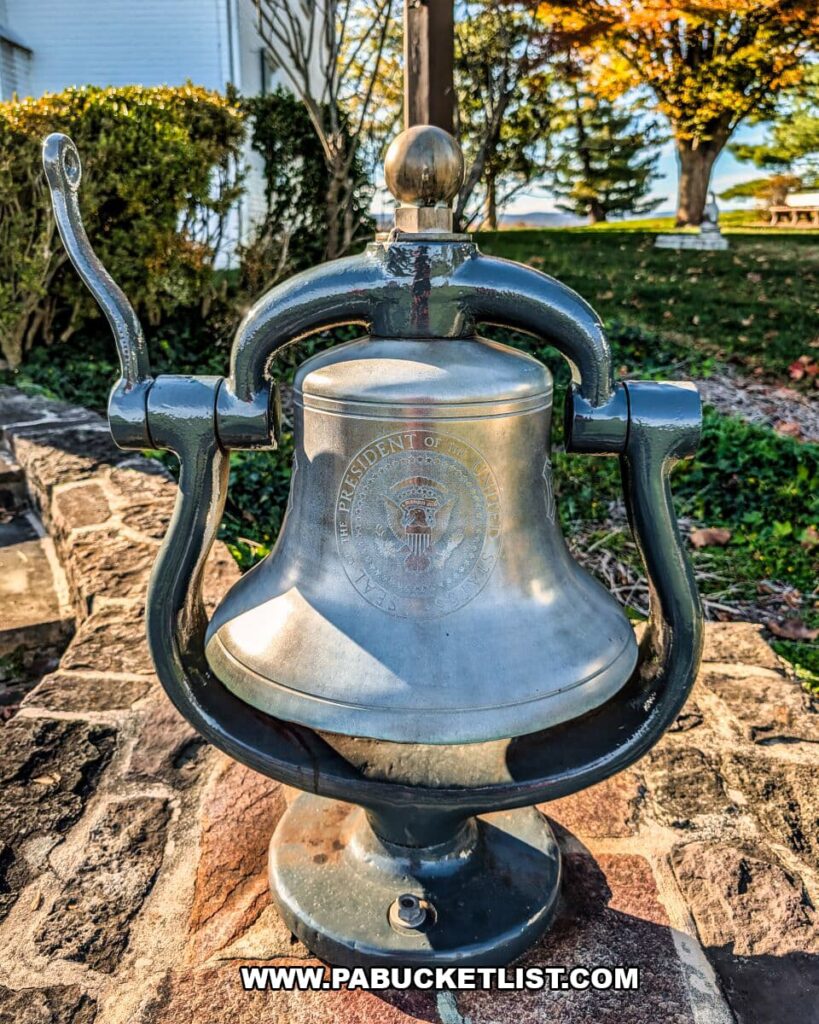
Outdoor dinner bell bearing the Presidential Seal at the Eisenhower National Historic Site, mounted on a stone wall near the farmhouse with autumn trees and lawn in the background.

The farm’s peaceful landscape makes it easy to understand why the Eisenhowers treasured this retreat.
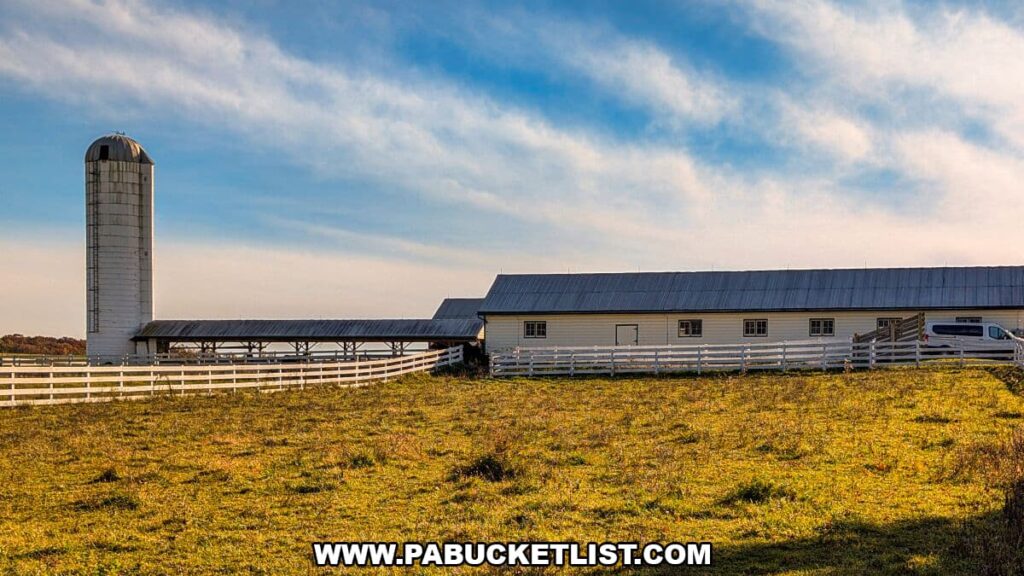
Long white livestock barn and silo on the Eisenhower farm at Gettysburg, surrounded by fenced pastures under a wide blue sky.

Final Thoughts

Visiting the Eisenhower National Historic Site today is both educational and unexpectedly intimate.
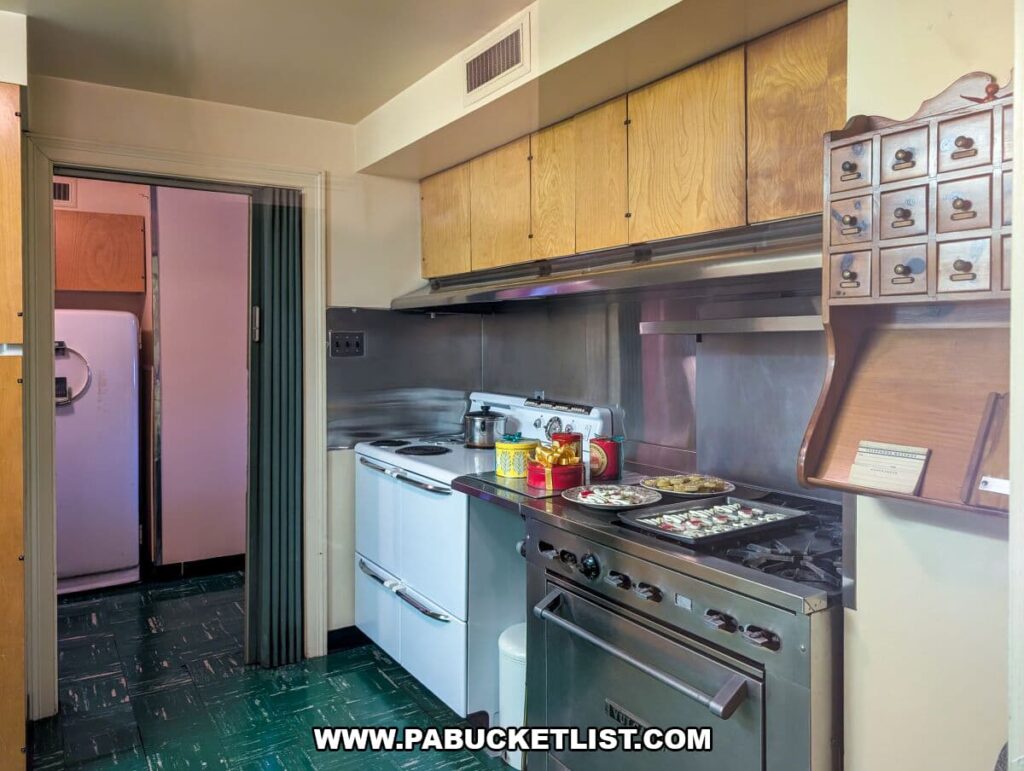
Vintage kitchen at the Eisenhower National Historic Site featuring mid-20th-century appliances, wood cabinets, a stovetop with trays of holiday cookies, and a pastel refrigerator visible through a doorway.

Whether you’re a history buff, a presidential enthusiast, or simply someone who craves quiet beauty, this Gettysburg landmark offers a profound look at leadership, legacy, and the comfort of home.
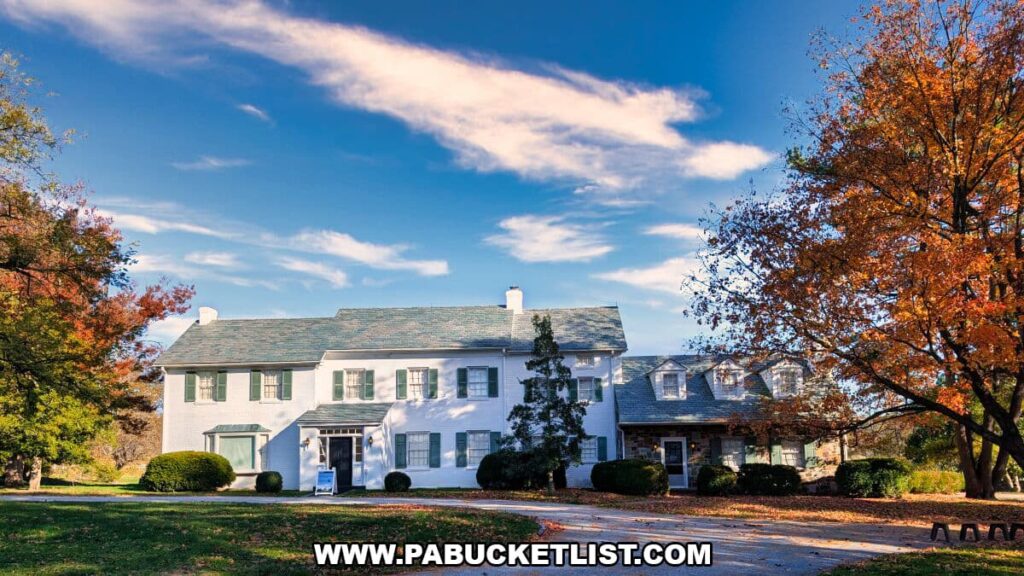
Front view of the white farmhouse at Eisenhower National Historic Site in Gettysburg, framed by fall foliage and a bright blue sky.

Nearby Attractions

26 Must-See Attractions in Adams County is your guide to even more great things to see and do near Eisenhower National Historic Site.
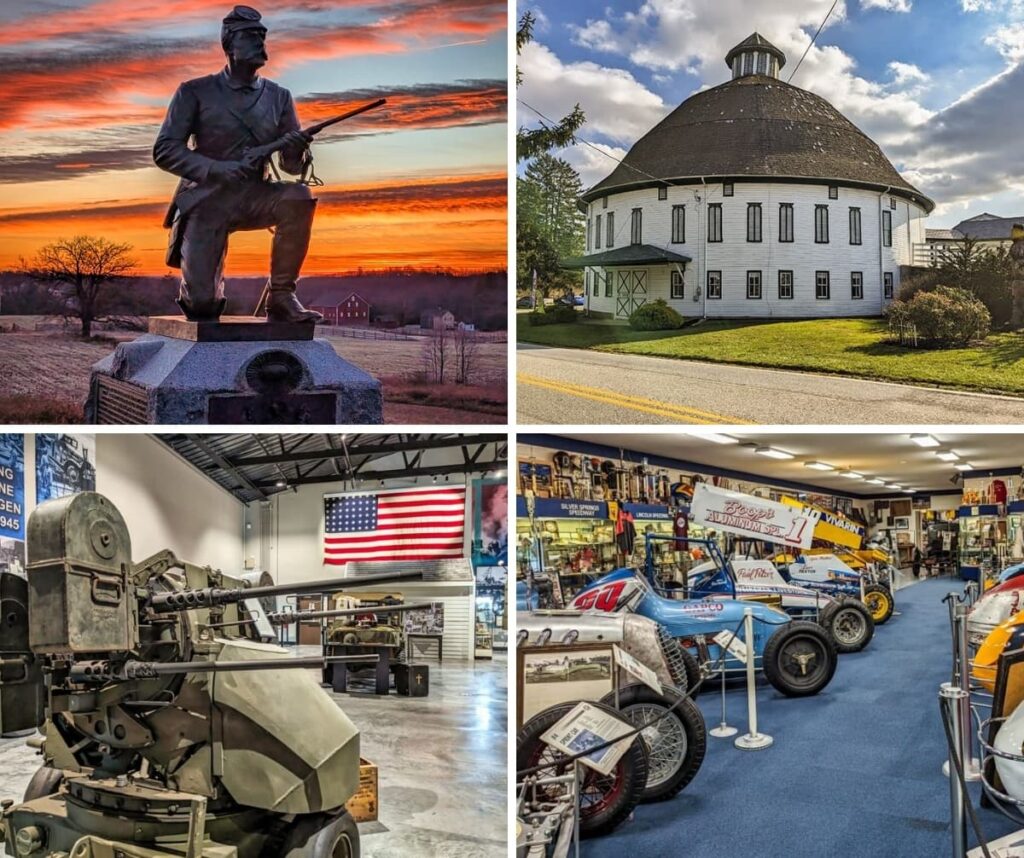
A collage of scenes from Adams County, PA including the Gettysburg National Military Park, the Round Barn, the World War II American Experience Museum, and the Eastern Museum of Motor Racing.

Discover more than a thousand incredible places to explore across Pennsylvania with the interactive PA Bucket List Travel Map!


Did you enjoy this article?

If so, be sure to like and follow PA Bucket List on Facebook, Instagram, and/or Pinterest to learn more about the best things to see and do in Pennsylvania!

Click on any of the icons below to get connected to PA Bucket List on social media.


The special-edition logo for PA Bucket List, celebrating America's 250th birthday in 2026.

Pennsylvania’s Best Travel Blog!

Rusty Glessner
Rusty Glessner is a professional photographer, lifelong Pennsylvanian, and a frequently-cited authority on PA's best travel destinations.