

Home PA Historic Places Exploring Independence Hall in Philadelphia

Exploring Independence Hall in Philadelphia

Exploring Independence Hall in Philadelphia.

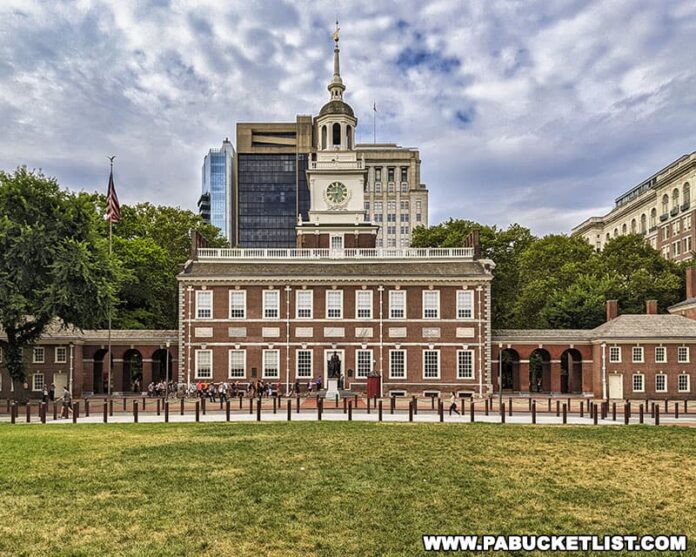
Independence Hall in Philadelphia is widely regarded as the birthplace of the United States, and this guide offers my insider’s perspective on what it’s really like to visit—based on my many firsthand experiences exploring this iconic landmark.
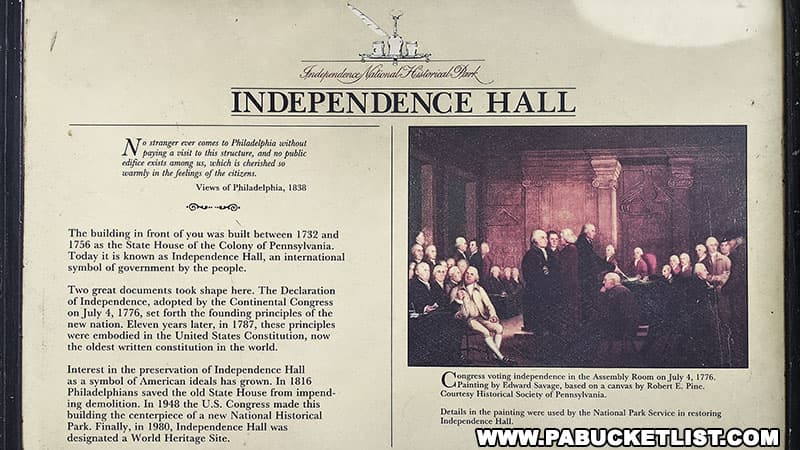
Informational display outside Independence Hall.

History of Independence Hall

In 1776, the Second Continental Congress signed the Declaration of Independence here.
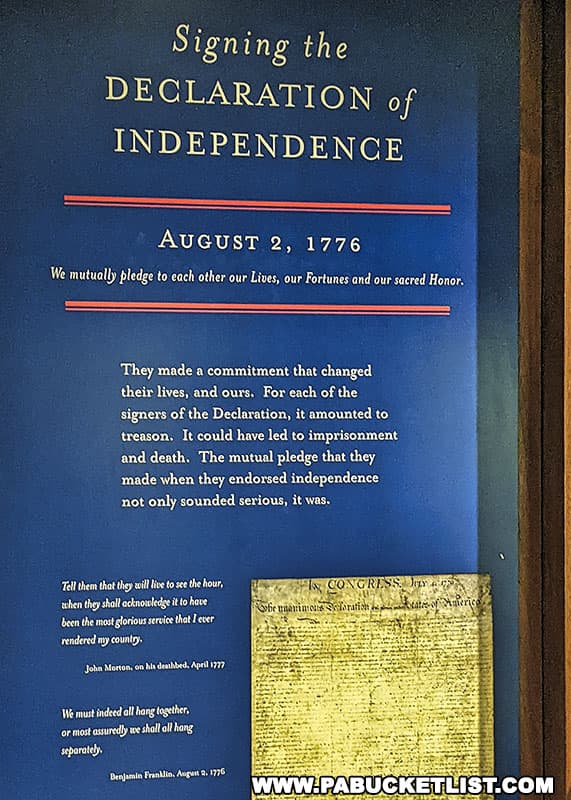
The Declaration of Independence was signed on August 2, 1776.

Eleven years later, in the same room, delegates to the Constitutional Convention created and signed the United States Constitution.
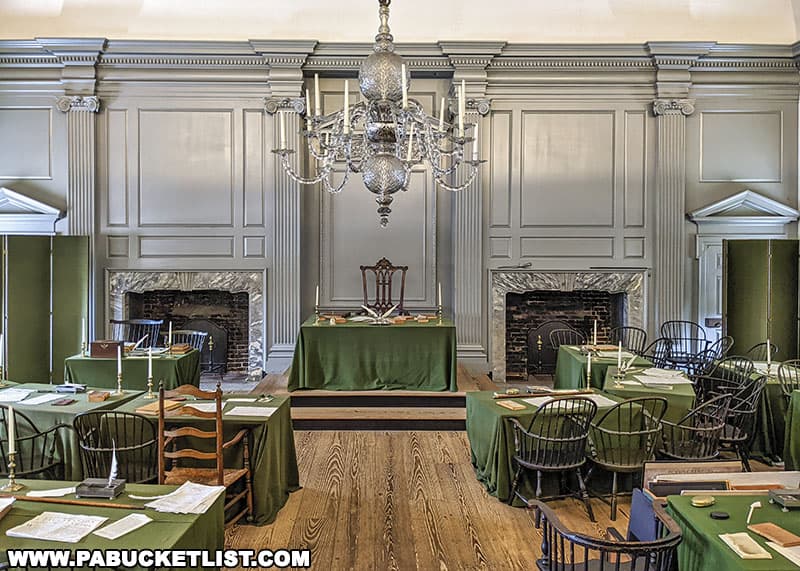
The Declaration of Independence and U.S. Constitution were both debated and signed inside this room at Independence Hall.
The Declaration of Independence and U.S. Constitution were both debated and signed in this room.

Although known today as Independence Hall, the building was constructed to be the Pennsylvania State House.
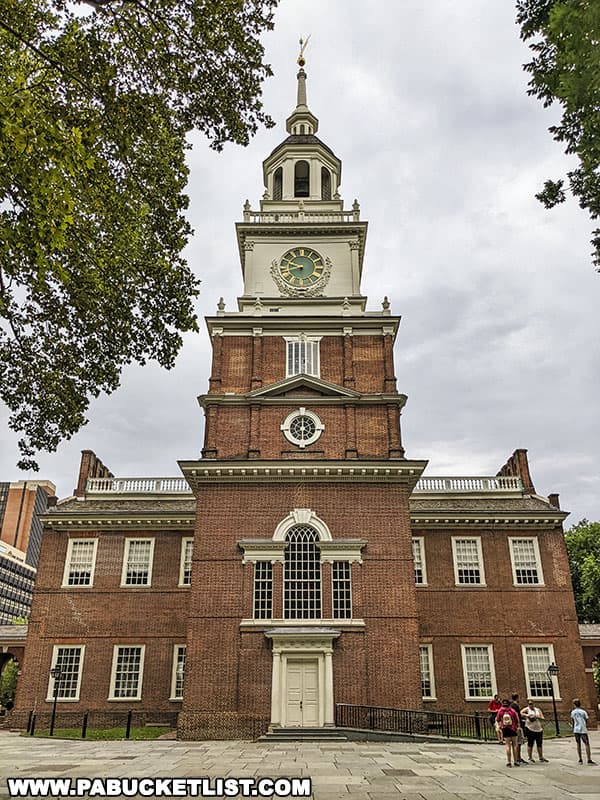
Independence Hall was completed in 1753 as the Pennsylvania State House
Independence Hall was completed in 1753 as the Pennsylvania State House.

It once housed all three branches of Pennsylvania’s colonial government.
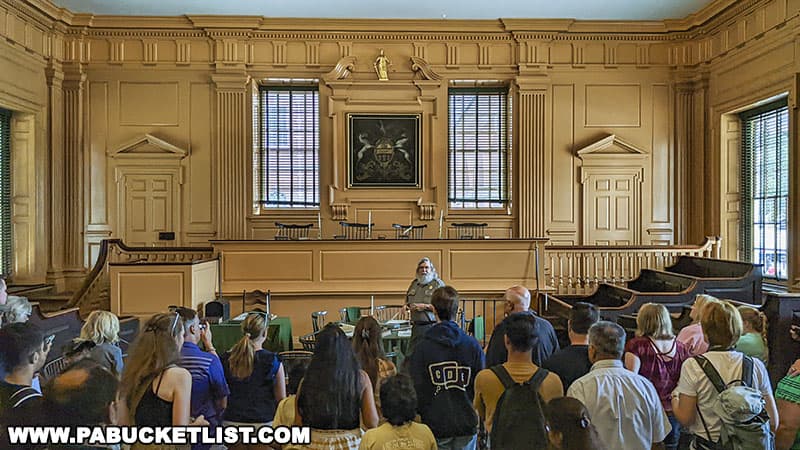
This room at what is now called Independence Hall housed the Supreme Court of colonial Pennsylvania.
This room once housed the Supreme Court of colonial Pennsylvania.

Today Independence Hall is the centerpiece of the Independence National Historical Park, and has been designated a UNESCO World Heritage Site.
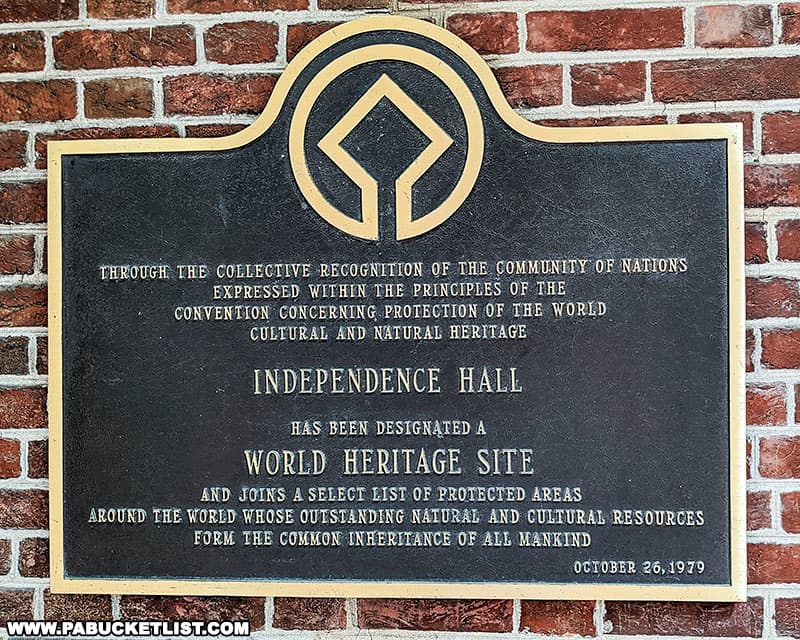
Independence Hall was designated a World Heritage Site in 1979.

Touring Independence Hall

Independence Hall is open for tours daily from 9 am to 5 pm.
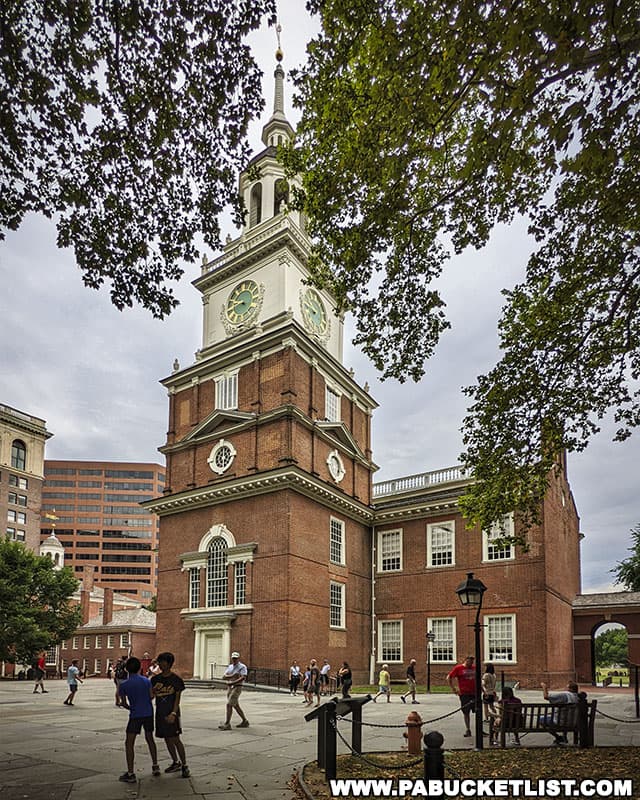
The highest point to the tip of the steeple spire on Independence Hall is 168 feet above the ground.

In January and February, entrance to Independence Hall is first-come, first-served, by guided tour only (except holiday weekends).
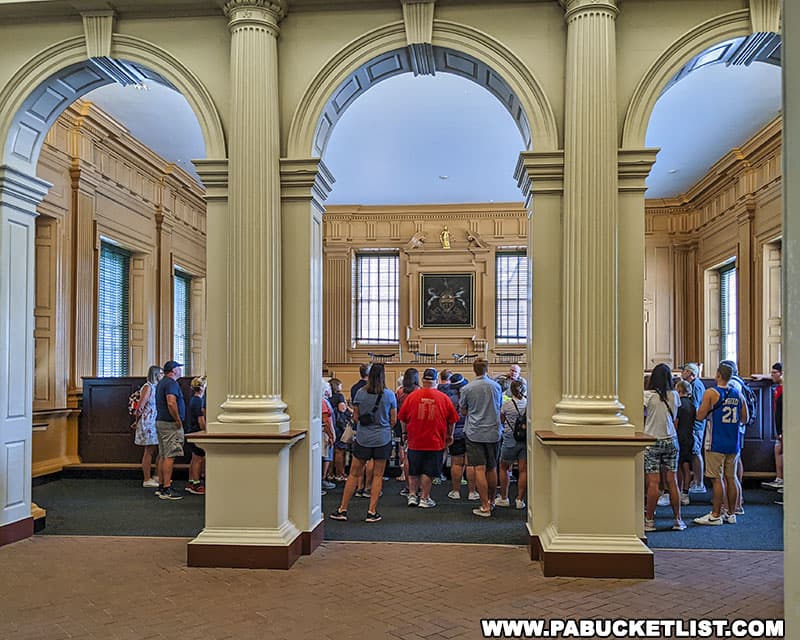
View from the Assembly Room into the Supreme Court Room at Independence Hall in Philadelphia.
View from the Assembly Room into the Supreme Court Room.

From March through December (and on holiday weekends in Jan-Feb), timed entry tickets are required, available at either the website or phone number listed in the image below.
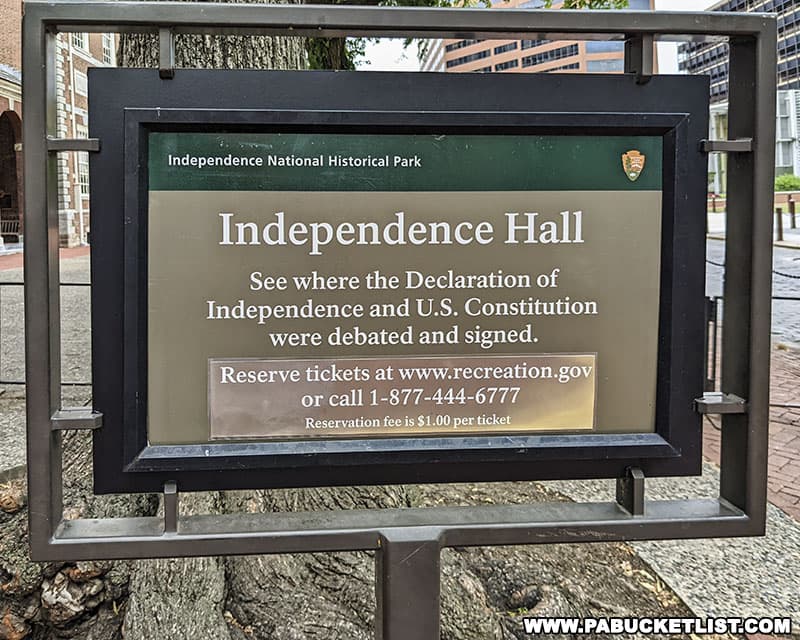
Visitors to Independence Hall must pay one dollar to reserve a ticket online or by phone before visiting.
Visitors to Independence Hall must pay one dollar to reserve a ticket online or by phone before being admitted.

What You’ll See on the Tour

Tours are led by a National Park Service Ranger, and begin by entering through the front door of Independence Hall, near a statue of George Washington.
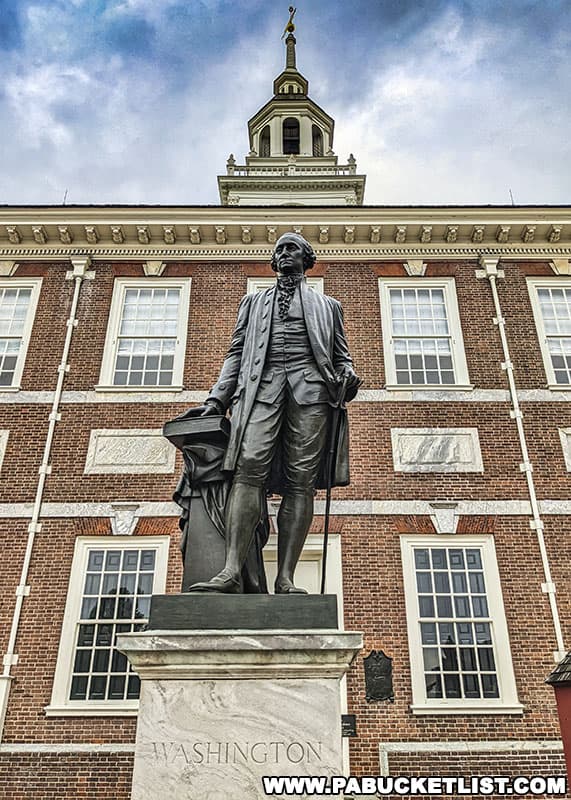
Statue of George Washington in front of Independence Hall.

The first stop on the tour is the Supreme Court Room, which once housed the Pennsylvania Supreme Court.
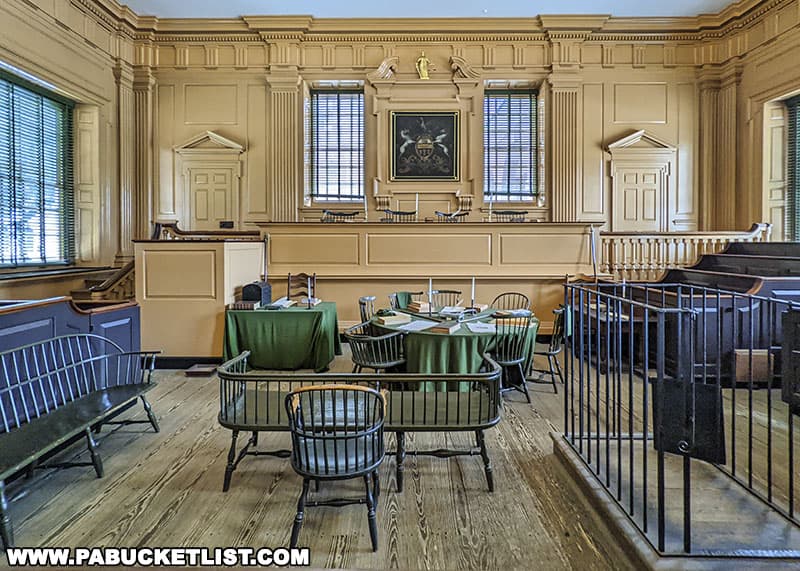
The Supreme Court Room at Independence Hall in Philadelphia.
The Supreme Court Room at Independence Hall.

Above the bench where the four judges sat hangs a beautiful painting of the Pennsylvania State Seal.
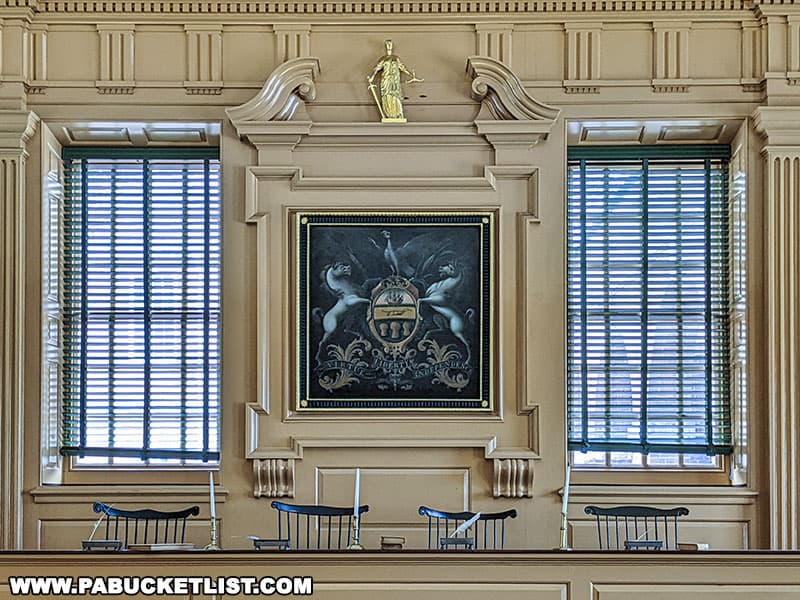
A painting of the Pennsylvania State Seal hanging over the judge's chairs in the Supreme Court Room at Independence Hall.
A painting of the Pennsylvania State Seal hanging over the judge’s bench in the Supreme Court Room.

The second stop on the tour is the Assembly Room.
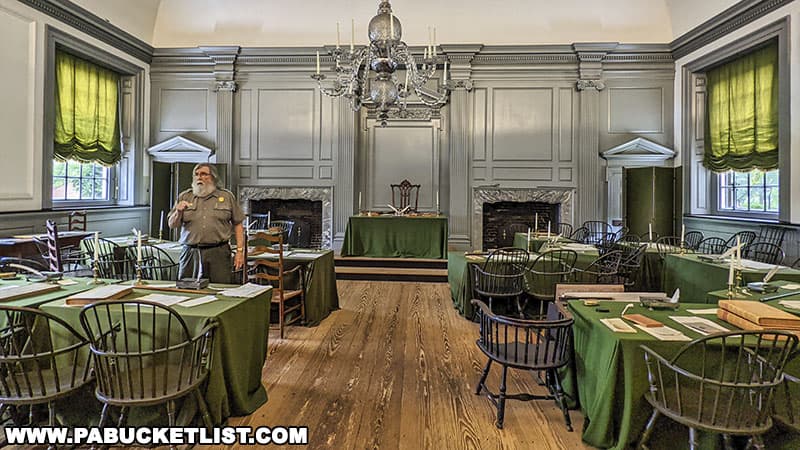
A Park Ranger explains the historic significance of the Assembly Room at Independence Hall.
A park ranger explains the historic significance of the Assembly Room at Independence Hall.

The Declaration of Independence and U.S. Constitution were both signed in this room.
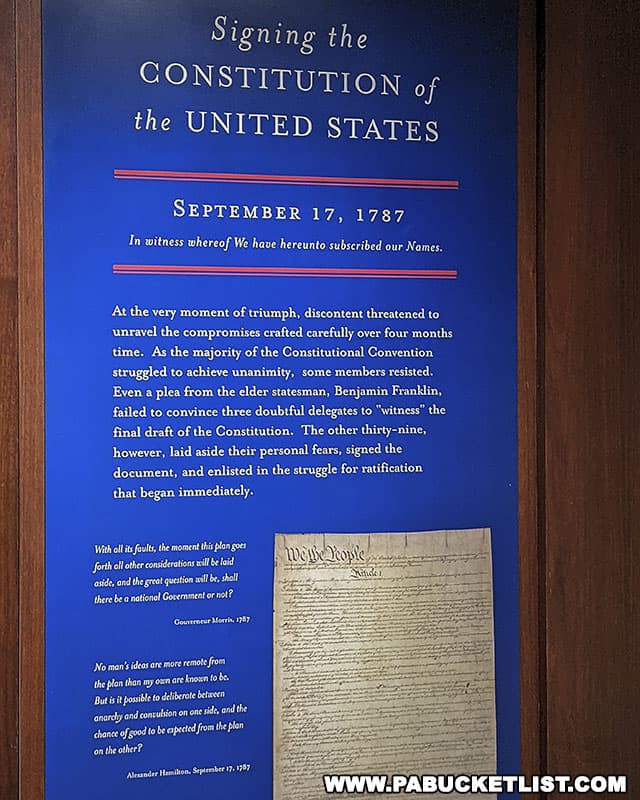
The Constitution of the United States was signed at Independence Hall on September 17, 1787.

In the 1850s, the Assembly Room became a shrine to the founding of the nation, proudly displaying the Liberty Bell and original paintings of the Founding Fathers.
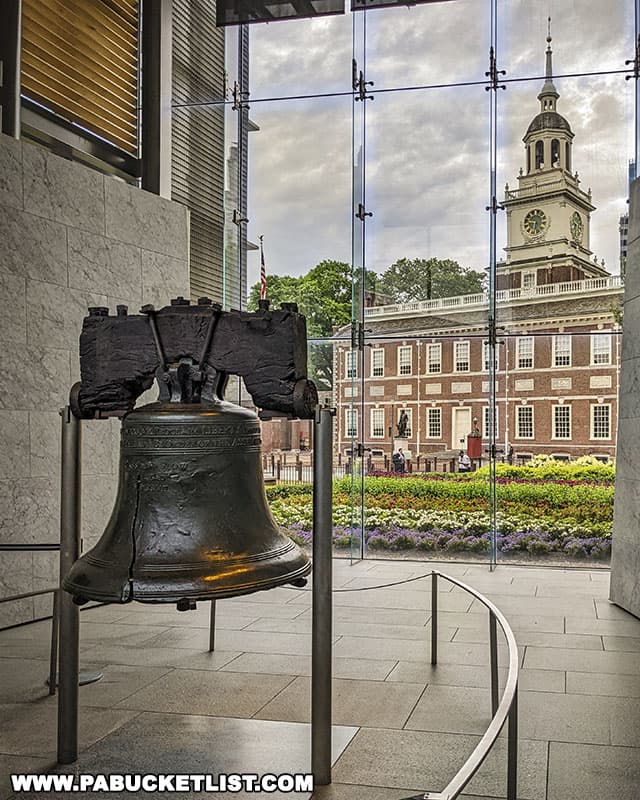
View of Independence Hall from the Liberty Bell.
The Liberty Bell, now housed in its own building, was once displayed in the Assembly Room inside Independence Hall.

President-elect Abraham Lincoln visited this shrine-like room in 1861, as he journeyed to Washington D.C. for his inauguration.
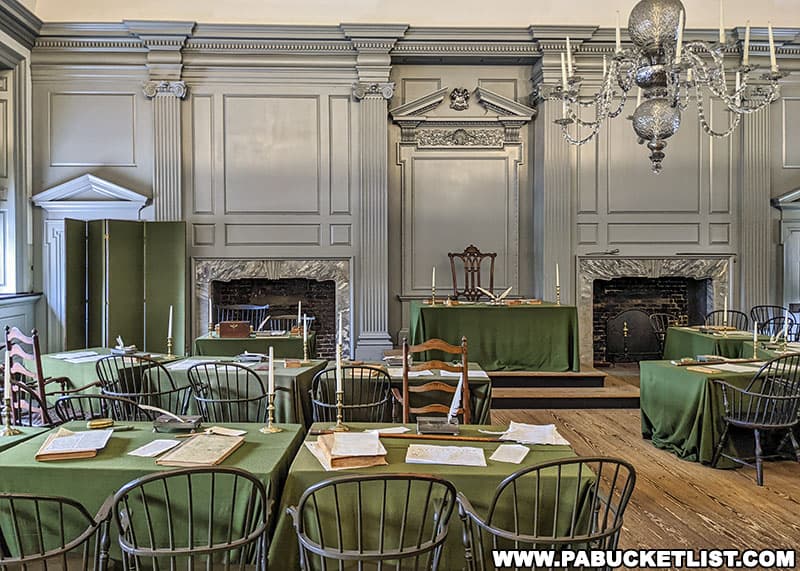
The Declaration of Independence was signed in this room on August 2, 1776.

After his assassination in 1865, President Lincoln’s body returned to the Assembly Room to lie in state for two days, where more than 85,000 mourners passed by the casket.
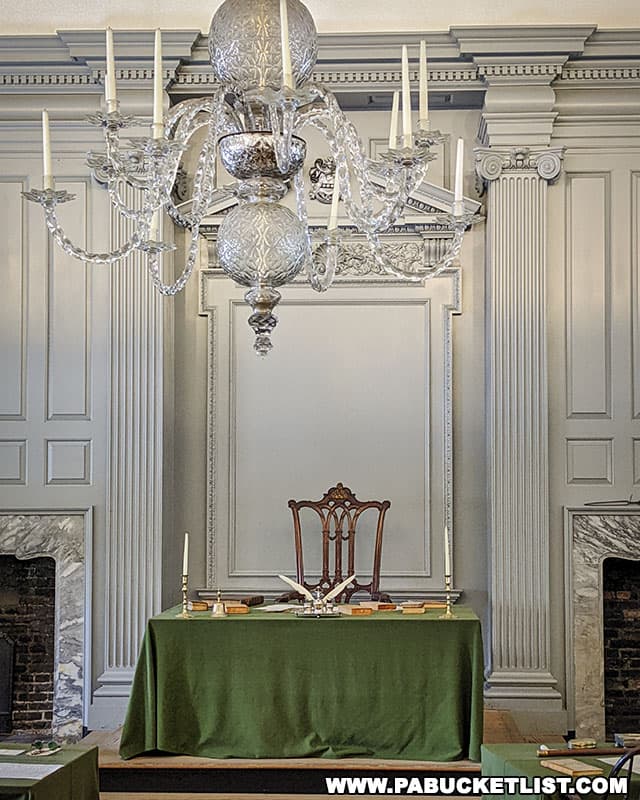
The chair where George Washington was seated as the presiding officer of the Constitutional Convention.

While you cannot get close to the actual “Rising Sun Chair” where George Washington sat while presiding over the Constitutional Convention in 1787, you can sit in an exact replica of it at the nearby Independence Visitor Center.
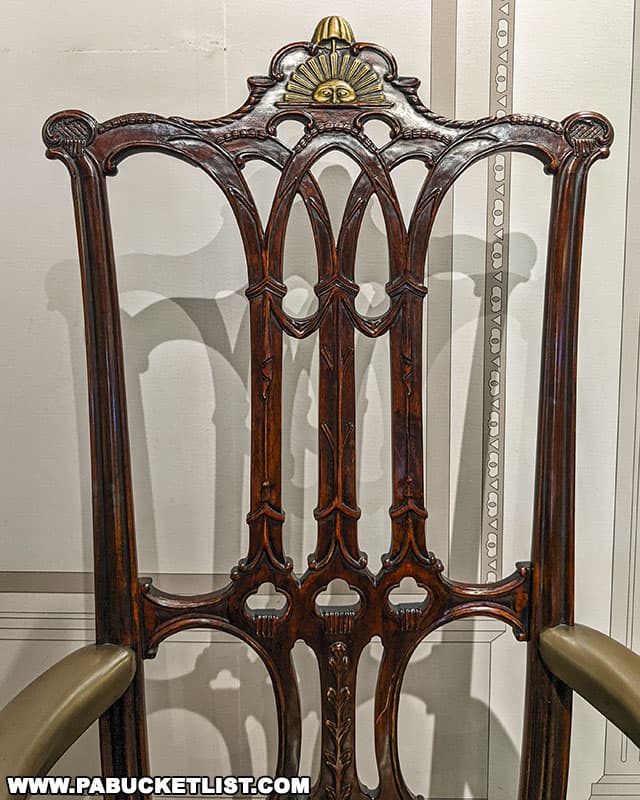
A replica of the Rising Sun Chair where George Washington sat at Independence Hall.
A replica of the “Rising Sun Chair”, where George Washington sat at Independence Hall.

The tour moves back out into the hallway between the two chambers, where you’ll see a grand staircase leading to a second floor.
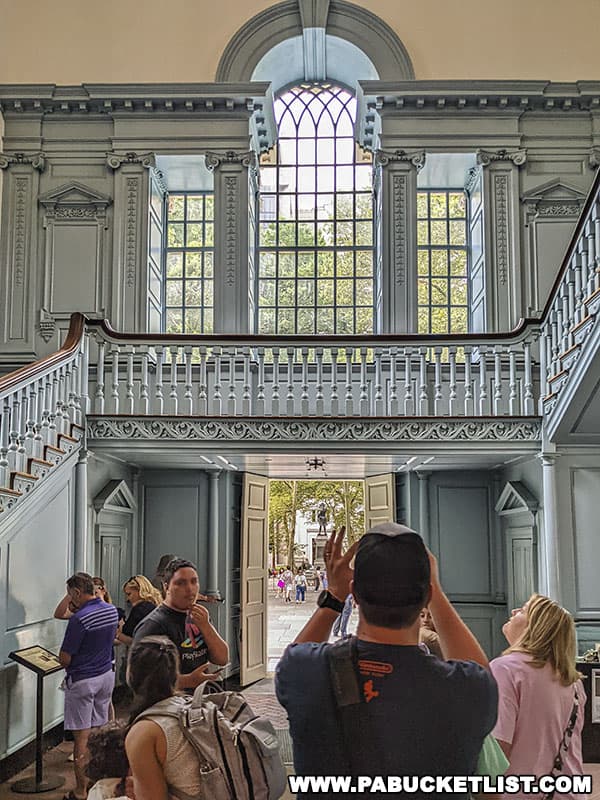
Staircase leading to the second floor of Independence Hall in Philadelphia.
Staircase leading to the second floor of Independence Hall.

While the second floor is not part of the tour (at least not as of July 2022), it once housed the Governor’s office, and was used in the time the British occupied Philadelphia during the Revolutionary War as a prison hospital for American POWs.
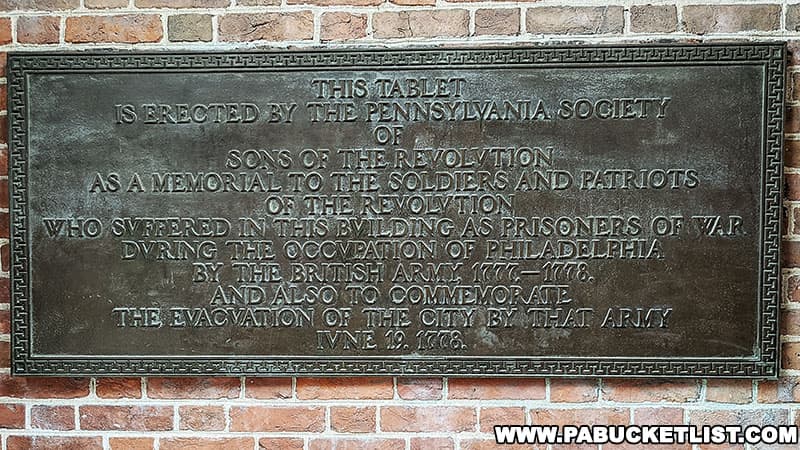
A plaque memorializing the American POWs housed on the upper floor of Independence Hall in 1777-1778.
A plaque memorializing the American POWs held on the upper floor of Independence Hall in 1777-1778.

You’ll also notice many ornate wood carvings in this hallway between the two lower chambers of the building.
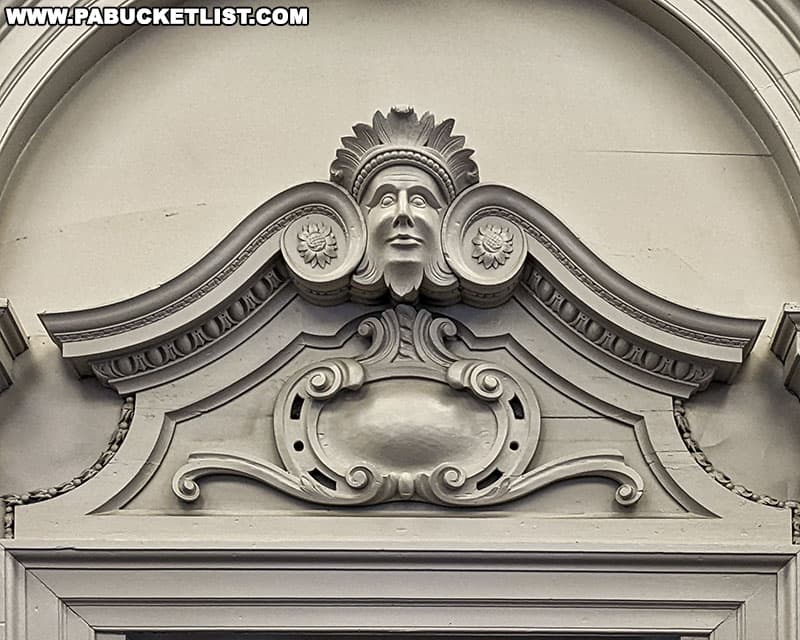
Carver Samuel Harding created much of the ornamental woodwork at Independence Hall.

The tour then exits the rear of Independence Hall onto Independence Square.
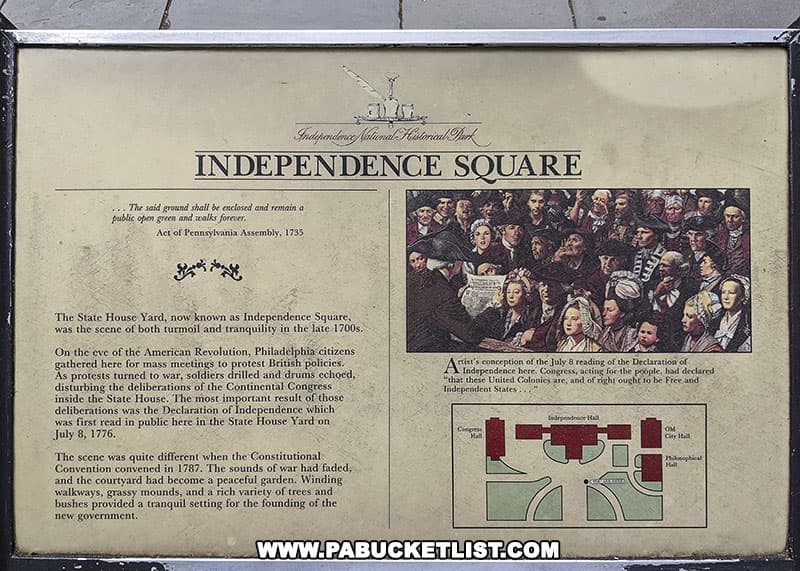
An informational display in Independence Square behind Independence Hall.
An informational display in Independence Square.

From here you can take a self-guided tour (no ticket required) of the West Wing of Independence Hall, which houses an exhibit called the Great Essentials.
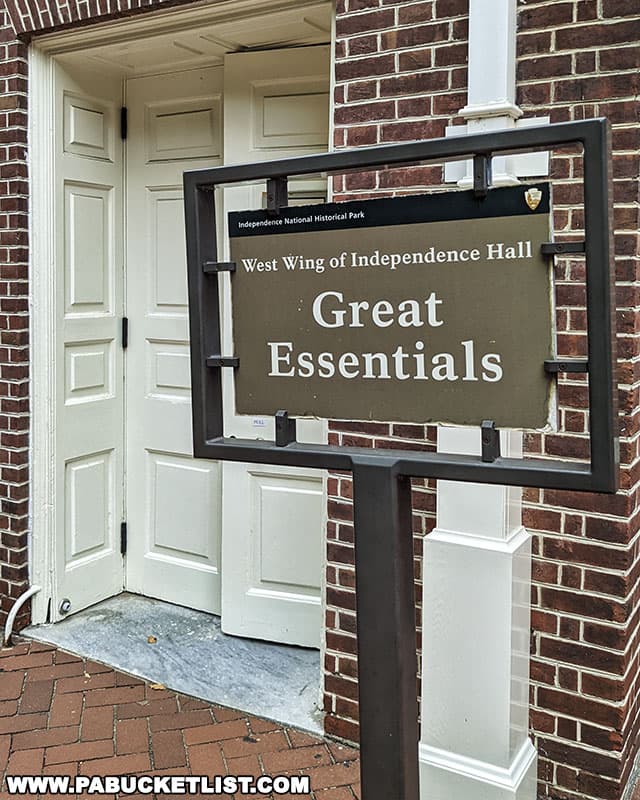
The Great Essentials exhibit at the West Wing of Independence Hall.

In this smaller chamber you’ll find original copies of the Declaration of Independence and the United States Constitution, as well as the inkwell used to sign both documents.
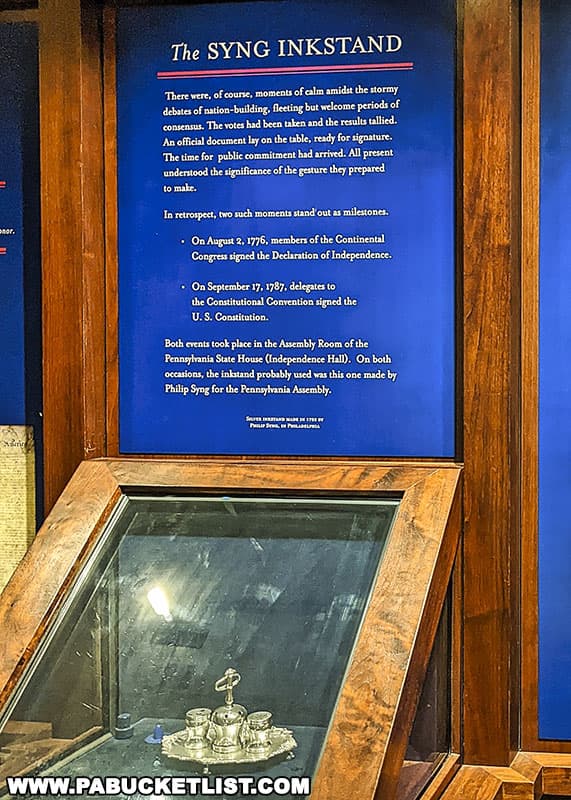
The Syng Inkstand used to sign both the Declaration of Independence and the Constitution.

Final Thoughts

There is no more important or historic site in the United States that Independence Hall in Philadelphia.
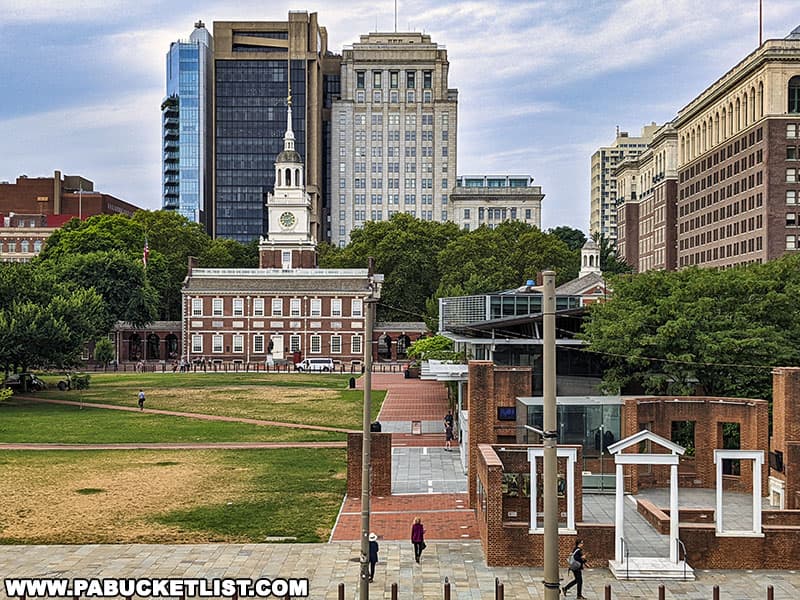
A view of Independence Hall from the second-floor patio at the Independence Visitor Center.

The debates, decisions, and documents associated with this building literally gave birth to the Nation, and have shaped every American’s lives to this very day.
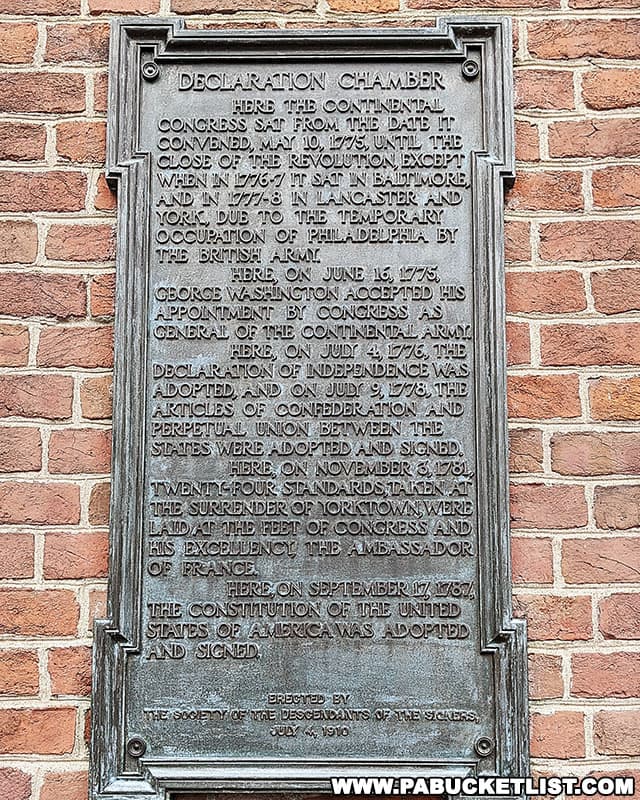
A plaque on an outside wall of Independence Hall.
A plaque commemorating the many historic events that unfolded at Independence Hall.

Visiting the exact spot where the United States got its start is a pilgrimage that, in my humble opinion, every American should make at least once in their lives.
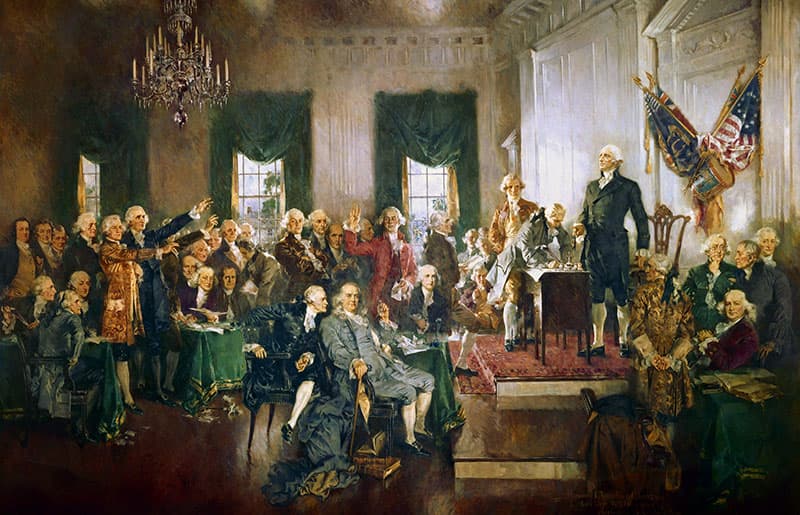
Howard Chandler Christy's Scene at the Signing of the Constitution of the United States
Howard Chandler Christy’s “Scene at the Signing of the Constitution of the United States” (public domain image).

The Best America 250 Sites in PA is my carefully curated guide to the top America250 destinations in Pennsylvania—historic places directly tied to the Declaration of Independence and the Revolutionary War that transformed bold words into a new nation.
The Best America 250 sites in PA logo created by Rusty Glessner Photography, LLC for Pa Bucket List.

So if you’ve ever dreamed of taking a patriotic road trip across Pennsylvania, this interactive map and guide will help you plan the ultimate America250 adventure through the Birthplace of Independence.


Exploring the Best National Park Sites in Pennsylvania is your guide to even more Keystone State attractions managed by or affiliated with the National Park Service.
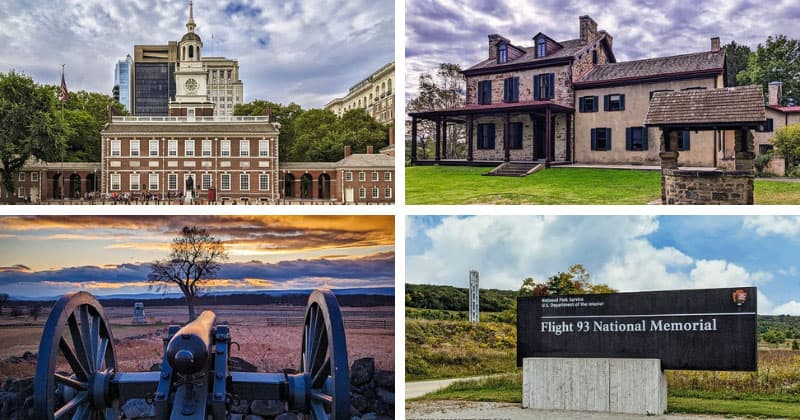
Exploring the Best National Park Sites in Pennsylvania.

Nearby Attractions

18 Must-See Attractions in Philadelphia showcases more remarkable sights and experiences near Independence Hall.
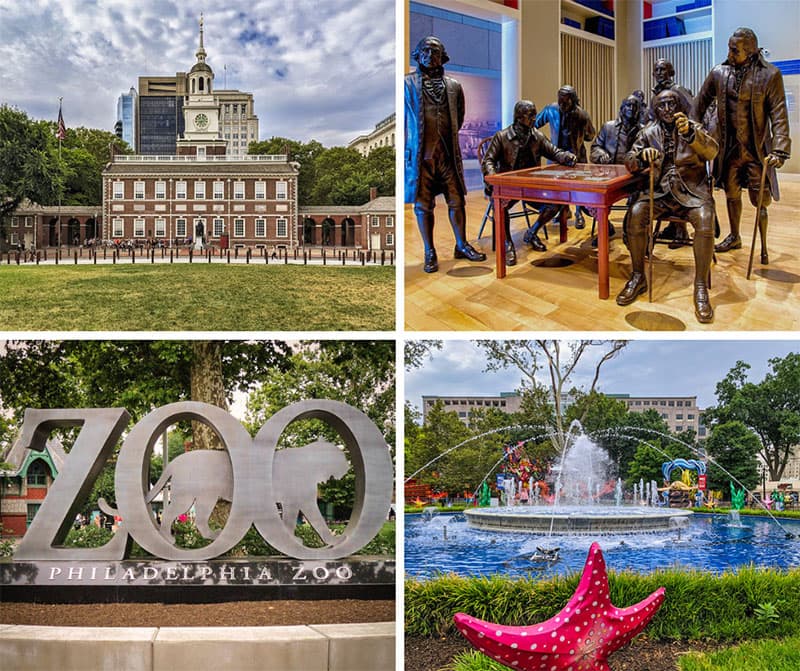
The best things to see and do in Philadelphia Pennsylvania.

A Smarter Way to Explore Pennsylvania

Explore Pennsylvania like a pro with the interactive PA Bucket List Travel Map, showcasing over 1,000 memorable destinations I’ve personally visited across the Keystone State.


Did you enjoy this article?

If so, be sure to like and follow PA Bucket List on Facebook, Instagram, and/or Pinterest to learn more about the best things to see and do in Pennsylvania!

Click on any of the icons below to get connected to PA Bucket List on social media.


The special-edition logo for PA Bucket List, celebrating America's 250th birthday in 2026.

Pennsylvania’s Best Travel Blog!

Rusty Glessner
Rusty Glessner is a professional photographer, lifelong Pennsylvanian, and a frequently-cited authority on PA's best travel destinations.