

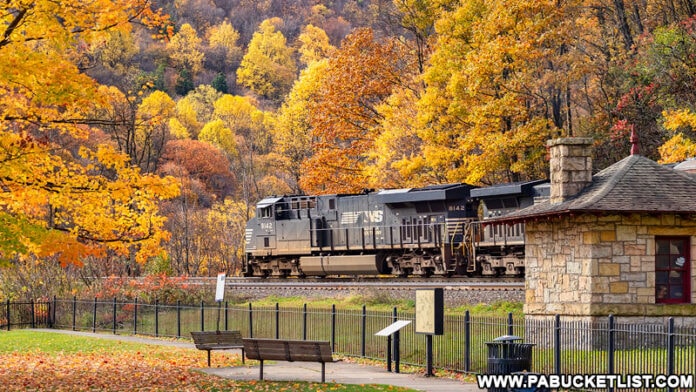
The Horseshoe Curve near Altoona is a must-see destination for train-lovers of all ages!
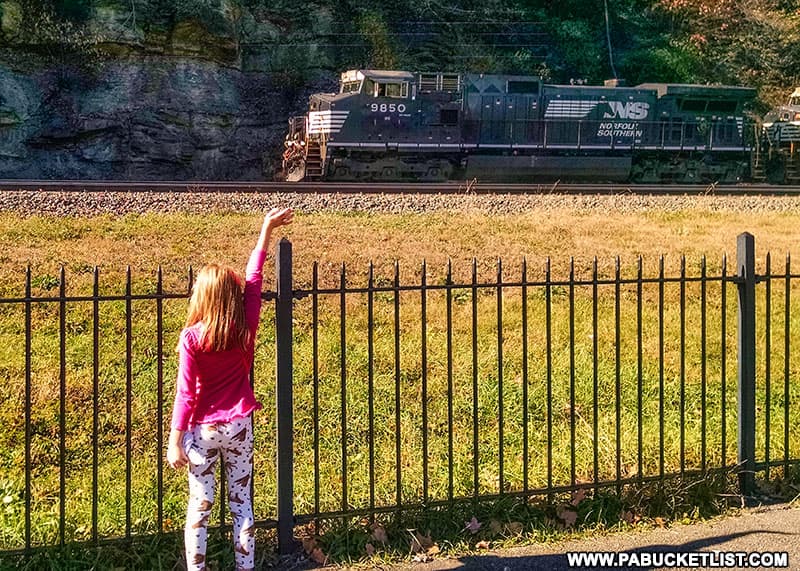
Considered one of the “engineering wonders of the world” at the time of its completion in 1854, it continues to offer railfans an up-close opportunity to experience the thrill of trains passing by along this 2,375 foot-long curved stretch of tracks.
Horseshoe Curve FAQs
5 miles west of Altoona, along the Veterans Memorial Highway.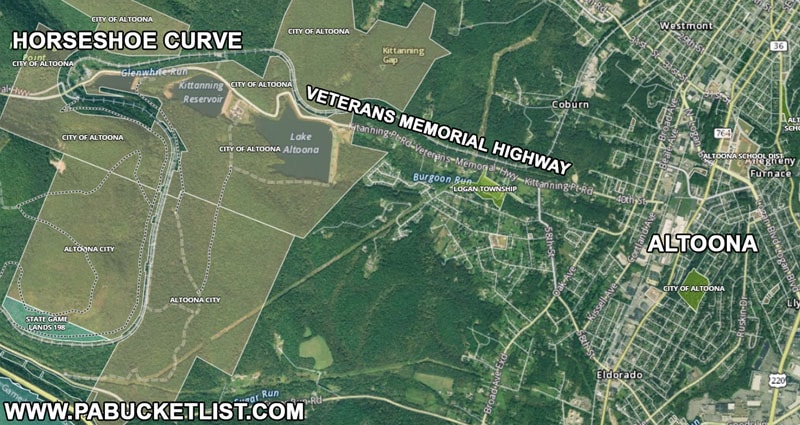
Yes – use GPS coordinates 40.49775, -78.48379 to navigate to the Horseshoe Curve.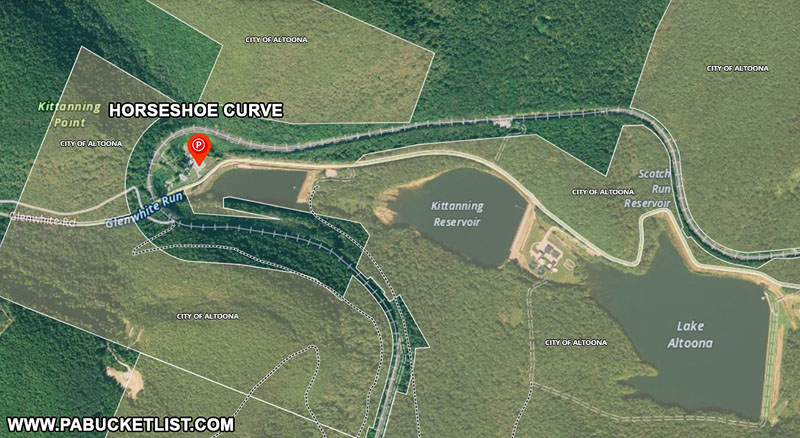
To lessen the steepness of the tracks for trains crossing the Allegheny Mountains between Altoona and Johnstown. Rather than try and go straight up or straight down the mountains, the Horseshoe Curve allows for a more gradual ascent/descent.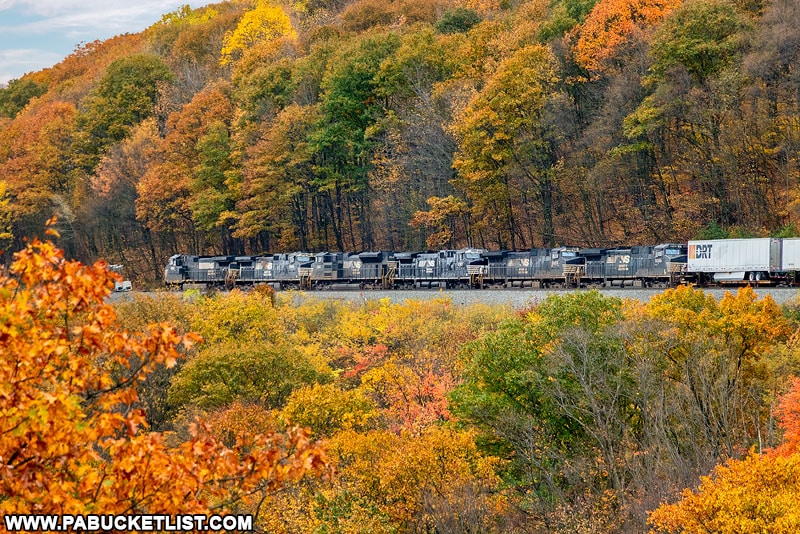
John Edgar Thomson, chief engineer and later president of the Pennsylvania Railroad, is credited with designing the Horseshoe Curve. 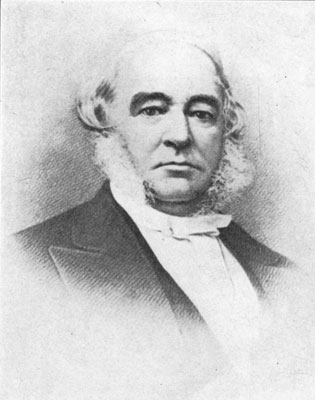
The Horseshoe Curve was built primarily by Irish immigrants using only picks and shovels to carve a ledge into the mountainsides, upon which train tracks could be laid. Mules and carts hauled away the rocks and dirt excavated from the mountainside, and the debris was then used to fill in the ravines on either side of the Horseshoe Curve’s center.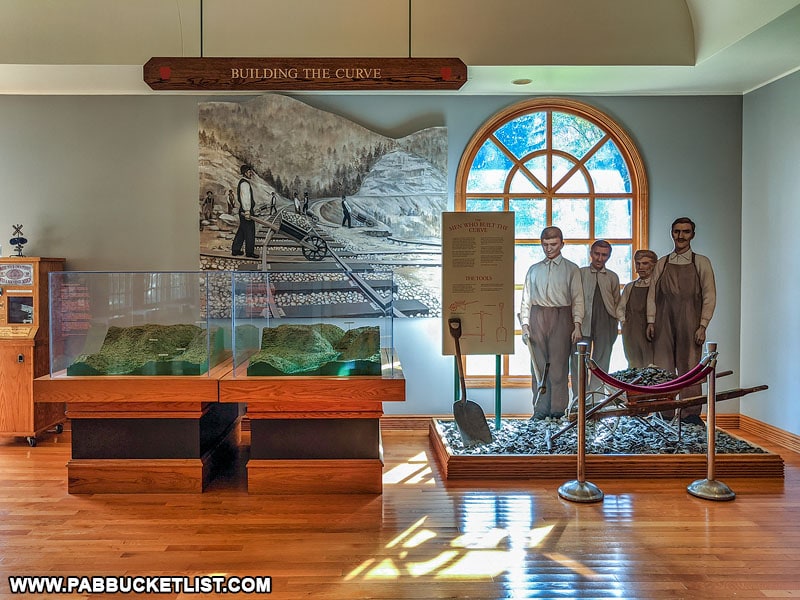
February 15, 1854.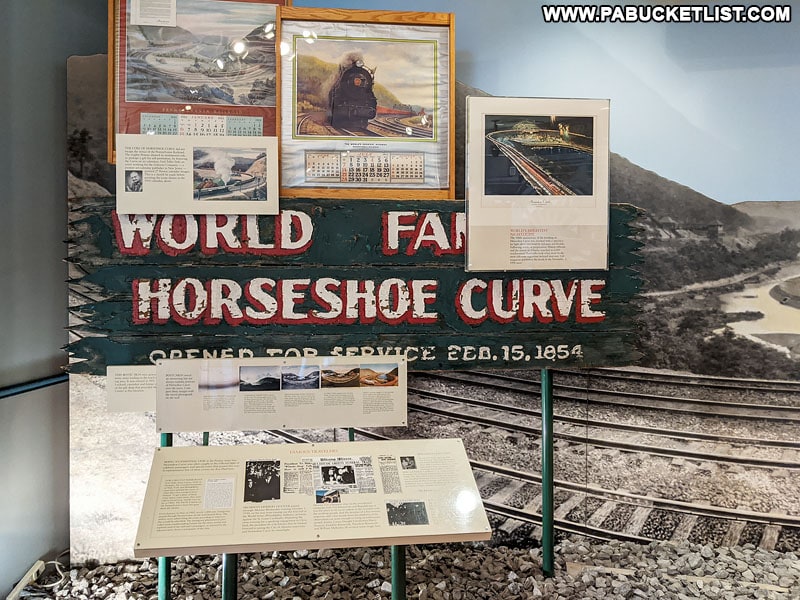
The Horseshoe Curve has both a museum/visitor center, as well as the viewing area to watch trains round the Curve itself.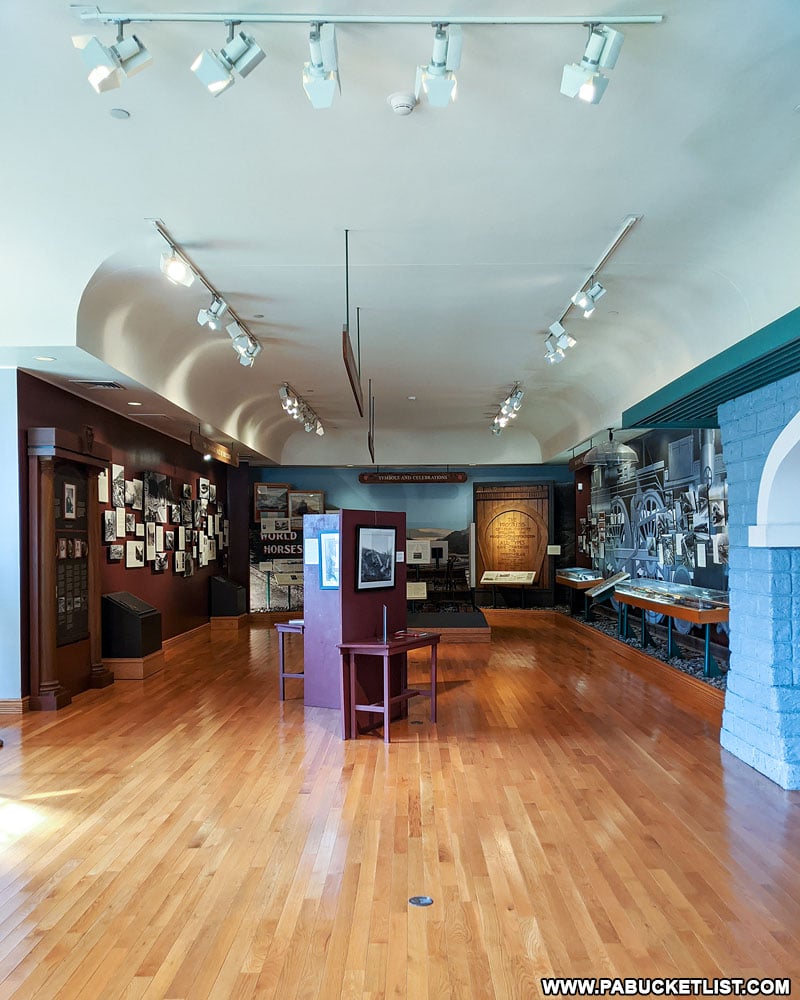
The Horseshoe Curve is open to visitors from April 1 – December 20, Wed – Sun from 9 am – 3:15 pm.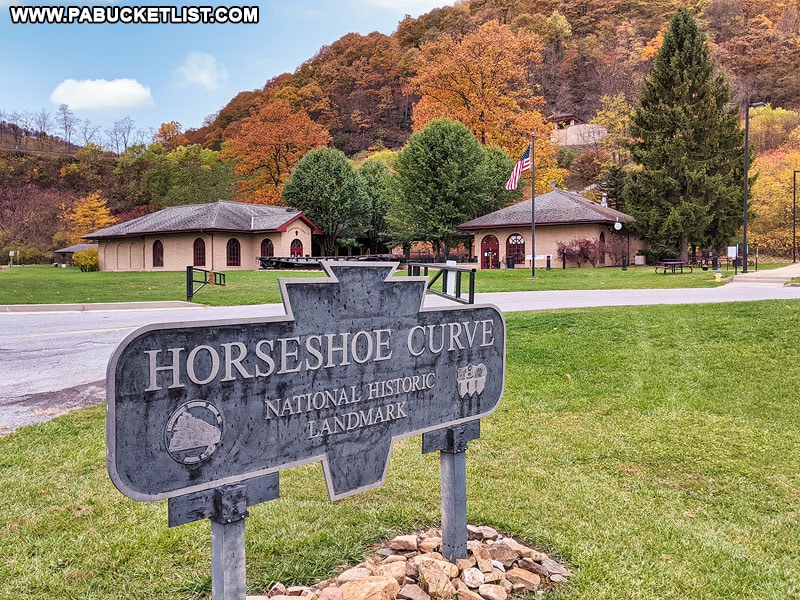
Yes. Admission fees as of 2026 are: Adult (18+) – $13 | Senior (65+) – $12 | Youth (4-17) – $11 | 3 and under – Free.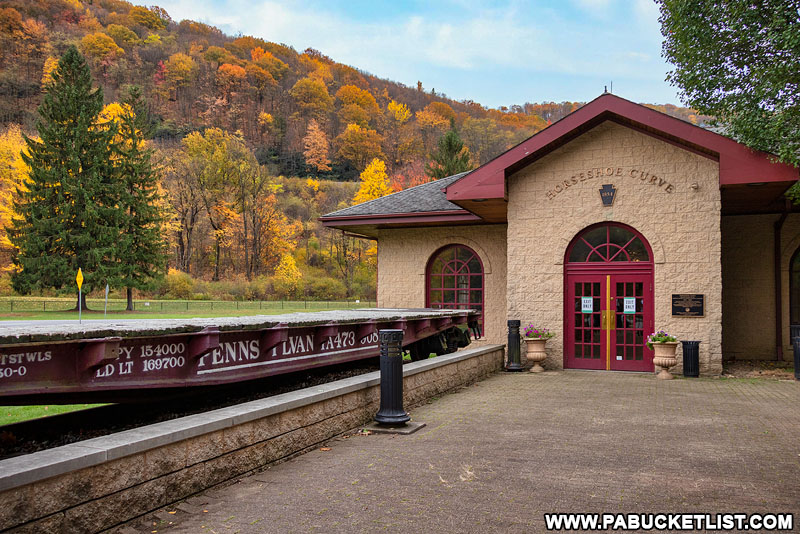
No – the Horseshoe Curve is a great spot to watch trains go by and learn about railroad history, but it is not a train station.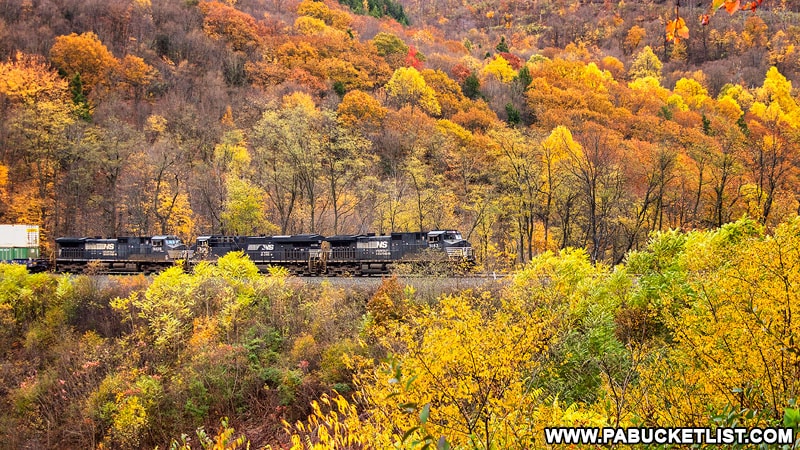
Yes – it was added to the National Register of Historic Places in 1966, and designated as an Historic Railroad Landmark in 2004.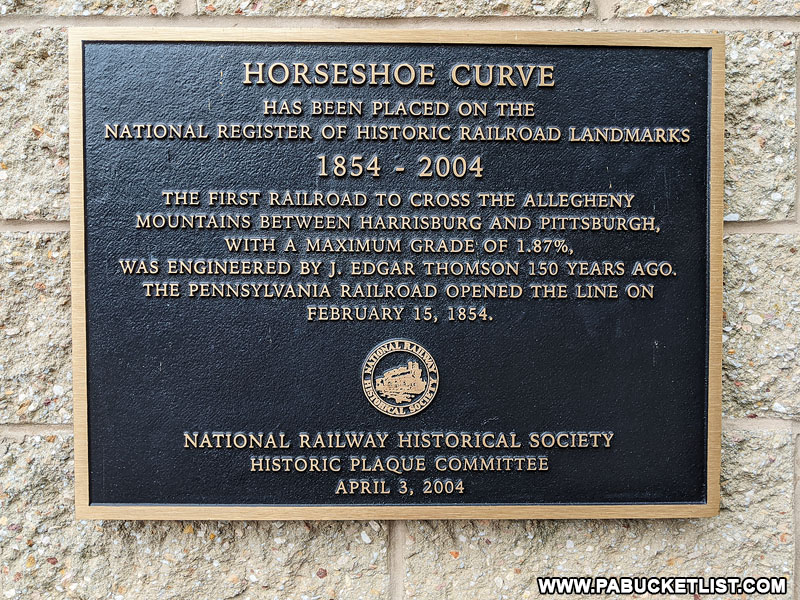
Either by taking the 194 steps pictured below, or by riding the funicular/inclined plane. When the funicular is not running due to mechanical issues, your only option is the 194 steps. 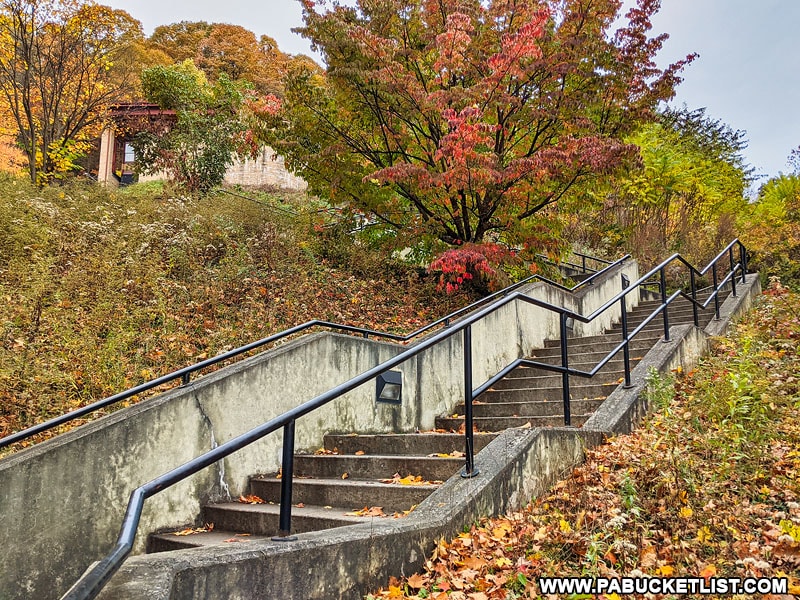
On average about once every half-hour.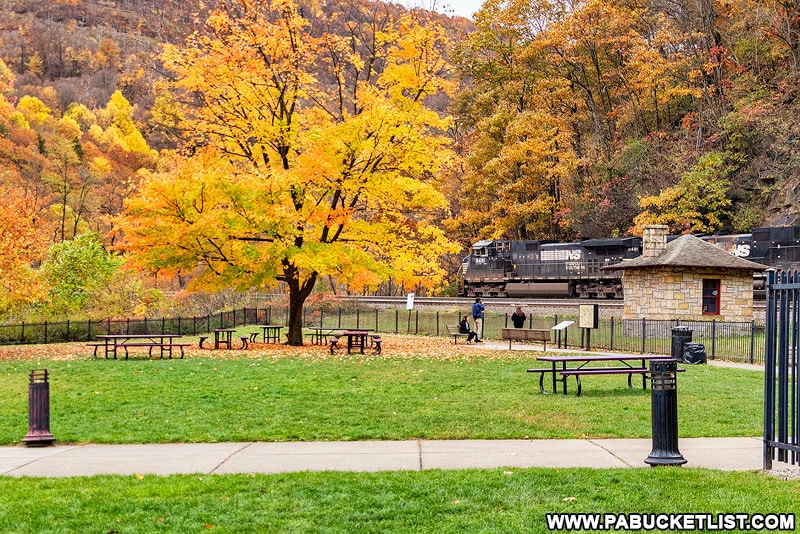
The Importance of the Horseshoe Curve
Moving people and freight between Philadelphia and Pittsburgh in the early 1800s was no small feat. It involved using canal boats and a series of inclined planes to haul those boats up and down over the mountains, a process fraught with danger and difficulties, especially in the winter months.
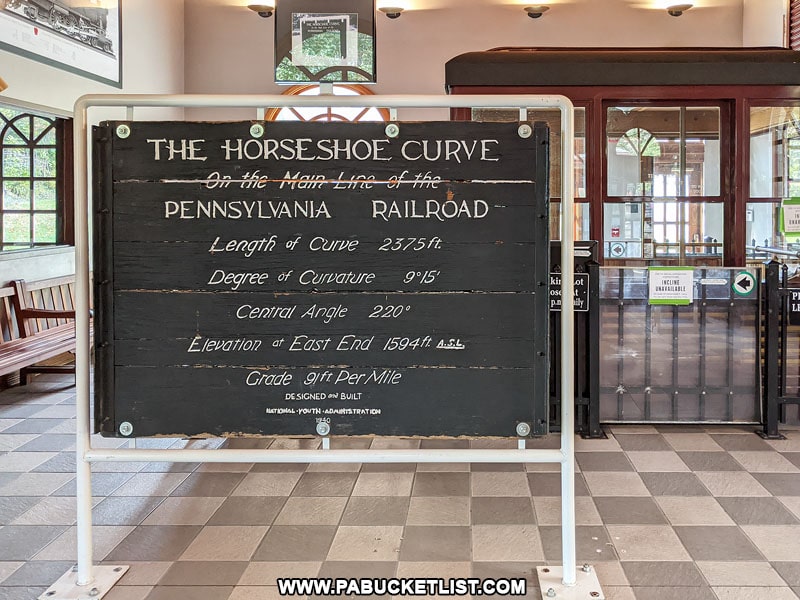
The opening of the Horseshoe Curve in 1854 meant the Pennsylvania Railroad could now move people and goods between Philadelphia and Pittsburgh in a mere 15 hours!

For the times, this was a miraculous achievement, and the Horseshoe Curve was listed alongside the the Panama Canal, the Empire State Building, and the San Francisco Bay Bridge as one of the “engineering wonders of the world!”
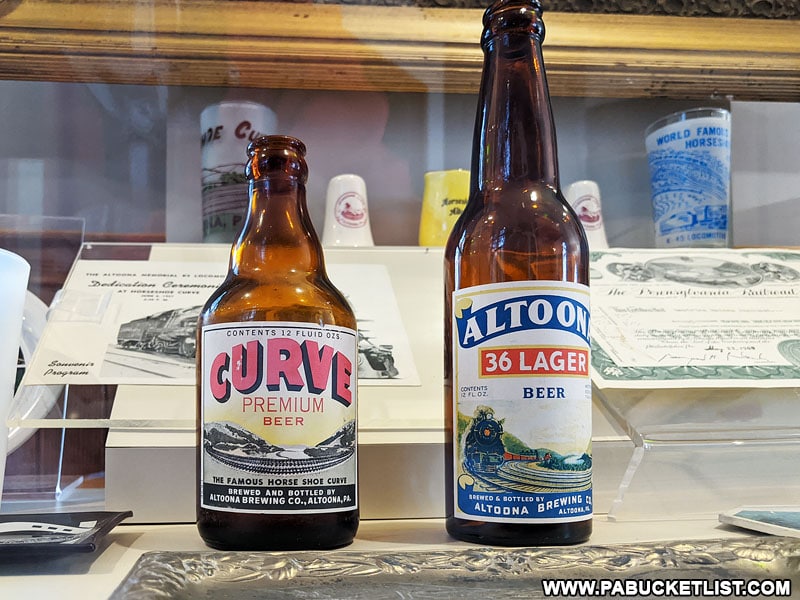
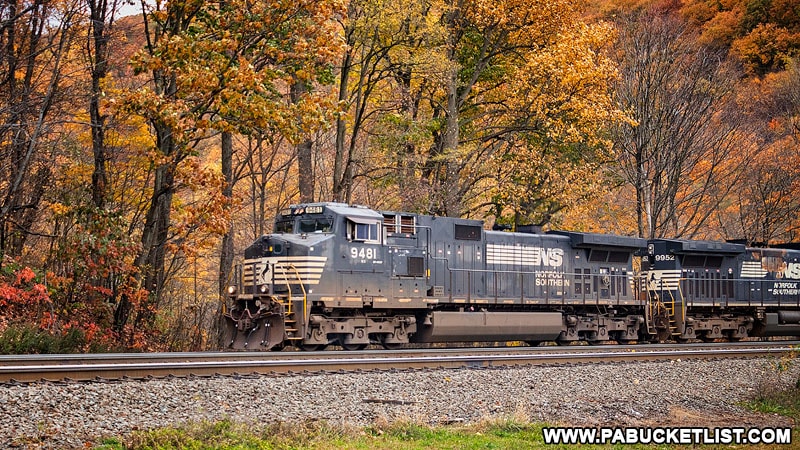
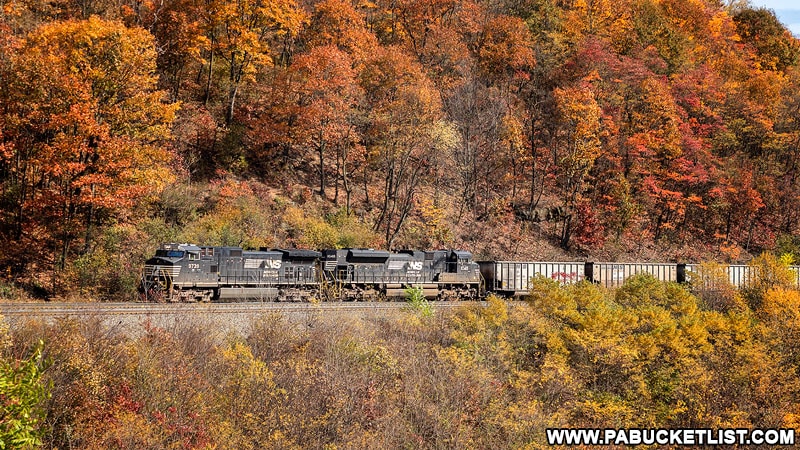
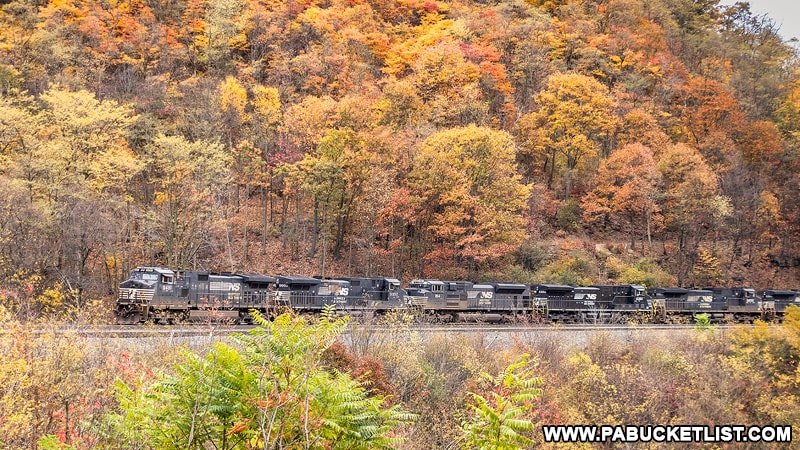
While perhaps less important to east-west travel today, the Horseshoe Curve is still a functional, working railroad landmark with many lengthy freight cars passing through every day.
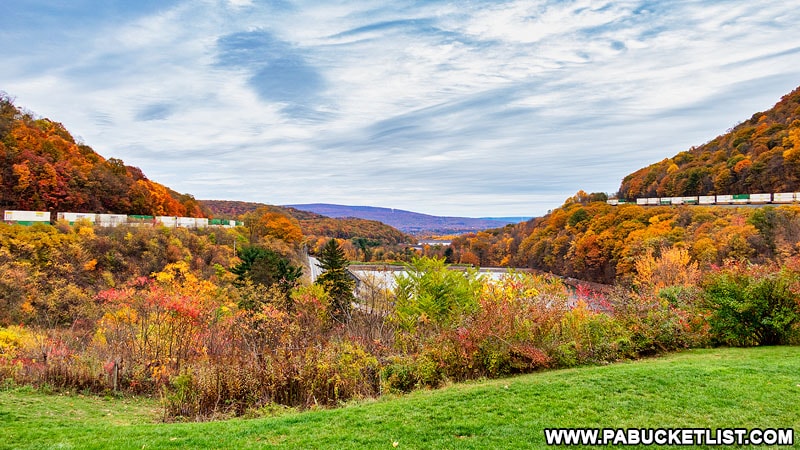
In fact, the trains are so long that a single train often entirely encircles the curve with neither end in sight!
Final Thoughts on Visiting the Horseshoe Curve
Whether you’re a lifelong railfan or simply passing through Blair County, a visit to the Horseshoe Curve is a memorable experience.
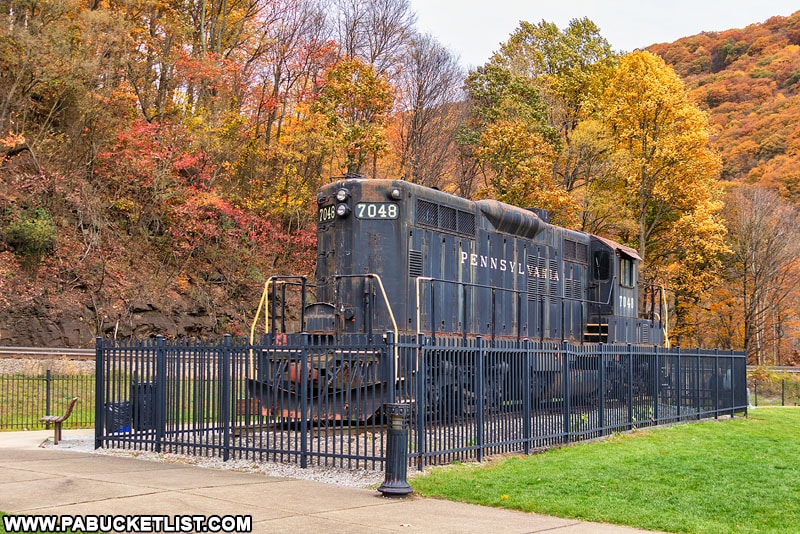
The scenic, park-like setting offers a relaxing place to watch trains wind through the Allegheny Mountains while reflecting on one of the greatest feats of railroad engineering in America.
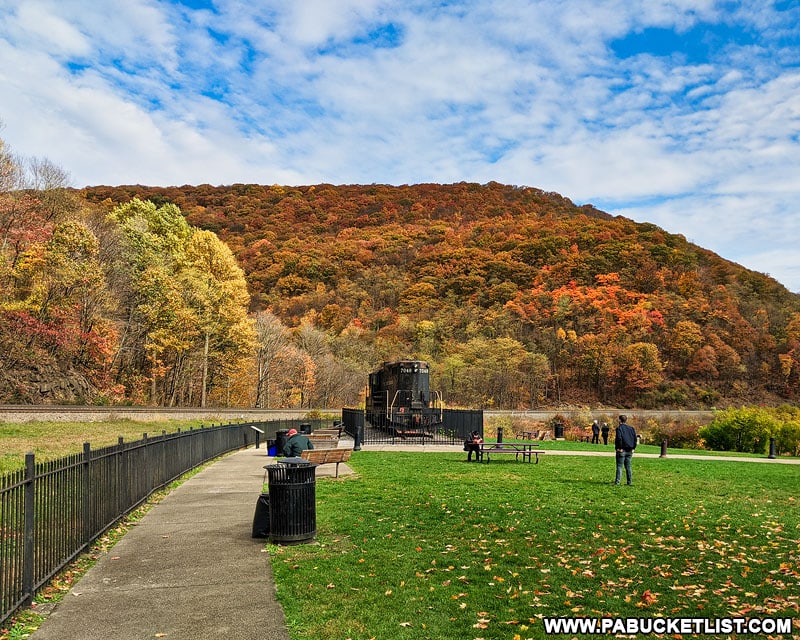
More than 170 years after its completion in 1854, this 2,375-foot-long curve still delivers the unmistakable thrill of seeing massive trains round the bend just yards away.
Related Attractions
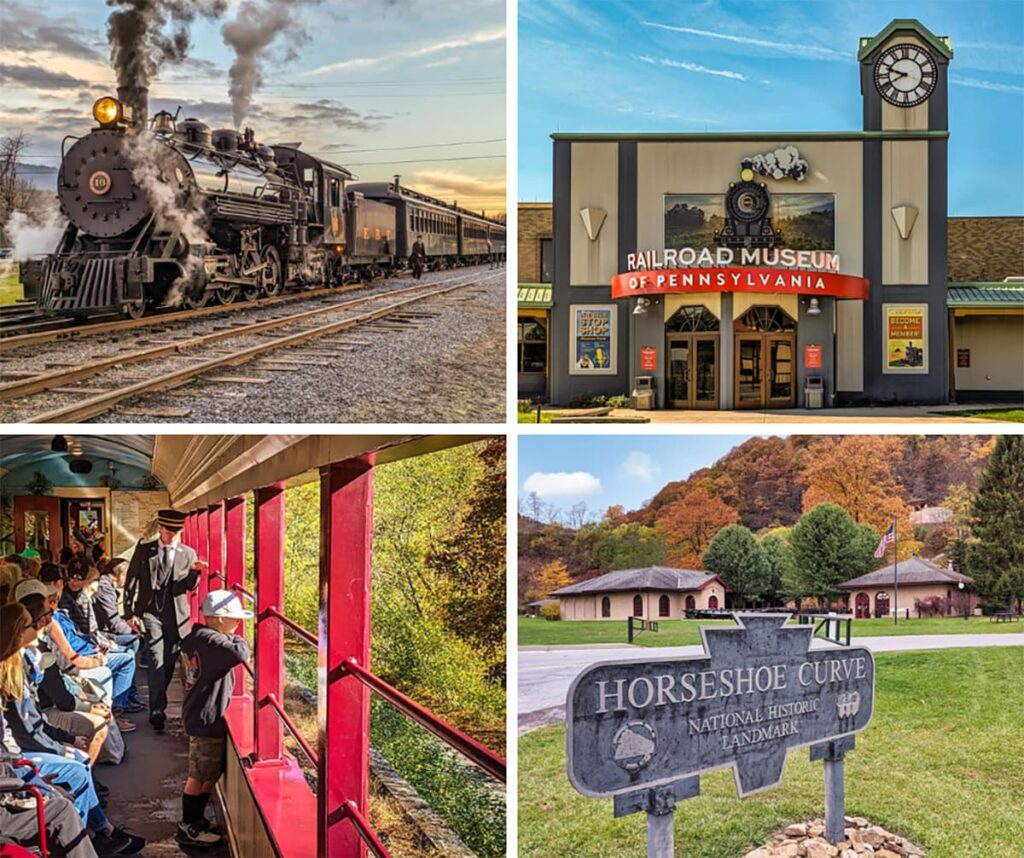
PA’s Top Railroad-Themed Attractions | A Visitor’s Guide highlights the best train rides in Pennsylvania, railroad museums, model railroads, and historic rail sites across Pennsylvania, all based on my firsthand visits.
Nearby Attractions
23 Must-See Attractions in Blair County showcases more remarkable sights and experiences near the Altoona Railroaders Memorial Museum.

A Smarter Way to Explore Pennsylvania
Explore Pennsylvania like a pro with the interactive PA Bucket List Travel Map, showcasing over 1,000 memorable destinations I’ve personally visited across the Keystone State.
Did you enjoy this article?
If so, be sure to like and follow PA Bucket List on Facebook, Instagram, and/or Pinterest to stay up-to-date on my latest write-ups about the best things to see and do in Pennsylvania!
Click on any of the icons below to get connected to PA Bucket List on social media.