

Home PA Historic Places Exploring Fort Ligonier in Westmoreland County

Exploring Fort Ligonier in Westmoreland County

A collage of four photos showcases various scenes from Fort Ligonier in Westmoreland County, Pennsylvania. The top-left image features a large bronze mortar cannon outside the museum entrance, with a historic battle mural and stone building in the background. The top-right photo shows two visitors standing next to a cannon near the fort’s defensive chevaux-de-frise barricades and wooden palisades. The bottom-left image presents a view of the reconstructed fort interior, complete with log walls, blockhouses, and a British flag flying above, with a small artillery cannon in the foreground. The bottom-right photo highlights a museum exhibit displaying 18th-century weaponry, including muskets, swords, powder horns, and illustrations of British soldiers.

If you’re looking for information about visiting Fort Ligonier in Westmoreland County, you’re in the right place!
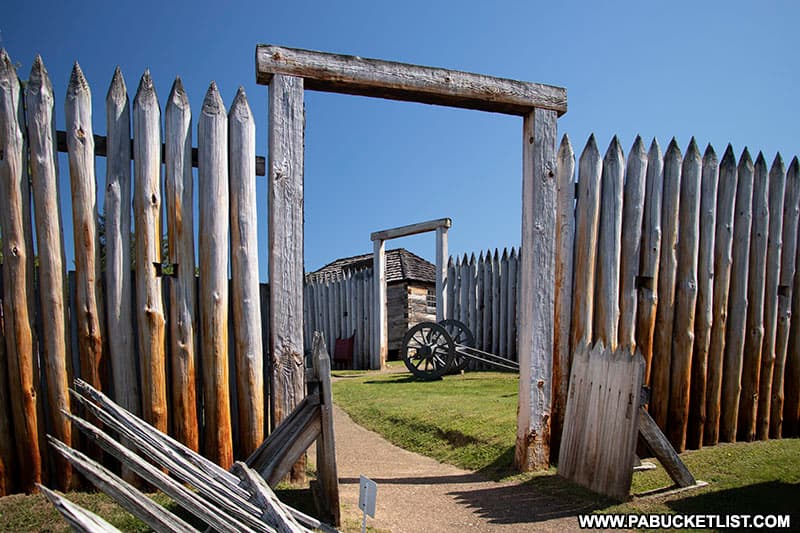
Entering Fort Ligonier.

Fort Ligonier in Westmoreland County features a reconstructed 1758 British fort and a museum housing one of the most complete collections of French and Indian War artifacts in existence, including items excavated from the original site.

A museum display at Fort Ligonier in Westmoreland County, Pennsylvania, showcases an extensive collection of 18th-century weaponry and military artifacts. The exhibit includes muskets, swords, bayonets, powder horns, and a British officer’s commission document. Illustrations of historical soldiers in period uniforms accompany the artifacts, providing context for their use. The display highlights the weaponry and equipment used during the French and Indian War, offering visitors a glimpse into the fort's military history.

Directions | Hours | Admission Fees

Fort Ligonier is located at 200 S Market St, Ligonier, PA 15658, literally right alongside Route 30.


Both the Fort and Museum are open daily, from early April through Thanksgiving weekend, 10:00 am – 5:00 pm.

A young girl wearing sunglasses and a gray hoodie smiles while standing next to a historic artillery piece inside Fort Ligonier in Westmoreland County, Pennsylvania. The cannon, featuring a bronze barrel and large wooden wheels with iron reinforcements, is positioned behind a reconstructed wooden palisade with sharpened stakes. The fort's sturdy log walls and lush green landscape surround the scene under a bright blue sky.

The Museum is open winter weekends (Friday, Saturday and Sunday), December through March, from 10:00 am – 5:00 pm.

A man and a young girl smile while wearing replica British redcoat uniforms inside the museum at Fort Ligonier in Westmoreland County, Pennsylvania. They stand in front of a recreated soldiers’ tent, with historical illustrations and exhibits visible in the background. The uniforms feature bright red coats with navy blue cuffs and brass buttons, adding to the immersive historical experience.

Admission fees are as follows (as of 2026): Adults $14.00 | Senior Citizens (Ages 62+) $11.00 | Active Military, Veterans & Law Enforcement $7.00 | Youth (Ages 4-17) $7.00 | Children (3 and under) FREE.

A historic blue supply wagon with red wooden wheels sits on the grassy grounds of Fort Ligonier in Westmoreland County, Pennsylvania. Nearby, a small artillery cannon is positioned within the reconstructed fort, surrounded by log palisades and blockhouses. The background features rolling green hills, trees, and a clear blue sky, adding to the scenic and historic atmosphere of the fort.

Brief History of Fort Ligonier

In the mid-1750s, what is now western Pennsylvania was a wild frontier, with ownership claimed and contested by the French, British, and Native Americans.
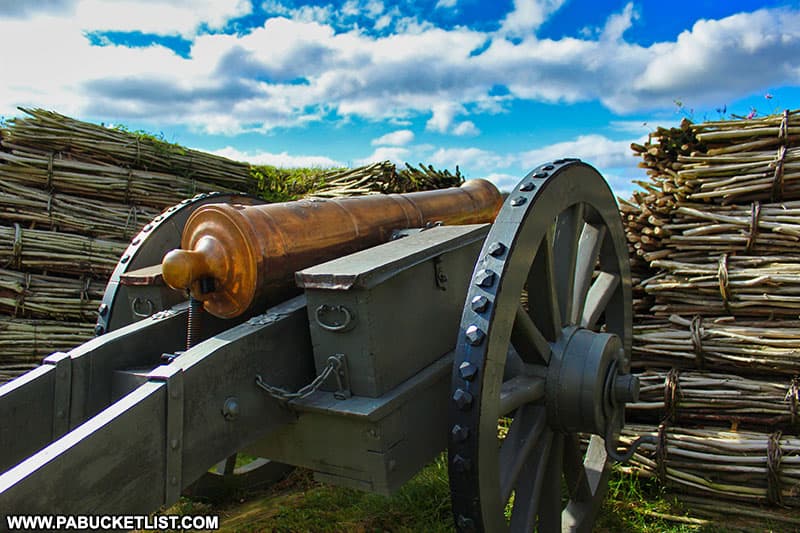
A cannon guarding Fort Ligonier.

The French occupied a position of strength in the form of Fort Duquesne at the Forks of the Ohio River, now the site of Point State Park in Pittsburgh.
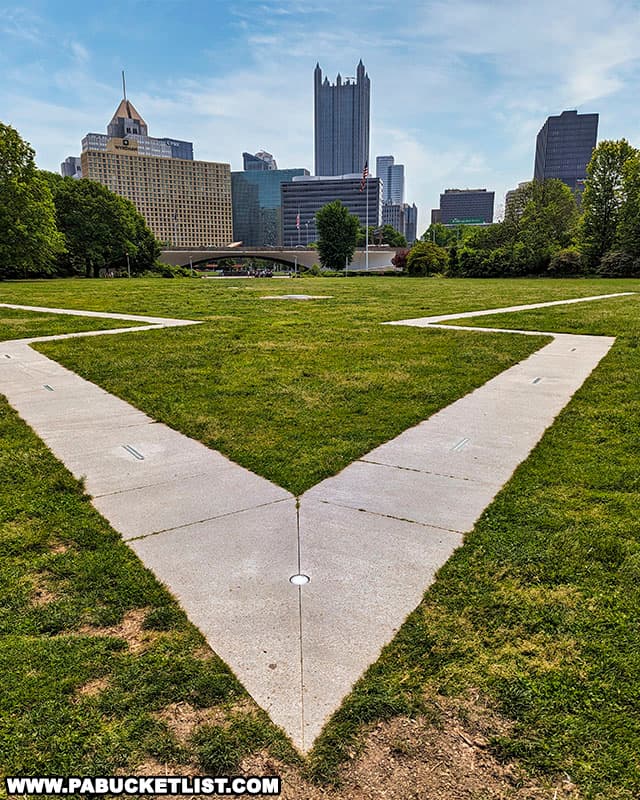
The concrete tracery marking the original outline of Fort Duquesne at Point State Park in Pittsburgh Pennsylvania.
The concrete tracery marking the original outline of Fort Duquesne.

Controlling the Ohio River meant controlling travel and trade routes in the interior of North America, and British General John Forbes was determined to remove the French from this fort and establish control of the region for the British empire.
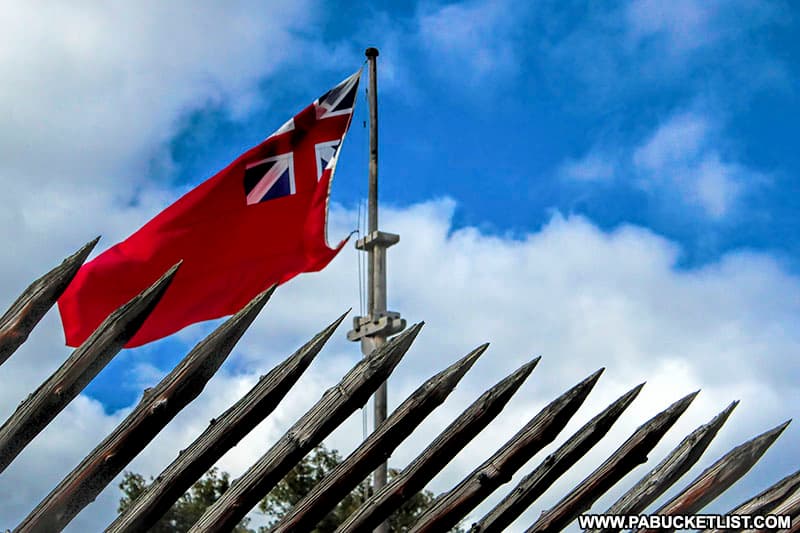
The British flag flying over Fort Ligonier.
The British flag flying over the fort.

So General Forbes set out to build a road (to become known as Forbes Road) from Philadelphia in the east to Fort Duquesne in the west, by which he could move troops and supplies across Pennsylvania and into position to eventually capture Fort Duquesne.
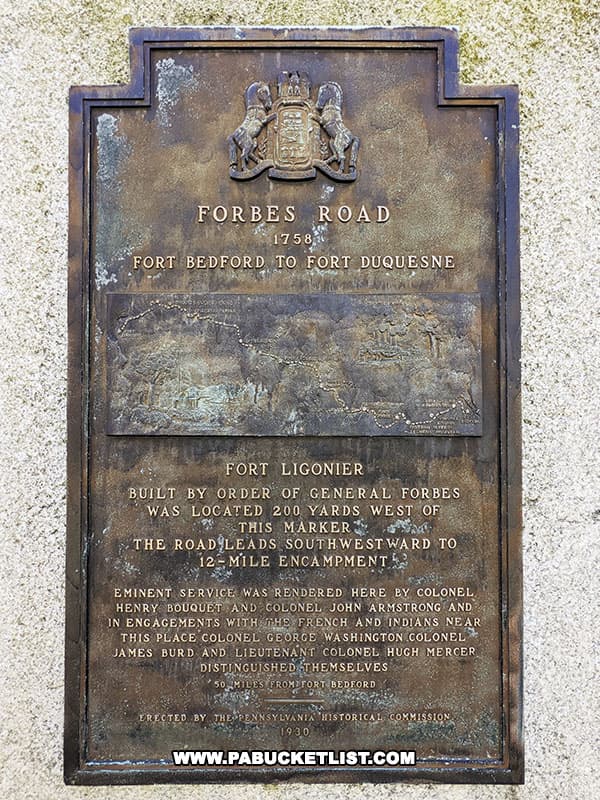
The Compass Inn sits along what was originally Forbes Road built in 1758 on orders from General John Forbes.
Forbes Road historical plaque near Fort Ligonier.

Along the route, he built a series of forts approximately every 50 miles, with Fort Ligonier being the final fort along the road before the intended target of Fort Duquesne.
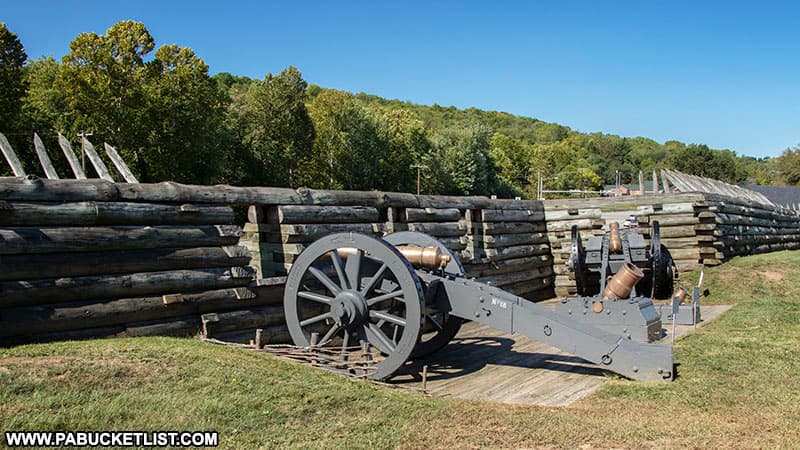
Artillery overlooking the Lincoln Highway below Fort Ligonier.
Artillery display.

Construction on the Post at Loyalhanna (as Fort Ligonier was known at the time) began in the late summer of 1758, and the fort withstood a major attack by the French and their Indian allies in October of 1758, before the fort was even completed.
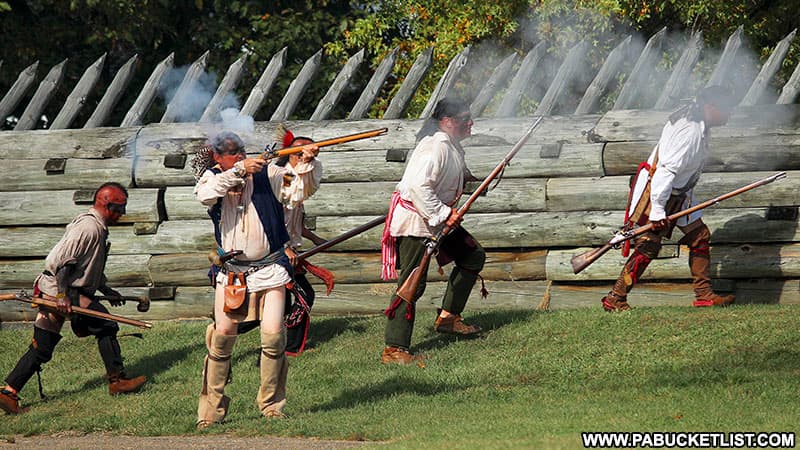
French and Indian reenactors at Fort Ligonier Days.
French and Indian reenactors at the fort.

In November of 1758 French and Indian forces again staged a raid on the Post at Loyalhanna, this time trying to steal horses and cattle from outside the fort.
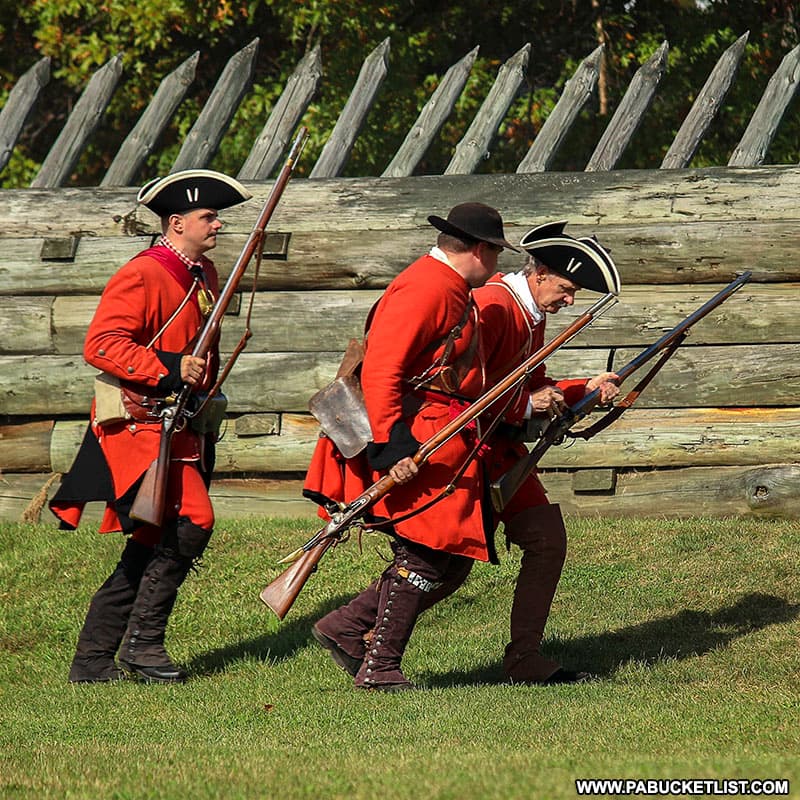
British Army reenactors at Fort Ligonier Days.
British Army reenactors at the fort.

French prisoners captured during the raid were interrogated and provided information that Fort Duquesne was in fact very undermanned and undersupplied.
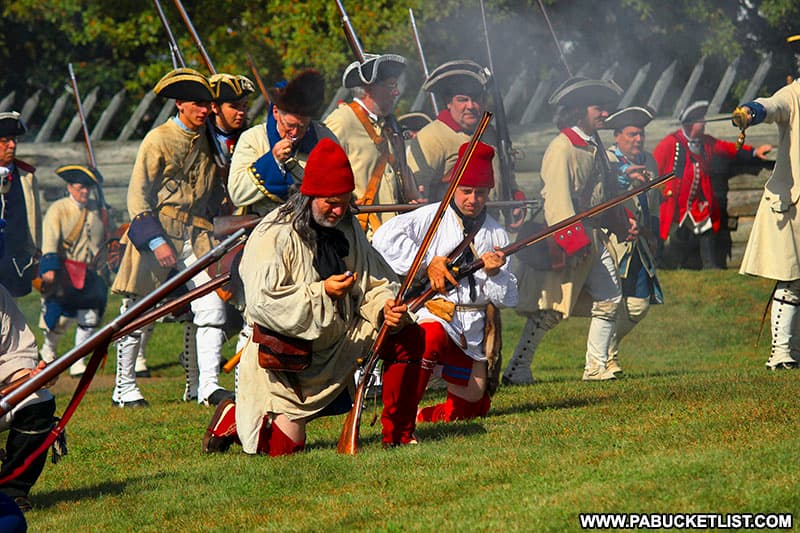
Historical reenactors staging an attack on Fort Ligonier.

Sensing an opportunity to attack the French position in its weakened state, General Forbes immediately launched plans to strike.
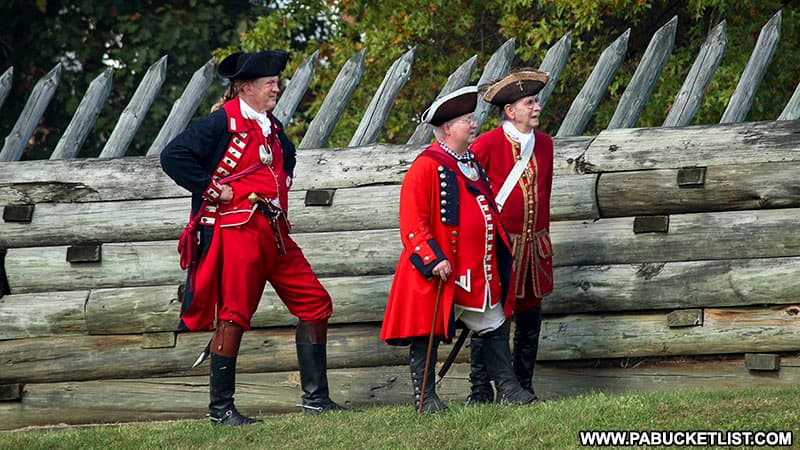
British officer reenactors at Fort Ligonier Days.
British officer reenactors at the fort.

But before the British troops could reach Fort Duquesne, the French and their Indian allies, sensing imminent defeat, burned and abandoned the fort.

French and Indian War reenactors at Fort Ligonier Days.

This British took control of the position on November 24, 1758, where they built a new fort, Fort Pitt, later to become Pittsburgh.
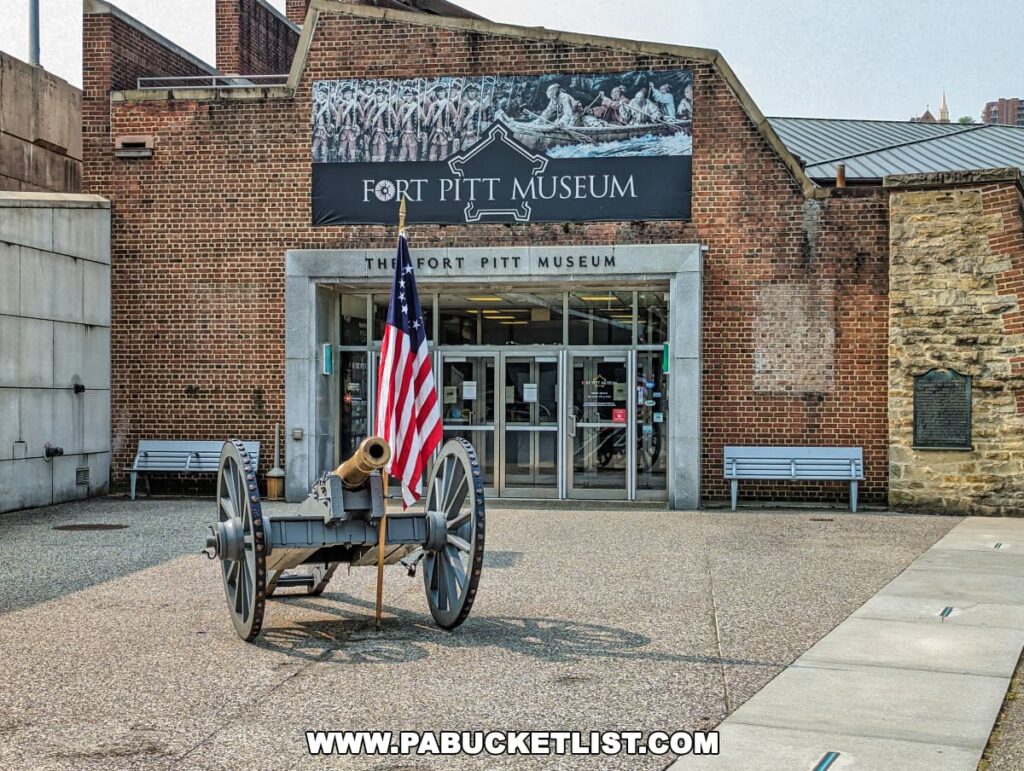
The entrance of the Fort Pitt Museum in Pittsburgh, Pennsylvania, with an antique cannon in the foreground displaying the American flag. The museum's facade features a brick wall and a banner with an image of colonial figures, welcoming visitors to explore the historical site.

To commemorate the victory, General Forbes changed the name of the Post at Loyalhanna to Fort Ligonier, in honor of Field Marshall Sir John Ligonier, Commander-in-Chief of the British Army at the time.
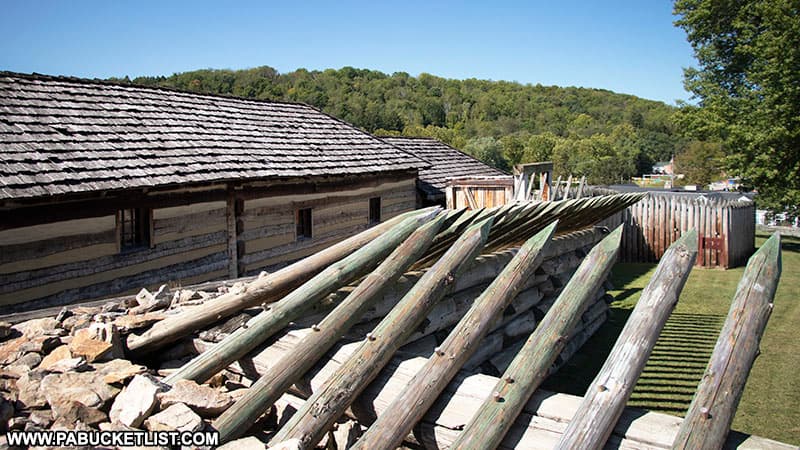
Fort Ligonier in Westmoreland County.
The fort is named in honor of Field Marshall Sir John Ligonier, Commander-in-Chief of the British Army from 1757 to 1766.

Fort Ligonier remained in use until it was decommissioned in 1766.

Two smiling visitors stand next to a historic artillery piece at Fort Ligonier in Westmoreland County, Pennsylvania. The young girl playfully leans against the cannon's bronze barrel, while the woman beside her poses with sunglasses and a casual outfit. Behind them, the fort’s defensive structures, including wooden chevaux-de-frise barricades and earthworks, stretch across the landscape. The reconstructed log walls and blockhouses of the fort sit atop a grassy hill, framed by a bright blue sky with scattered clouds.

The Museum at Fort Ligonier

The museum at Fort Ligonier contains one of the most complete collections of French and Indian War artifacts in existence, many excavated from the ruins of the original Fort Ligonier itself.
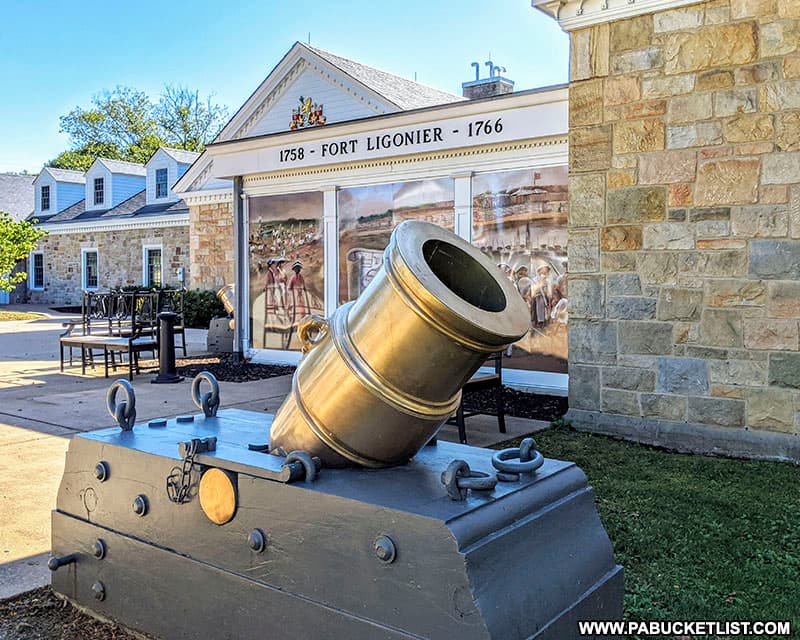
Mortar outside the Fort Ligonier museum.

Fans of military history will enjoy the various small arms and artillery pieces inside the museum.
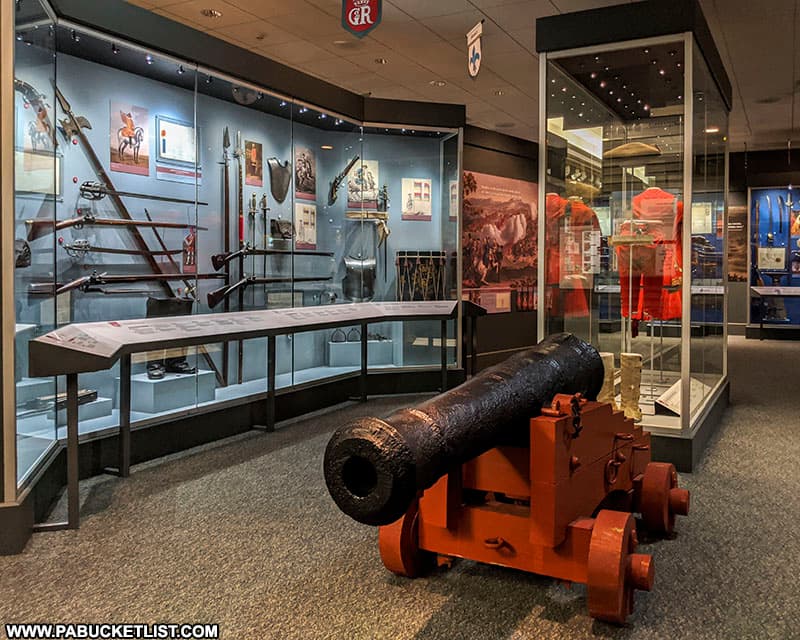
Weaponry on display inside Fort Ligonier museum.
Weaponry on display inside the museum.

Numerous interpretive exhibits show what day-to-day life was like at Fort Ligonier.
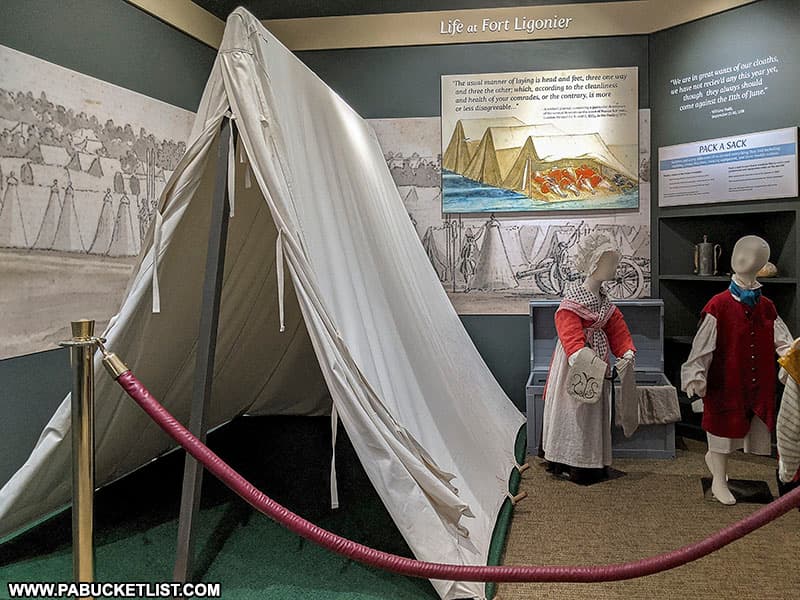
Life at Fort Ligonier exhibit inside the Fort Ligonier Museum.
Life at the fort exhibit.

One particularly fascinating exhibit is a pair of pistols once owned and carried by George Washington.
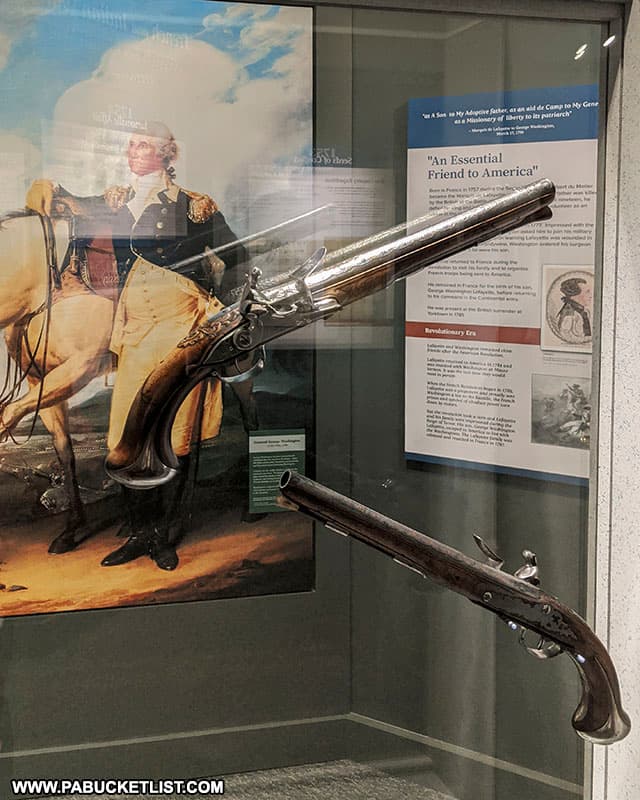
A pair of pistols once carried by George Washington now on display at the Fort Ligonier Museum.
A pair of pistols once carried by George Washington, now on display at the Fort Ligonier Museum.

Ironically, the pistols were a gift from Frenchman Marquis de Lafayette, who served the Continental Army with distinction during the American Revolutionary War, providing tactical leadership while securing vital assistance from his native France.
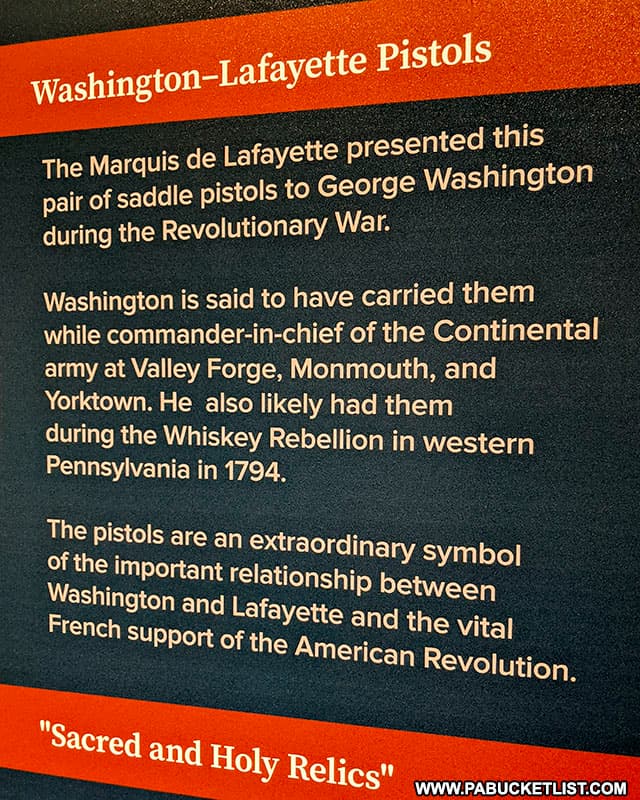
HIstory of the George Washington pistols on display at the Fort Ligonier Museum.

This a little more than a decade after Washington had fought WITH the British AGAINST the French forces in North America!
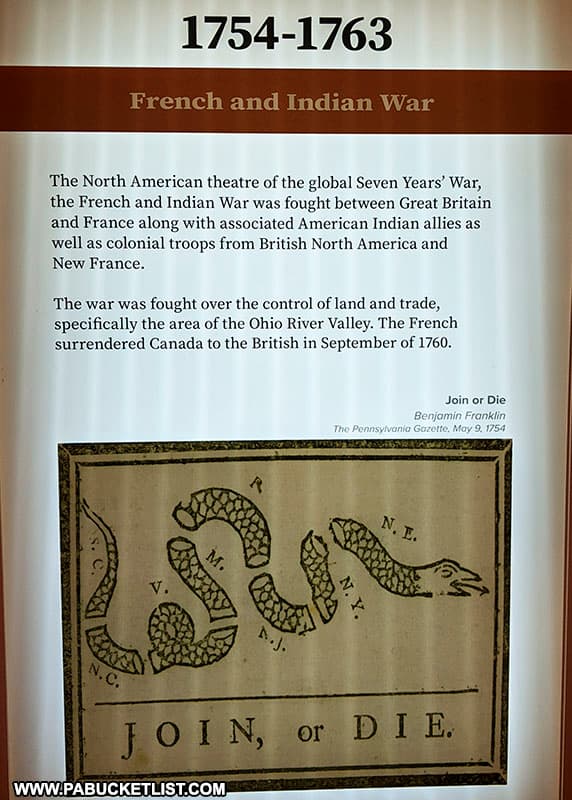
The reasons for the French and Indian War summarized in this exhibit at the Fort Ligonier museum.

Another interesting display from more recent history tells of the connection between Fred Rogers (Mister Rogers of children’s television fame) and Fort Ligonier.
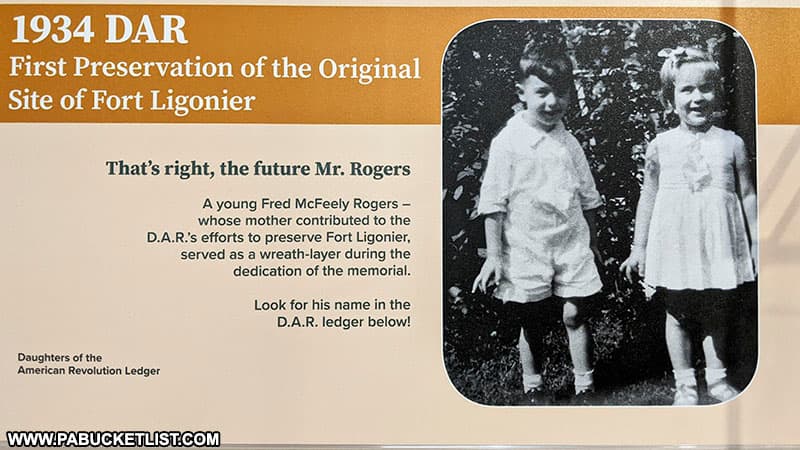
Mister Rogers link to Fort Ligonier explained in this exhibit at the Fort Ligonier Museum.

The Fort Ligonier museum also boasts an impressive art gallery, with portraits and paintings of subjects related to the fort and/or the French and Indian War.
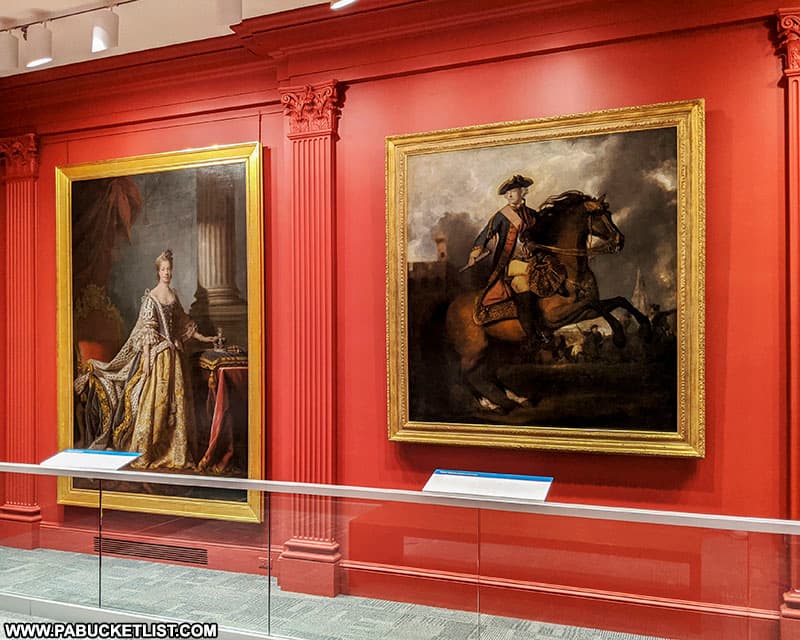
Art gallery inside the Fort Ligonier museum.
Art gallery inside the fort’s museum.

And what historical attraction would be complete without a well-appointed gift shop!
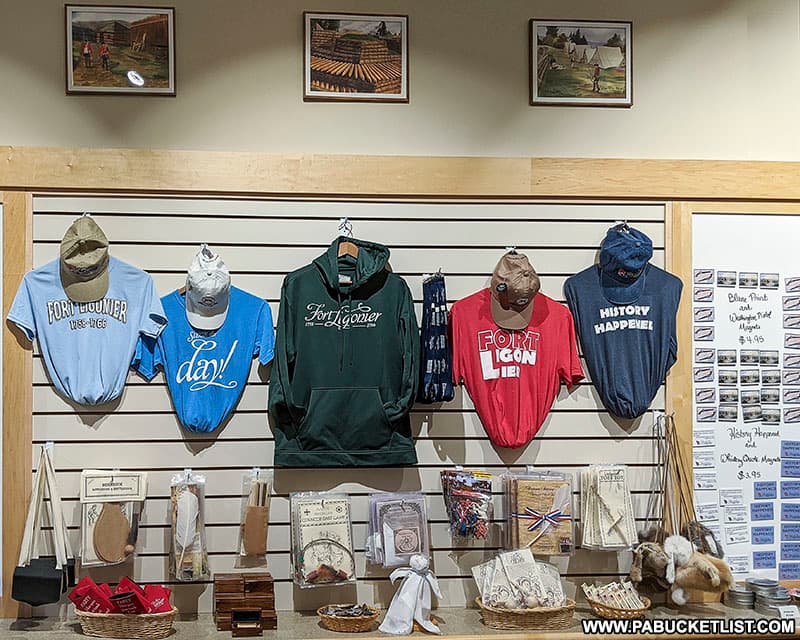
The gift shop at Fort Ligonier.
The gift shop.

Exploring the Fort

Once you’ve toured the museum and more fully understand the backstory, it’s time to explore Fort Ligonier itself.
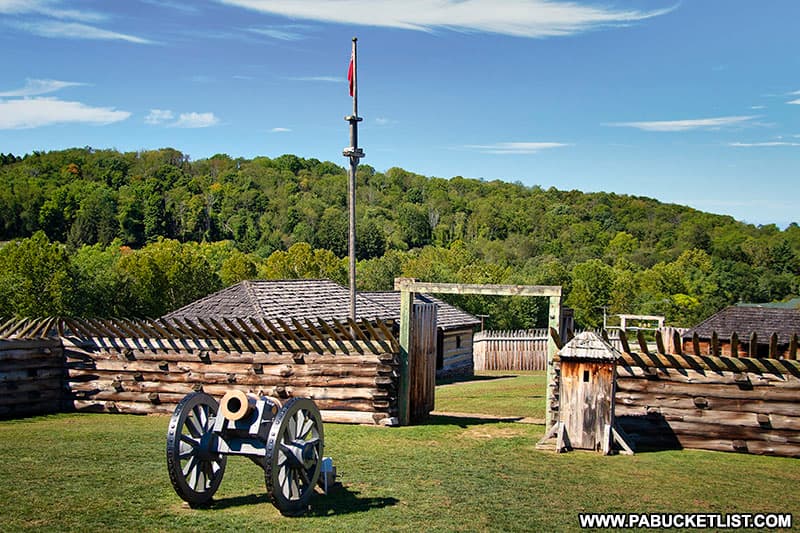
Fort Ligonier on a late summer morning.

Much of the original fort has been painstakingly recreated in a historically accurate way.
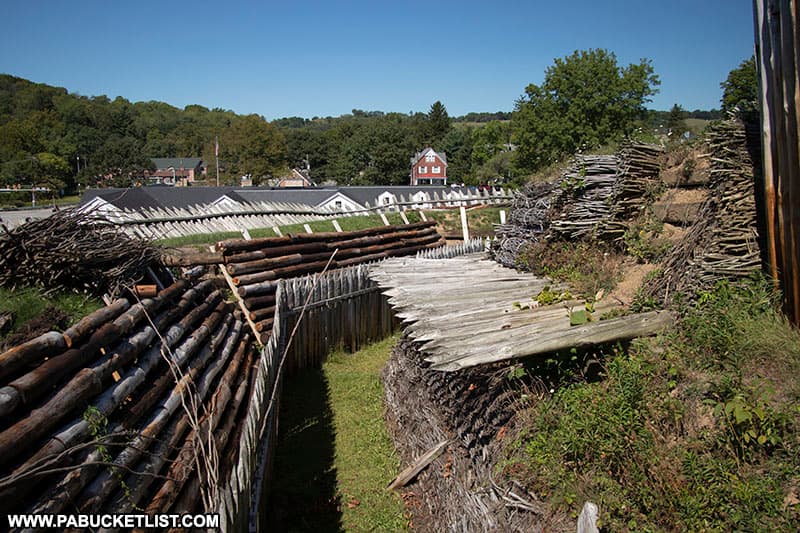
Trench between the outer and inner defenses at Fort Ligonier.
Trench between the outer and inner defenses at the fort.

Numerous artillery pieces are on display around the outer defenses of the fort.
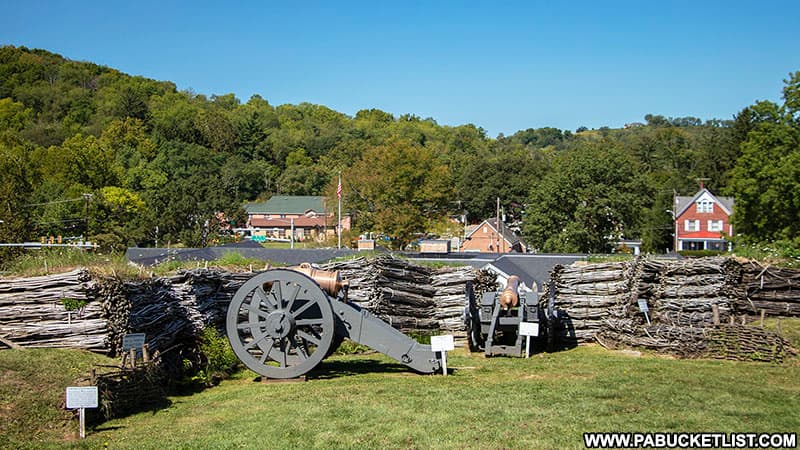
Cannons at Fort Ligonier overlooking the town and Route 30 below.
Cannons at the fort overlooking the town and Route 30 below.

Behind the inner defenses you’ll find numerous quarters, including those of General Forbes himself.
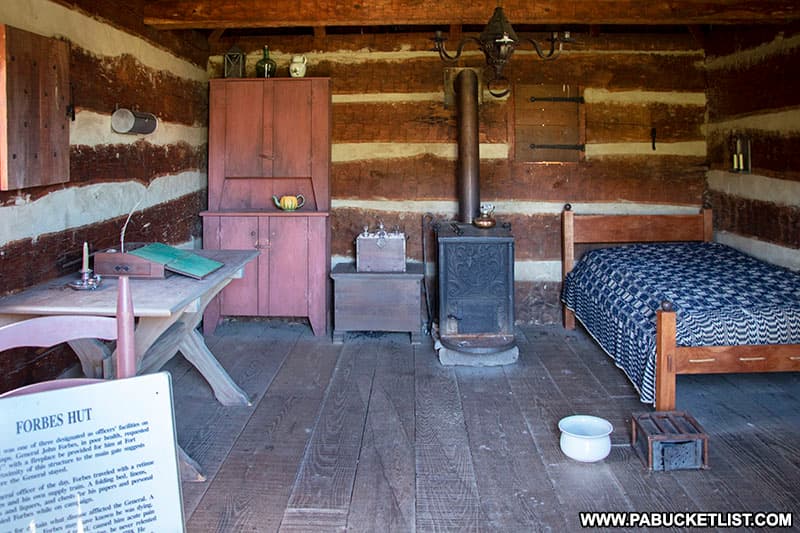
General Forbes quarters at Fort Ligonier.
General Forbes quarters.

The barracks themselves were/are quite spartan.
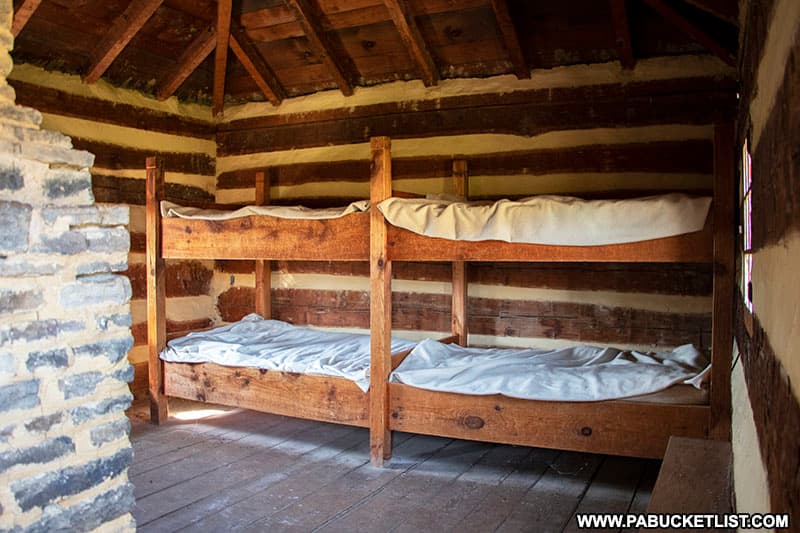
Barracks at Fort Ligonier.
Soldiers’ barracks at the fort.

While some of the cannons are beautifully ornate.
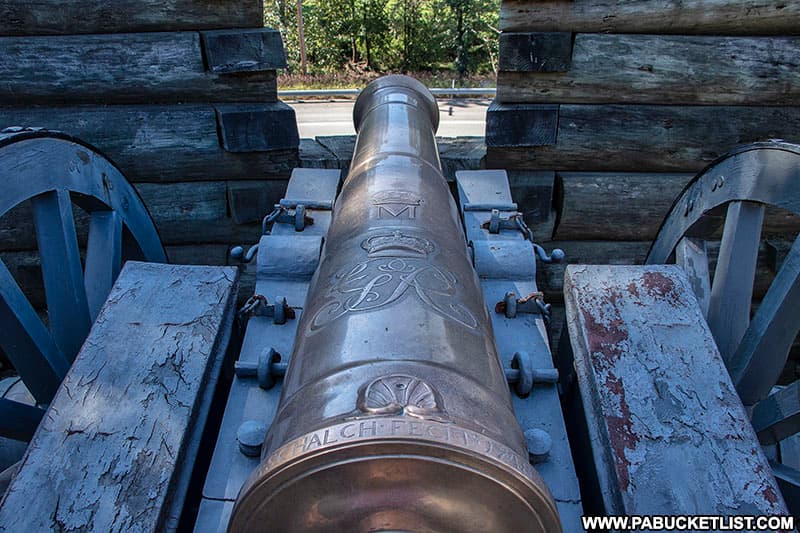
An ornately decorated cannon at Fort Ligonier.
An ornately decorated cannon.

Life in a frontier fort was certainly not glamorous, and one can begin to grasp what the “daily grind’ was like by touring the various buildings inside Fort Ligonier.
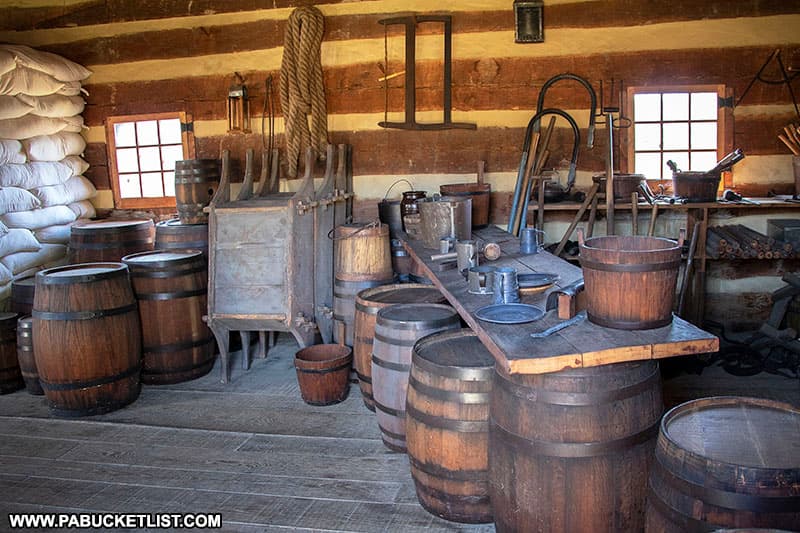
Storehouse at Fort Ligonier.
Quartermaster’s storehouse.

Fort Ligonier Days

One weekend every October (October 10th-12th in 2025), near the anniversary of the 1758 assault on Fort Ligonier, a town-wide celebration know as Fort Ligonier Days takes place at the fort and various other locations around Ligonier.
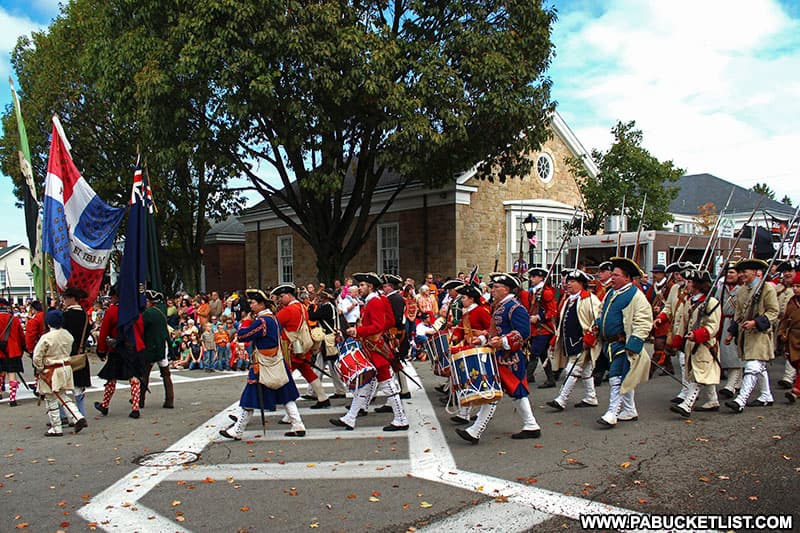
Historical reenactors marching in the Fort Ligonier Days parade.
Historical reenactors marching in the parade.

At the fort itself you can witness battle reenactment scenes – check the official Fort Ligonier Days events schedule here.
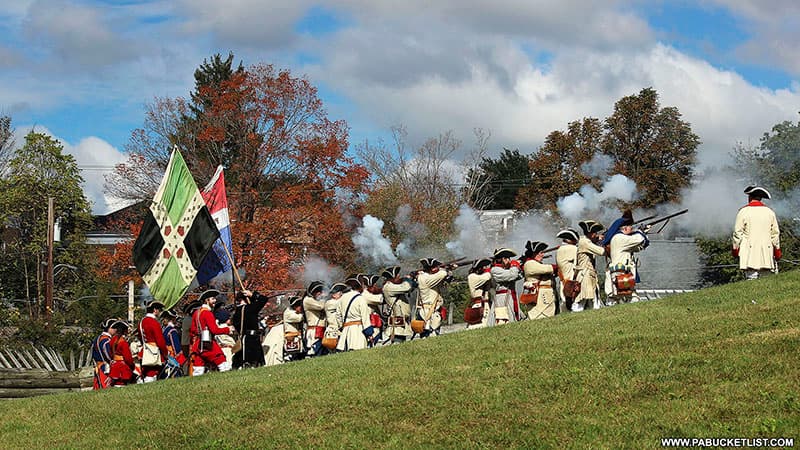
A battle reenactment during Fort Ligonier Days.

Between “battles” you can interact with the reenactors and learn from folks whose passion is recreating and passing on the history of this fort and era.
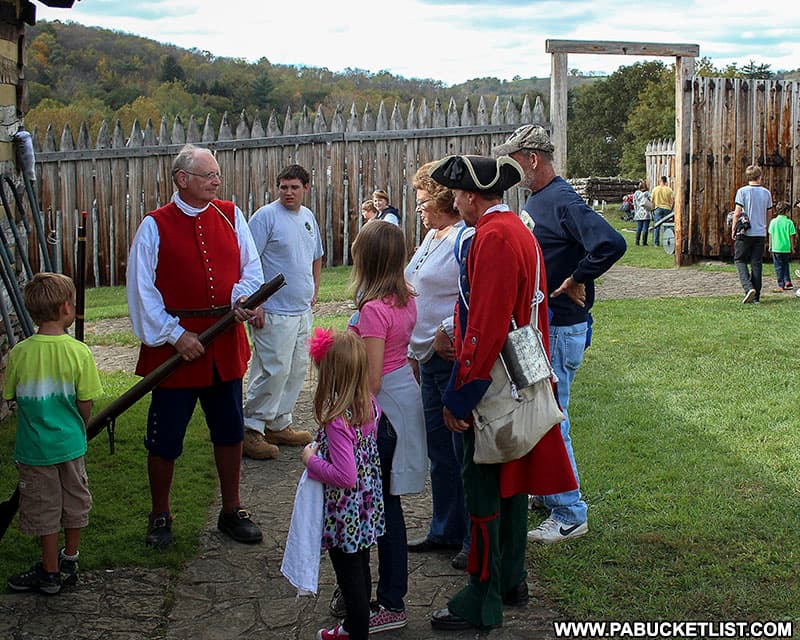
Interacting with historical reenactors at Fort Ligonier Days.
Interacting with historical reenactors.

There is also a MASSIVE parade on Saturday during Fort Ligonier Days, quite possibly the longest parade I’ve ever personally witnessed!
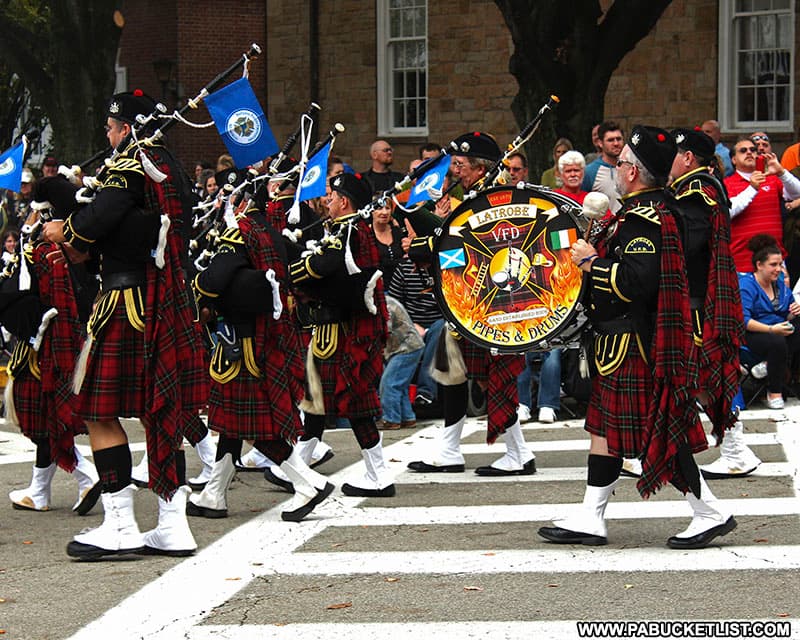
The Latrobe Fire Department Pipes and Drums Corp at the Fort Ligonier Days parade.
The Latrobe Fire Department Pipes and Drums Corp.

Of course it wouldn’t be a western PA parade without the Shriners in their tiny cars.
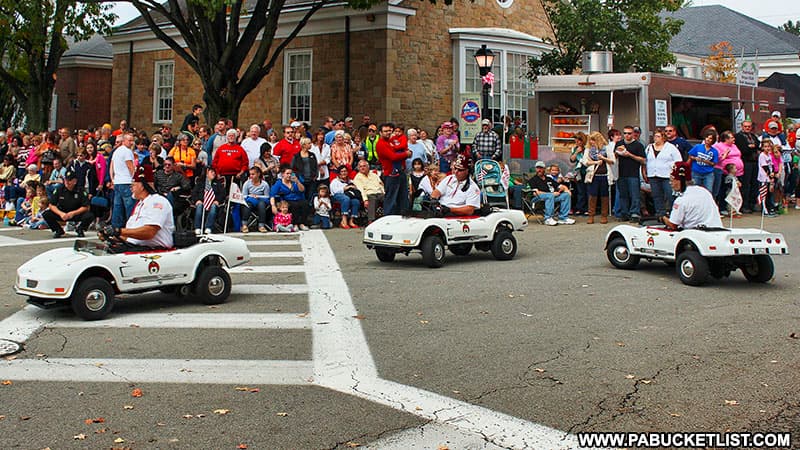
The Shriners in the Fort Ligonier Days parade.
The Shriners.

Even YouTube sensation Pittsburgh Dad has been a participant.
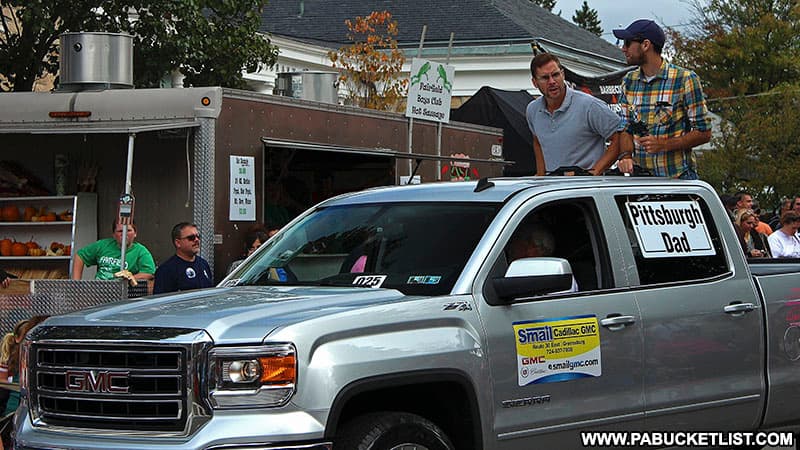
Pittsburgh Dad at the Fort Ligonier Days parade.

The Fort Ligonier Days parade is about as All-American as you can get!
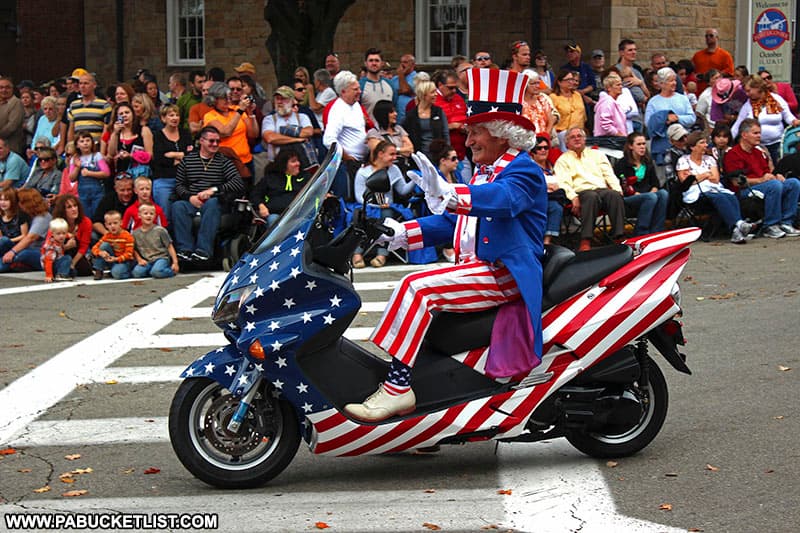
Uncle Sam in the Fort Ligonier Days parade.
Uncle Sam in the parade.

Final Thoughts

A visit to Fort Ligonier in Westmoreland County, PA, offers a deep dive into the French and Indian War, a pivotal conflict that shaped Pennsylvania’s history and influenced the course of global events.

A museum display at Fort Ligonier in Westmoreland County, Pennsylvania, showcases memorabilia from the fort’s 200th anniversary celebration in 1958. The exhibit includes a vintage sign advertising the bicentennial event, commemorative pins, an ashtray, a lighter, and a guest badge from President Dwight D. Eisenhower’s visit. Black-and-white photos capture moments from the celebration, including Eisenhower inspecting the fort and using a pen and inkwell from the event. The display highlights the significance of the bicentennial in preserving Fort Ligonier’s history.

Through its reconstructed 1758 British fort and world-class museum collection, Fort Ligonier reveals how battles fought in Pennsylvania played a crucial role in sparking the worldwide Seven Years’ War.
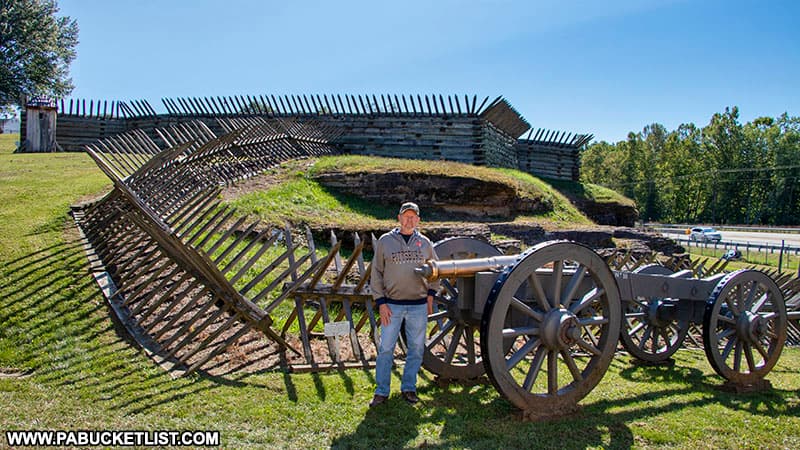
The front of Fort Ligonier next to the Lincoln Highway.

PA’s Best Military-Themed Attractions highlights some of Pennsylvania’s most fascinating battlefields, forts, military museums, and historic sites, all based on my firsthand visits across the Keystone State.
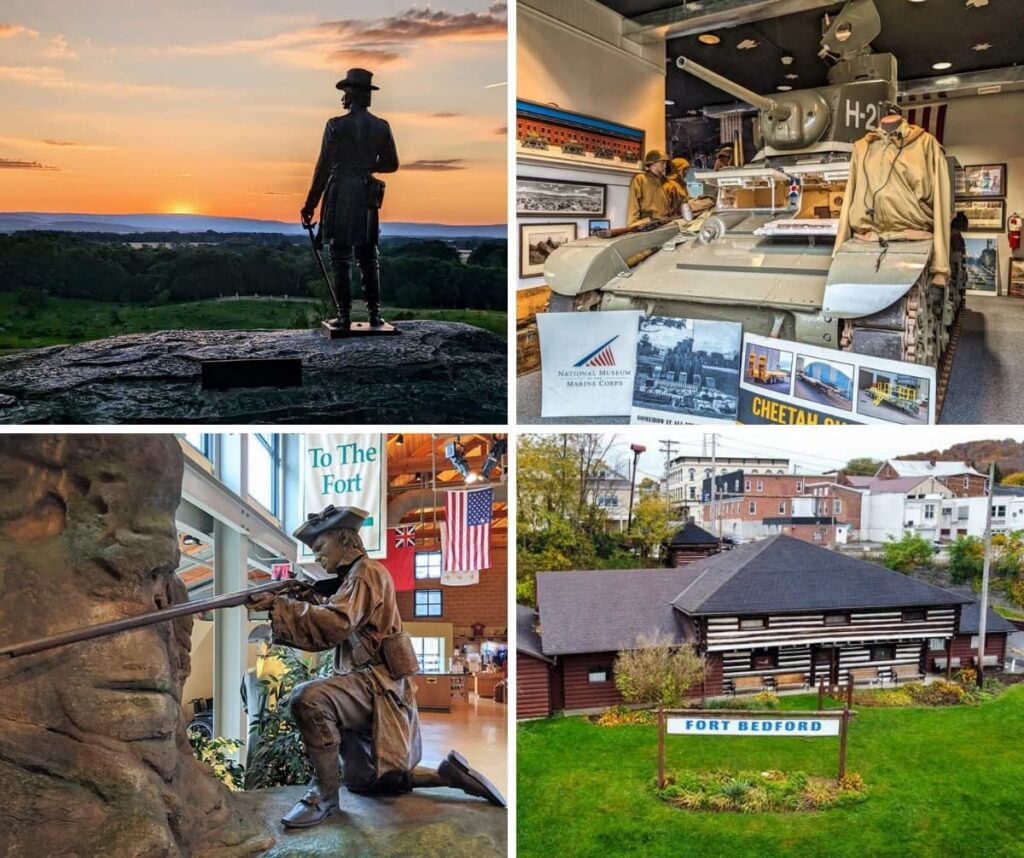
A collage of 4 images from some of Pennsylvanias best military themed attractions.

Nearby Attractions

27 Must-See Attractions in Westmoreland County showcases more remarkable sights and experiences near Fort Ligonier.
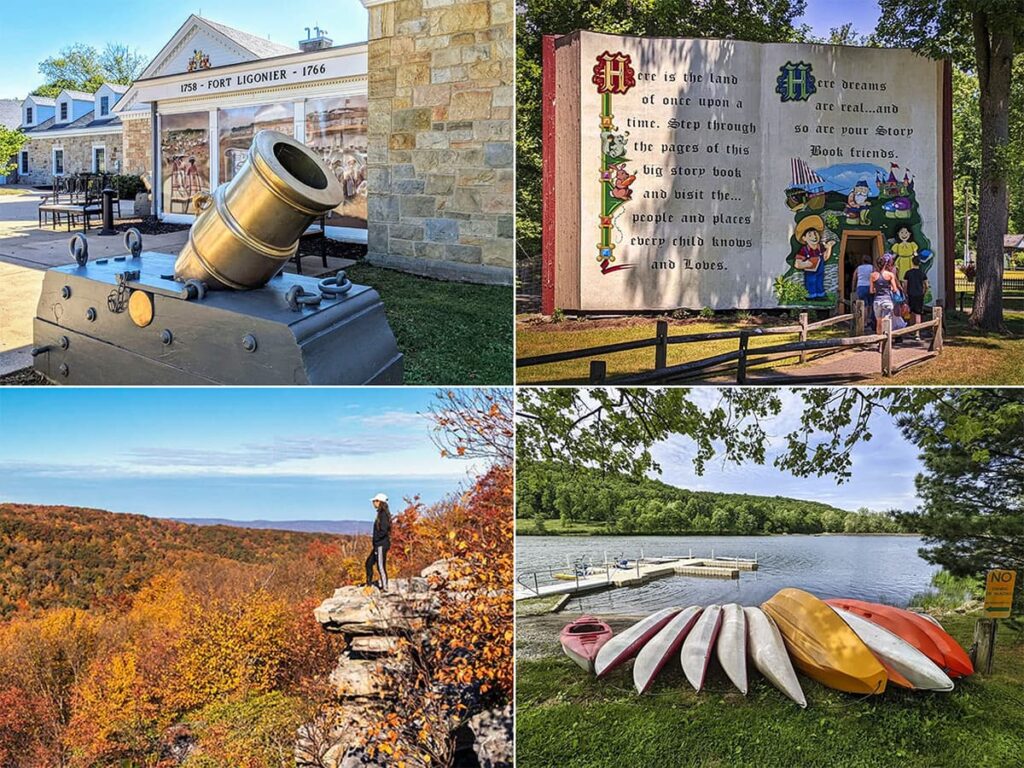
A collection of four photos depicting attractions in Westmoreland County, Pennsylvania. Top left: A large historic cannon displayed outside with the Fort Ligonier museum entrance in the background. Top right: A whimsical, large book-shaped mural with a fairy tale theme, inviting visitors to walk through to a park. Bottom left: A person stands on a rocky outcrop overlooking a stunning autumn forest vista. Bottom right: A lineup of colorful kayaks and canoes on the grassy shore of a tranquil lake with a dock in the background.

A Smarter Way to Explore Pennsylvania

Explore Pennsylvania like a pro with the interactive PA Bucket List Travel Map, showcasing over 1,000 memorable destinations I’ve personally visited across the Keystone State.


Did you enjoy this article?

If so, be sure to like and follow PA Bucket List on Facebook, Instagram, and/or Pinterest to stay up-to-date on my latest write-ups about the best things to see and do in Pennsylvania!

Click on any of the icons below to get connected to PA Bucket List on social media.


PA Bucket List 2022 Sasquatch Logo

Pennsylvania’s Best Travel Blog!

Rusty Glessner
Rusty Glessner is a professional photographer, lifelong Pennsylvanian, and a frequently-cited authority on PA's best travel destinations.