

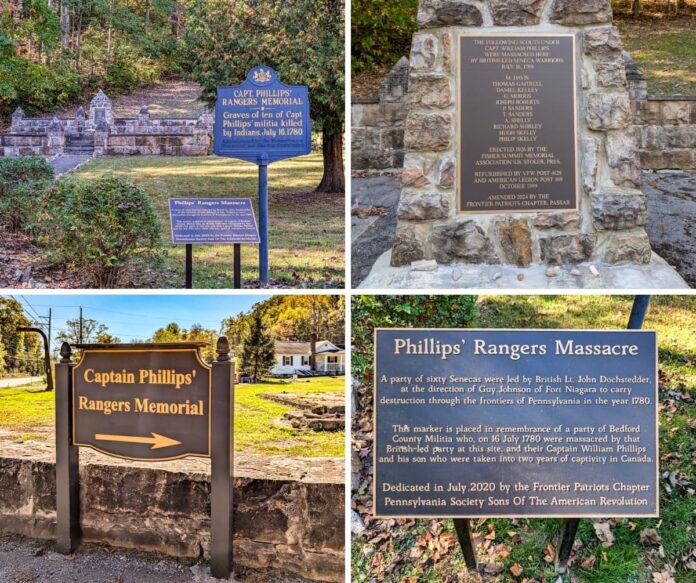
Captain Phillips’ Rangers Memorial in Bedford County sits at the end of a quiet country lane, offering a peaceful yet powerful place to reflect on Pennsylvania’s frontier history—and this guide shares my firsthand tips to help you make the most of visiting this inspiring Revolutionary-era landmark.
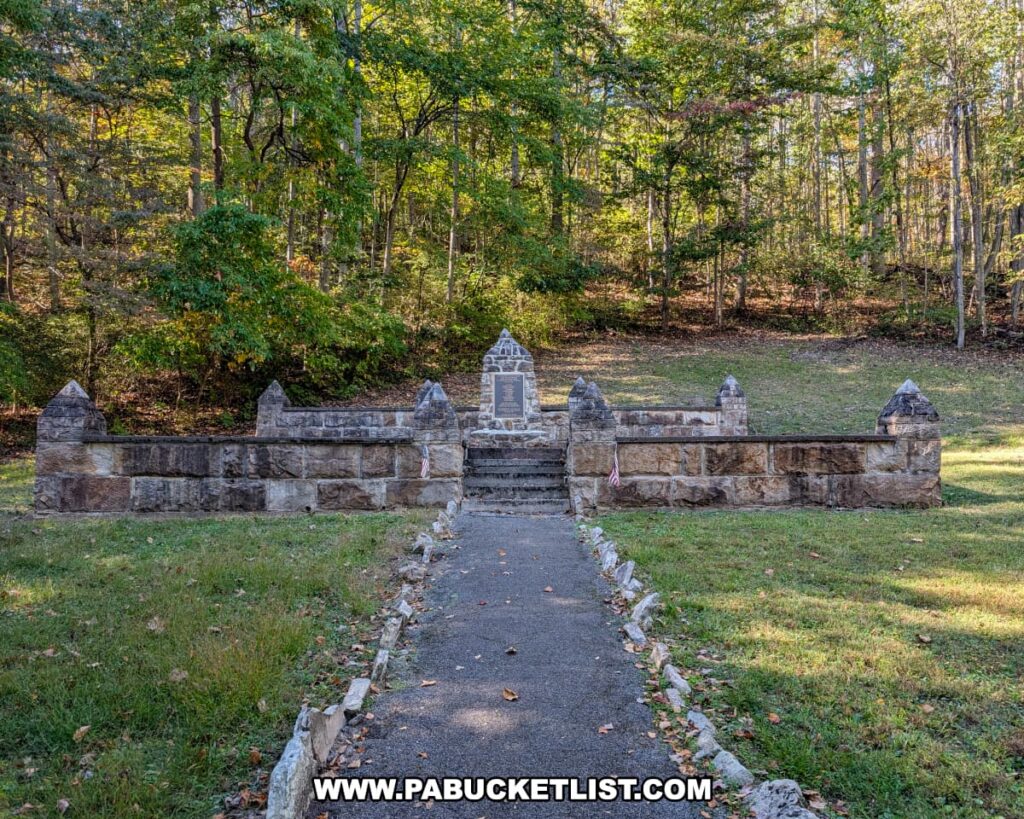
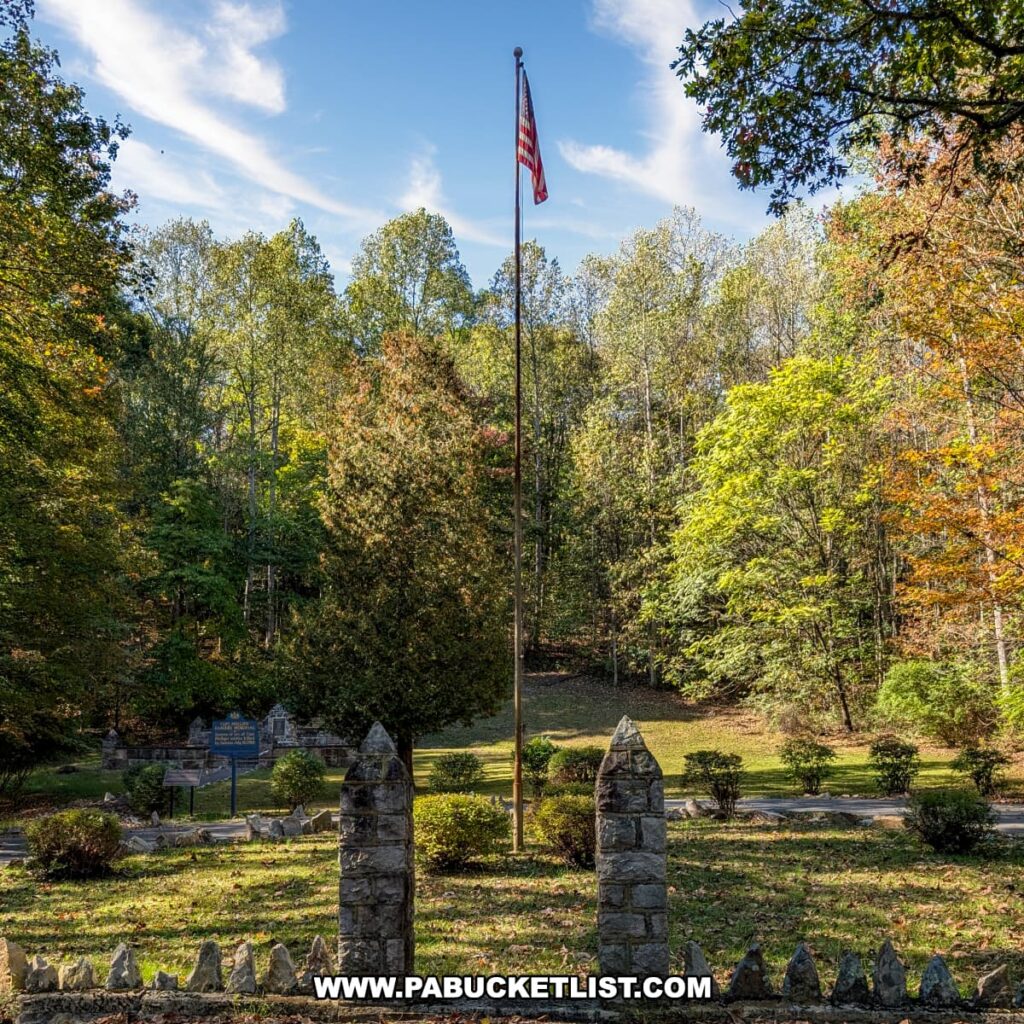
The stone monument, American flag, and nearby historical markers together honor a grim event that unfolded on this spot during the Revolutionary War.
Visiting today, the quiet setting belies the violence that took place here in 1780, when the frontier was still a dangerous place on the edge of the young nation.
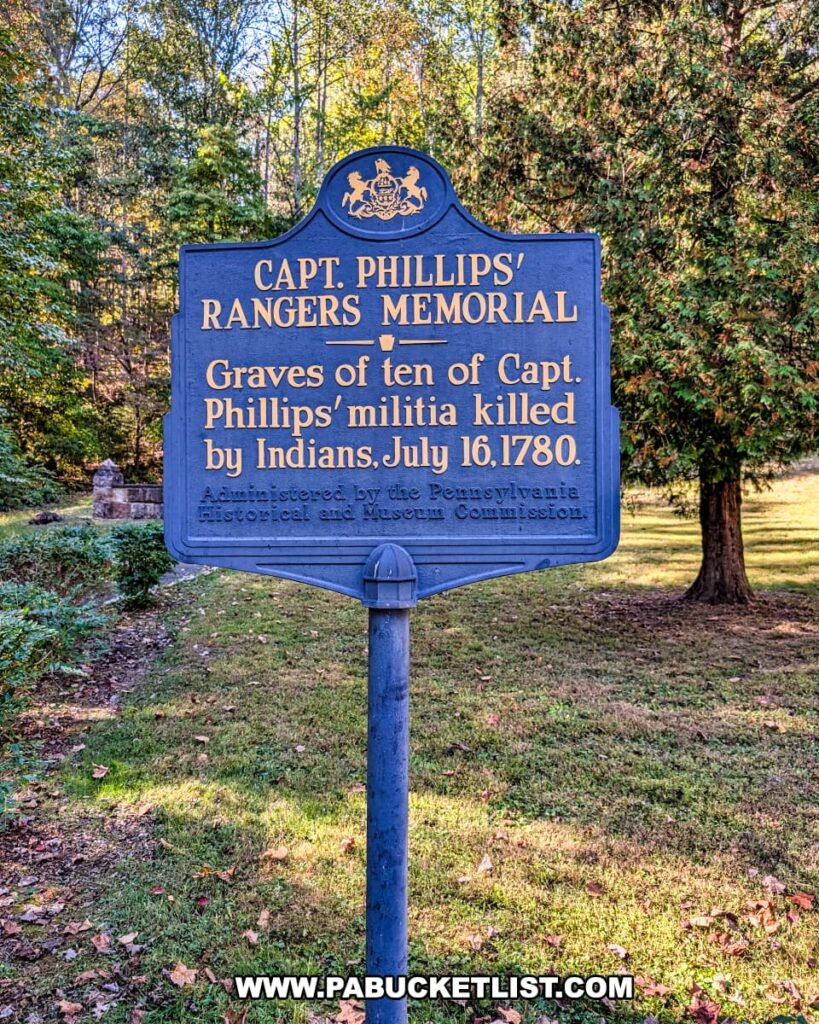
Directions to the Captain Phillips’ Rangers Memorial
Captain Phillips’ Rangers Memorial is located just off of Route 26, roughly 5 miles north of Saxton.
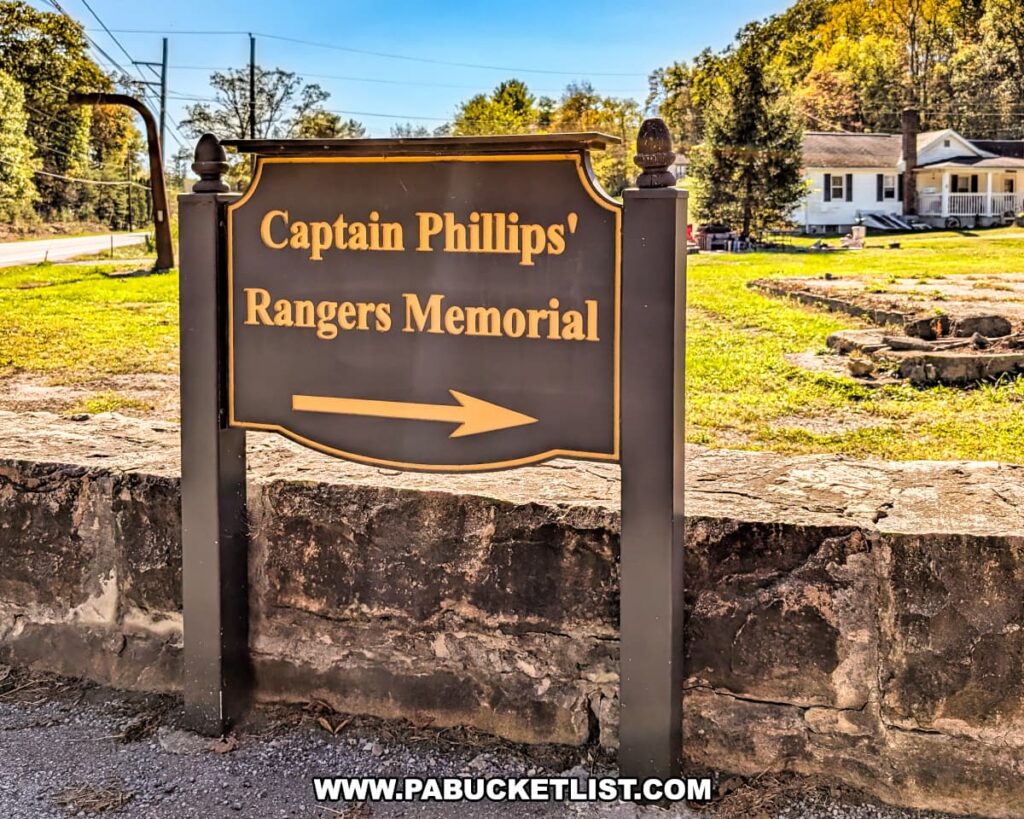
A directional sign along Route 26 guides visitors to the Captain Phillips’ Rangers Memorial, located at the very end of Phillips Memorial Road.
The Tragedy That Inspired the Memorial
In the summer of that year, Captain William Phillips and his Bedford County rangers patrolled the western frontier, guarding settlers against Seneca war parties allied with the British.
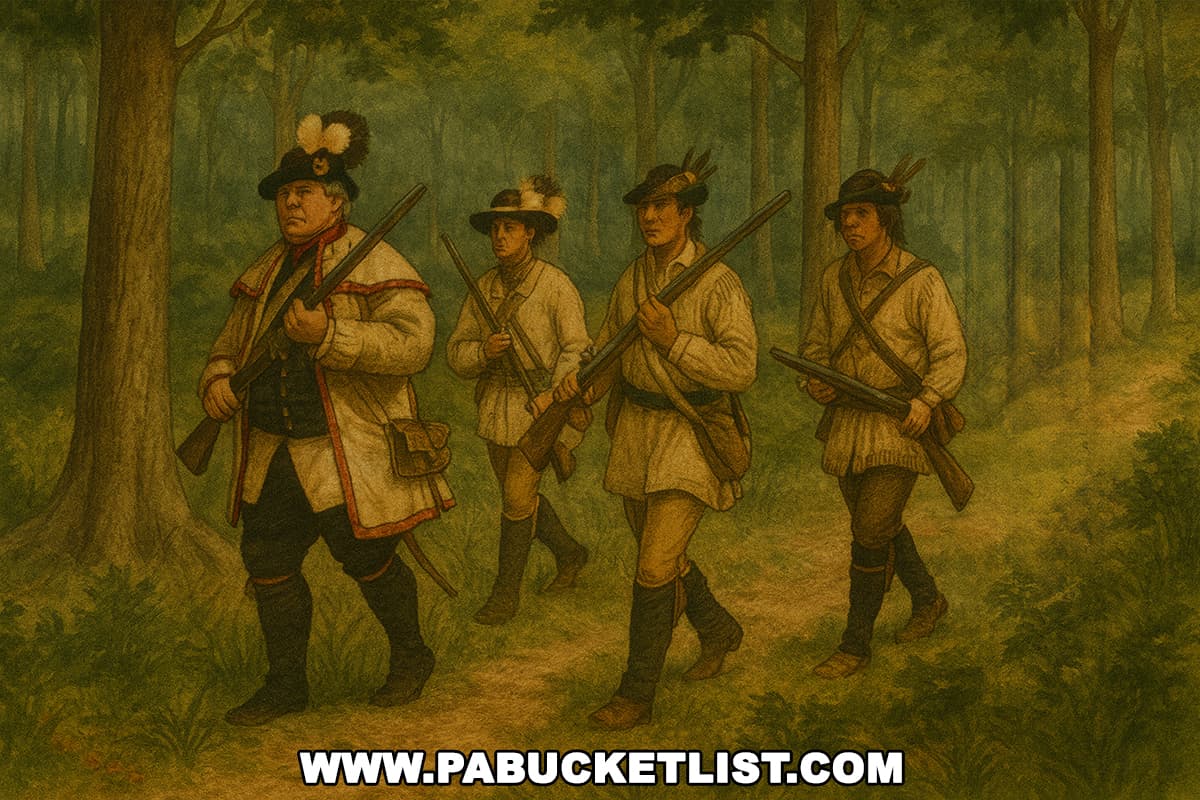
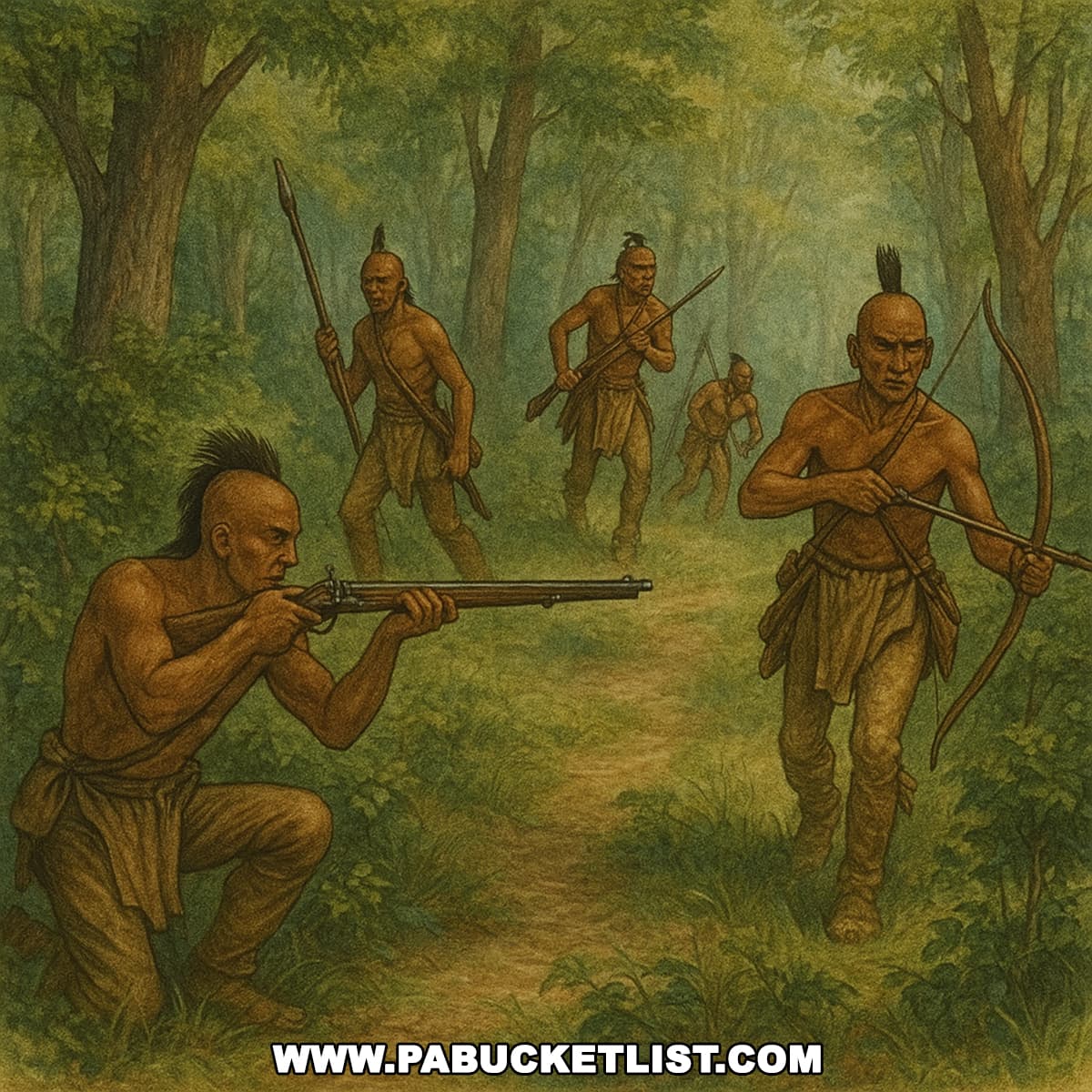
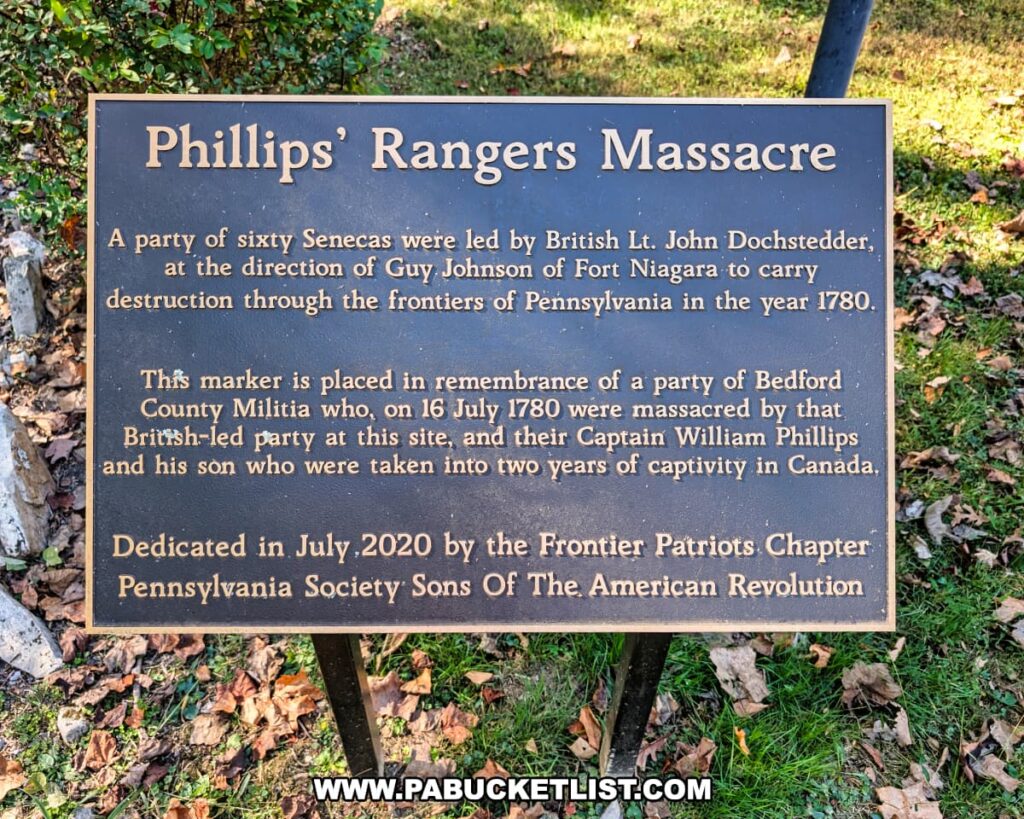
By mid-July, he and his eleven men – including his 14 year-old son Elijah – had crossed the rugged Tussey Mountain into Woodcock Valley, unaware that British Lieutenant John Dochstedder and his force of sixty Seneca warriors were nearby.
Seeking shelter, the rangers spent the night in the abandoned Heater homestead, a sturdy log house equipped with gun loopholes.
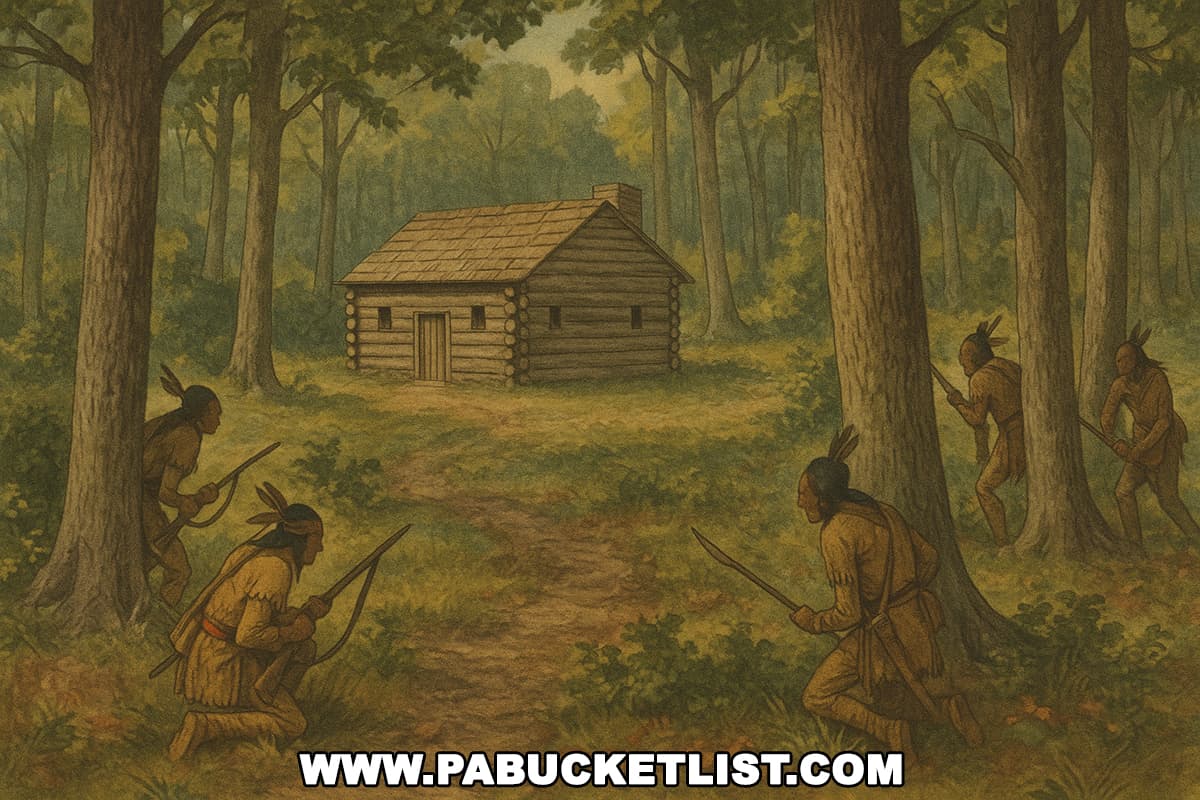
At dawn, they awoke to find the building surrounded, and a fierce battle erupted that lasted for hours.
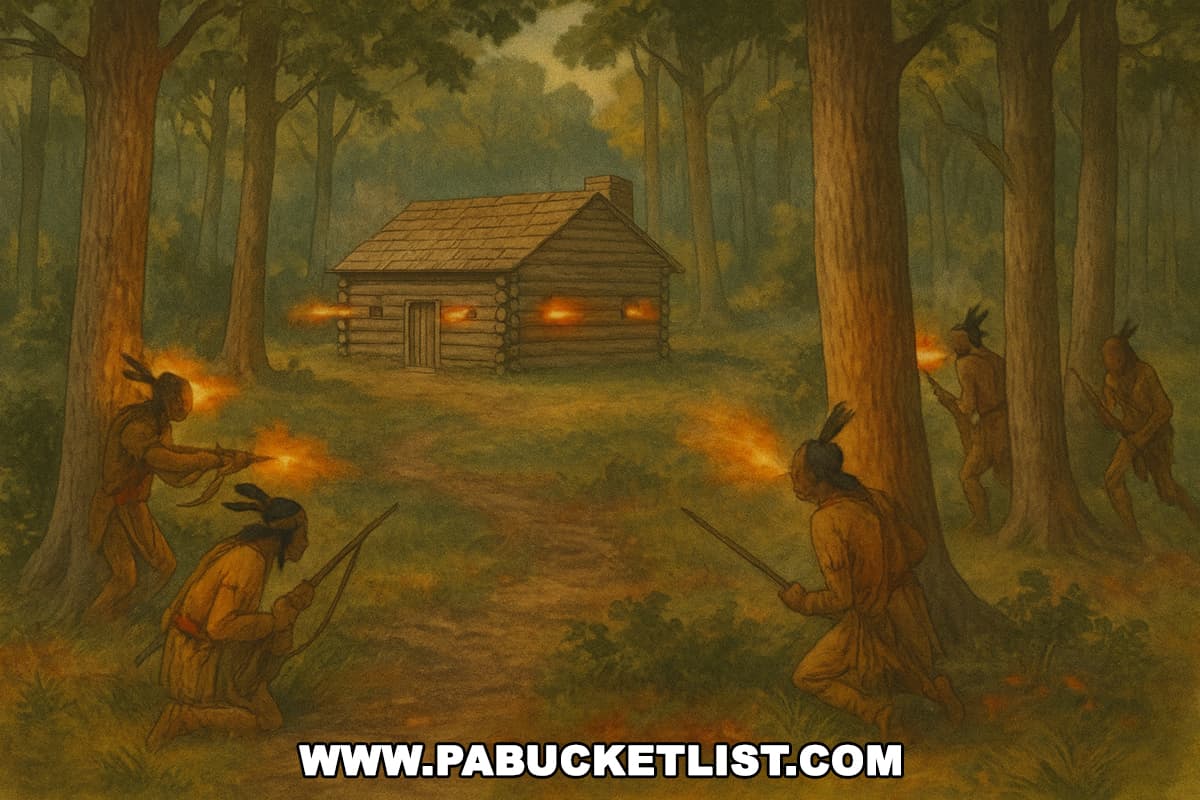
The rangers fought bravely but were ultimately overcome when flaming arrows set the roof ablaze.
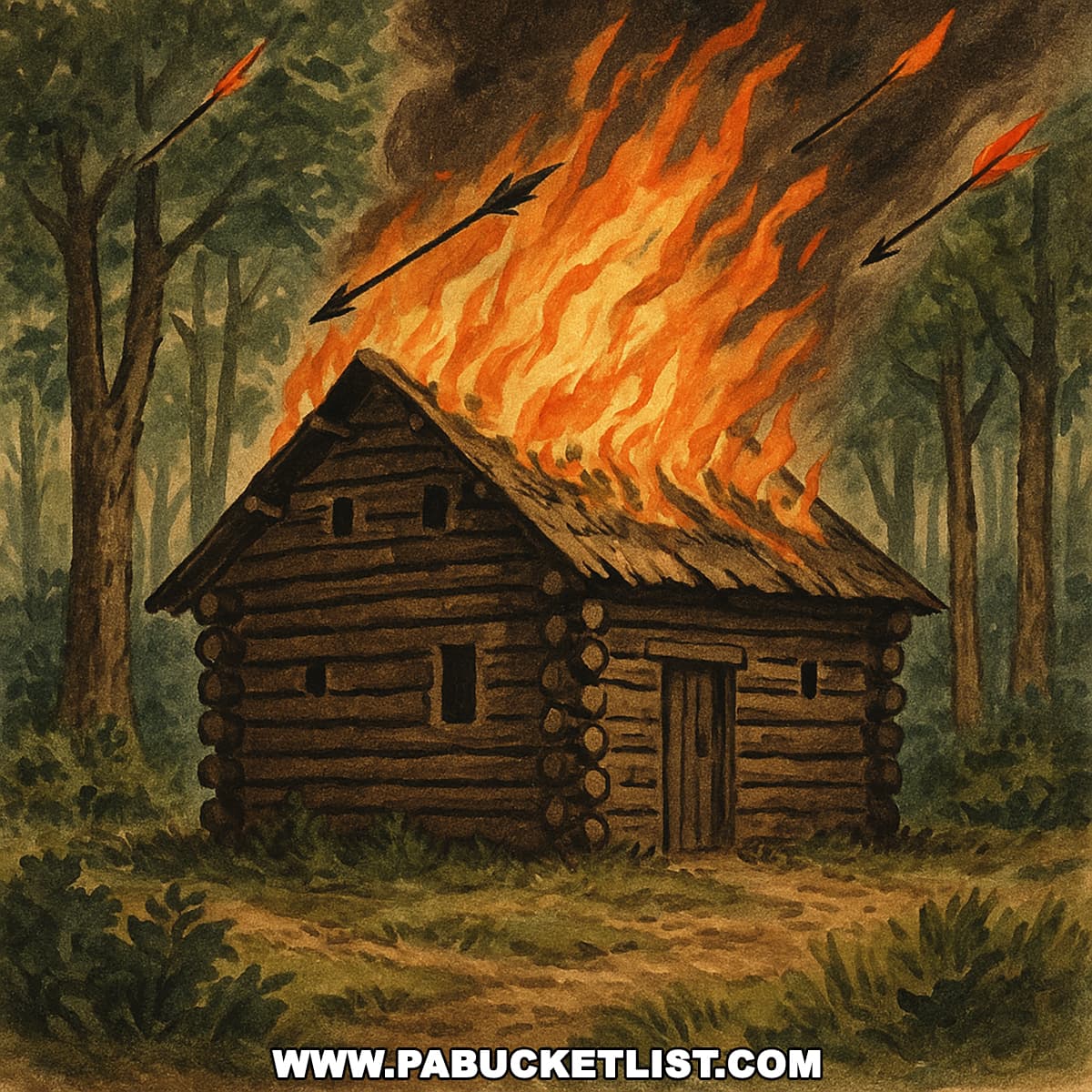
Captain Phillips surrendered under a promise of mercy, but only he and his son were spared and taken prisoner to Canada.
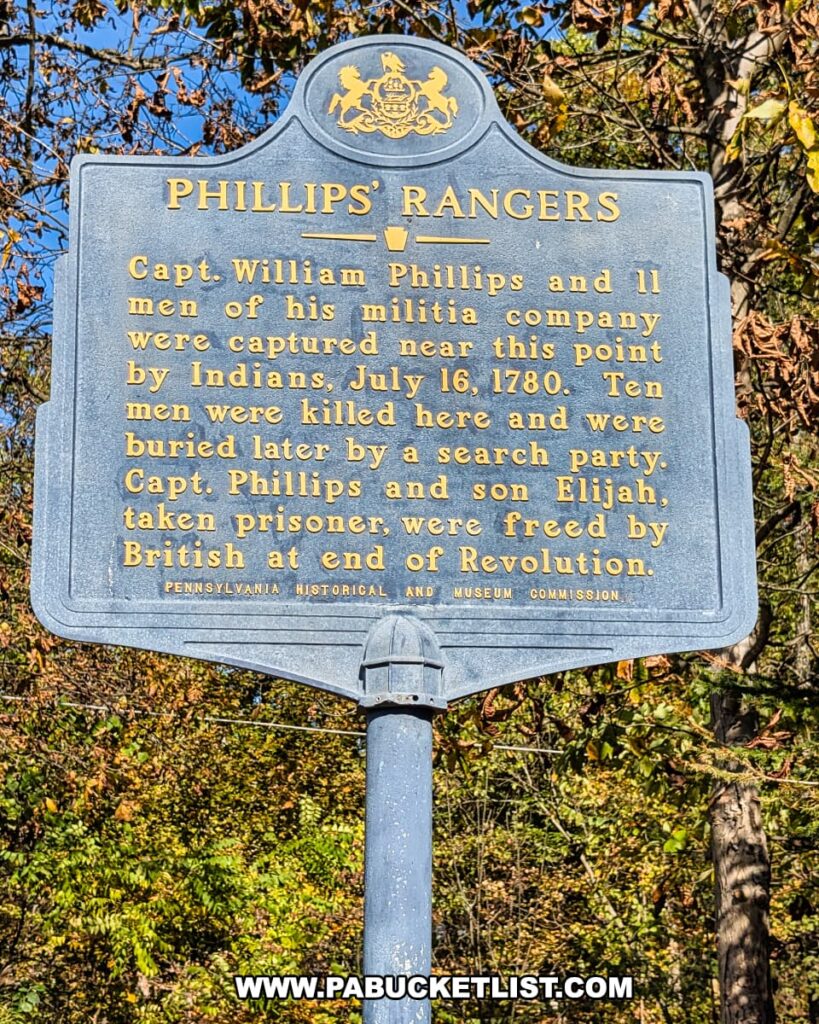
The remaining men were executed by the Seneca and left tied to the trees, their bodies later discovered by Colonel John Piper and buried in a common grave.
Commemorating the Fallen
Over time, the exact location of the rangers’ grave was lost, but a monument was built nearby in 1926 to honor their sacrifice.
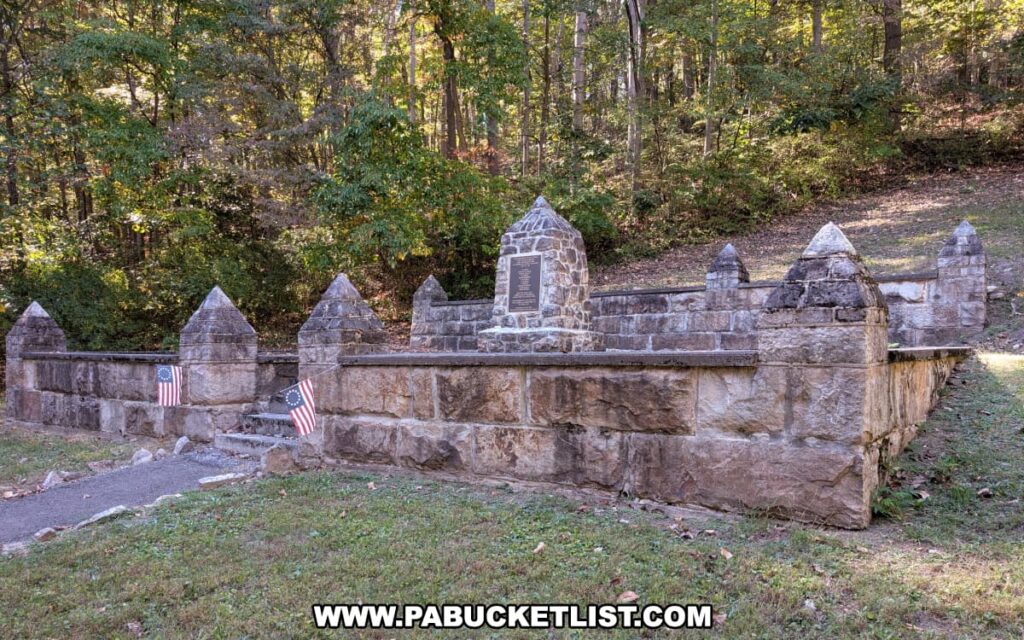
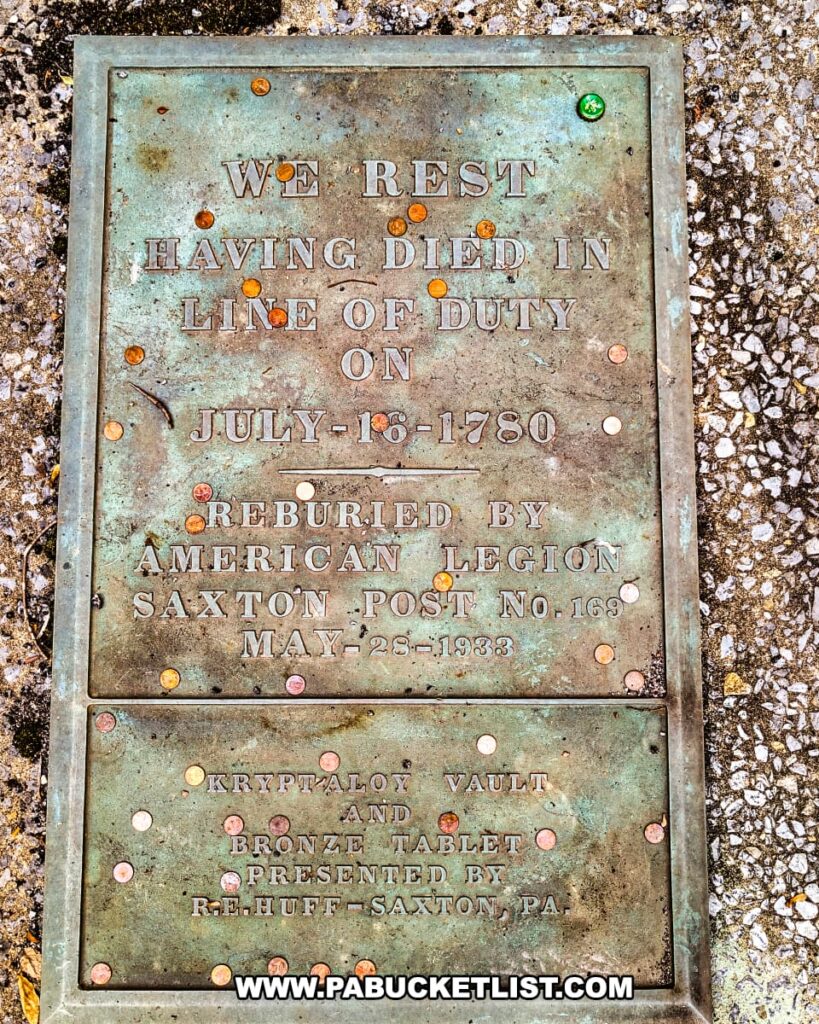
In 1933, a WPA crew discovered human remains just a few feet from the monument, confirming the site of the long-lost burial.
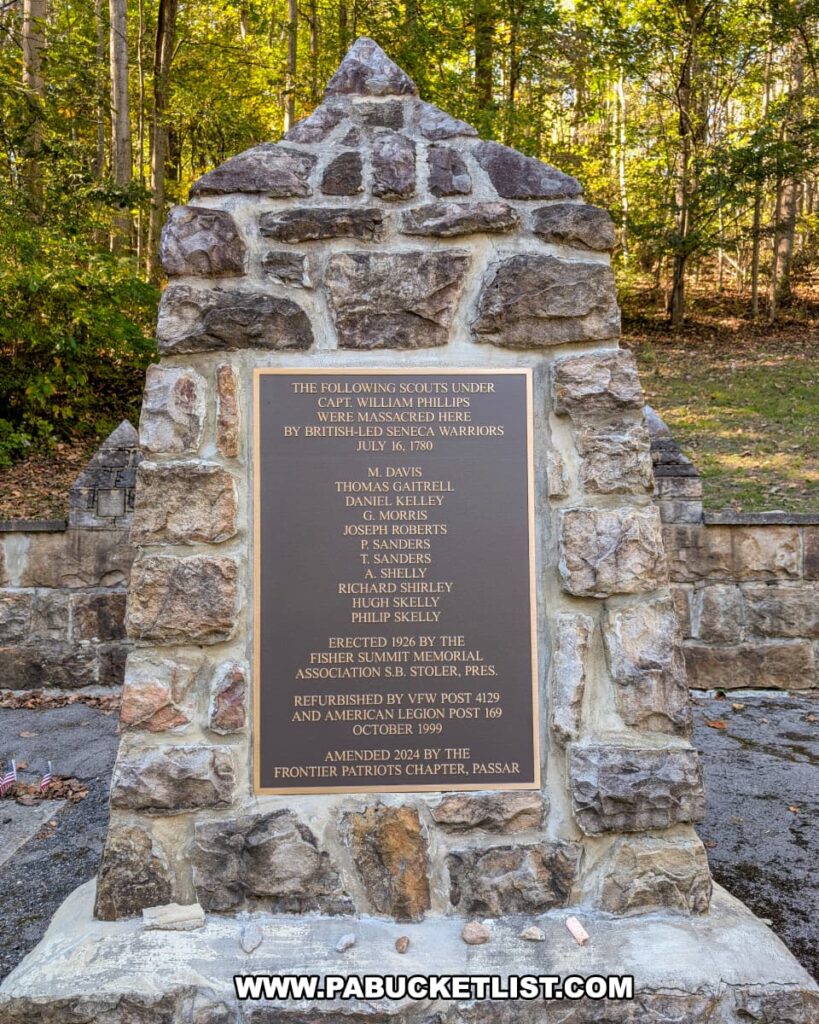
The remains were reinterred during that year’s memorial ceremony, and today the peaceful, well-tended setting offers visitors a quiet place to reflect on the heavy cost of defending Pennsylvania’s frontier during the American Revolution.
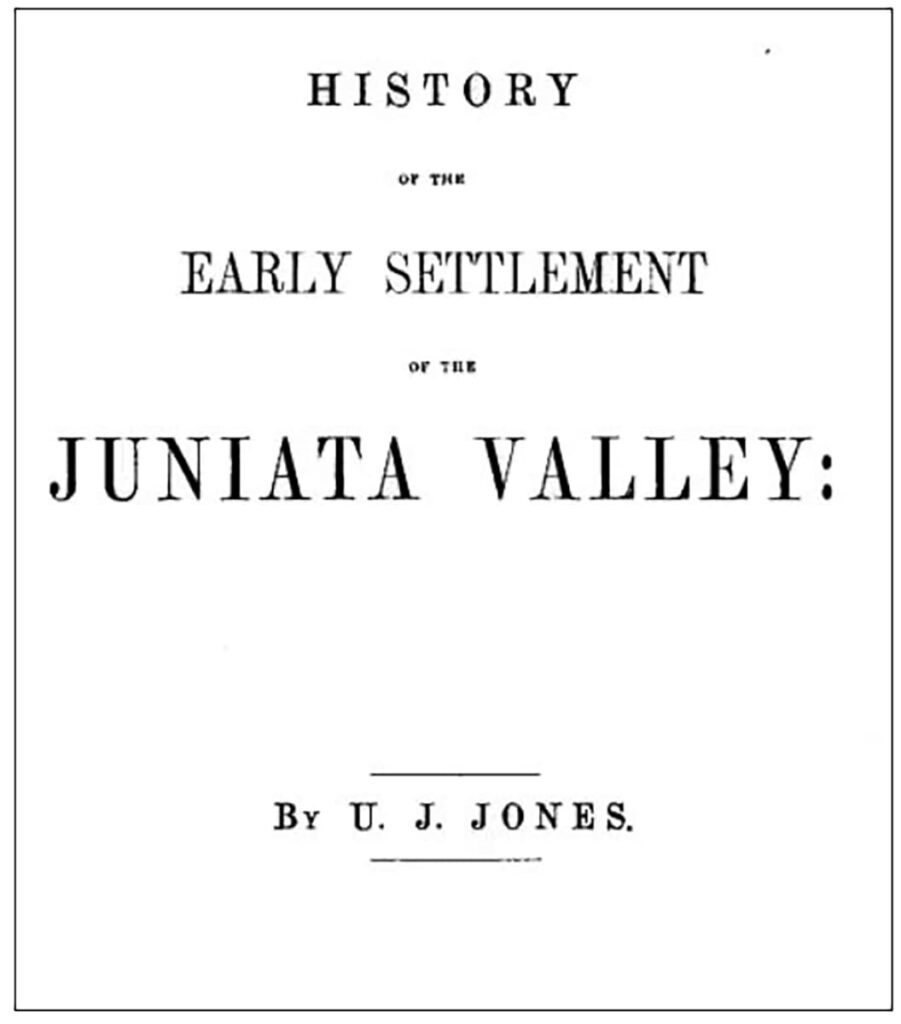
Information for this article was drawn from History of the Early Settlement of the Juniata Valley by U. J. Jones, originally published in 1856 and available to read for free here, courtesy Project Gutenberg.
Related Attractions
The Best America 250 Sites in PA is my carefully curated guide to the top America250 destinations in Pennsylvania—historic places directly tied to the Declaration of Independence and the Revolutionary War that transformed bold words into a new nation.

So if you’ve ever dreamed of taking a patriotic road trip across Pennsylvania, this interactive map and guide will help you plan the ultimate America250 adventure through the Birthplace of Independence.
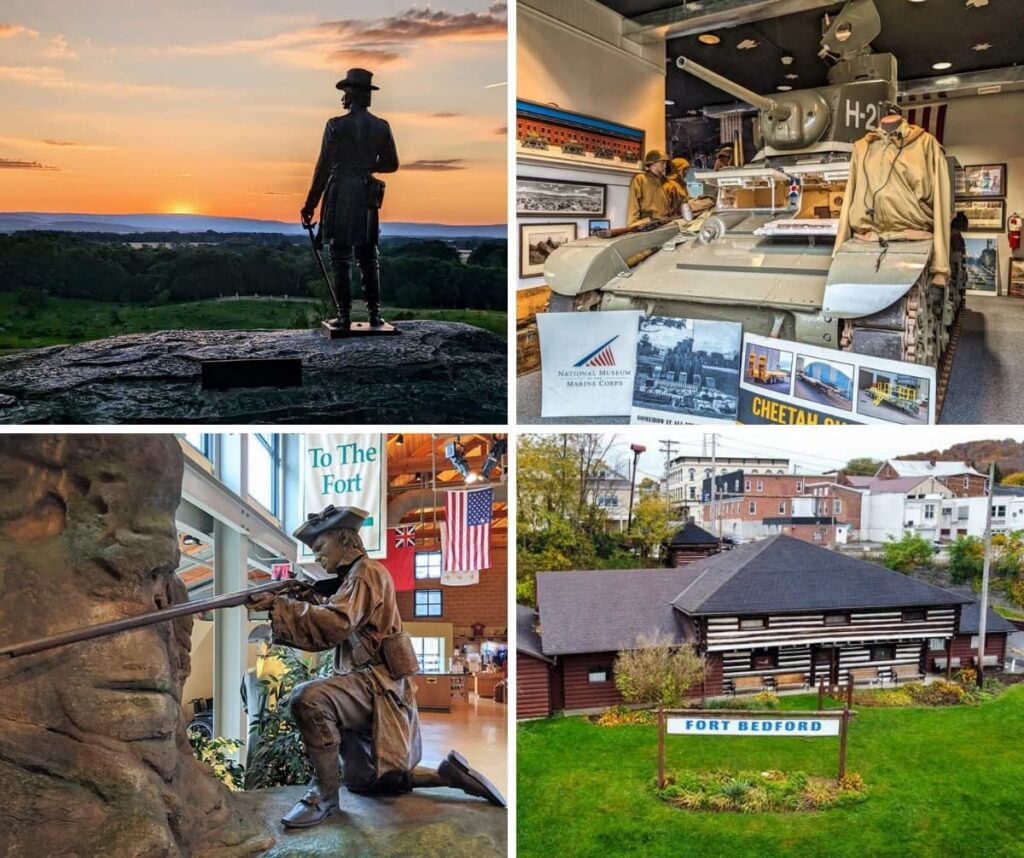
PA’s Best Military-Themed Attractions highlights some of Pennsylvania’s most fascinating battlefields, forts, military museums, and historic sites, all based on my firsthand visits across the Keystone State.
Nearby Attractions
30 Must-See Attractions in Bedford County showcases more remarkable sights and experiences near the Captain Phillips’ Rangers Memorial.

A Smarter Way to Explore Pennsylvania
Explore Pennsylvania like a pro with the interactive PA Bucket List Travel Map, showcasing over 1,000 memorable destinations I’ve personally visited across the Keystone State.
Did you enjoy this article?
If so, be sure to like and follow PA Bucket List on Facebook, Instagram, and/or Pinterest to learn more about the best things to see and do in Pennsylvania!
Click on any of the icons below to get connected to PA Bucket List on social media.