

Home PA Museums Exploring the Fort Pitt Museum in Pittsburgh

Exploring the Fort Pitt Museum in Pittsburgh

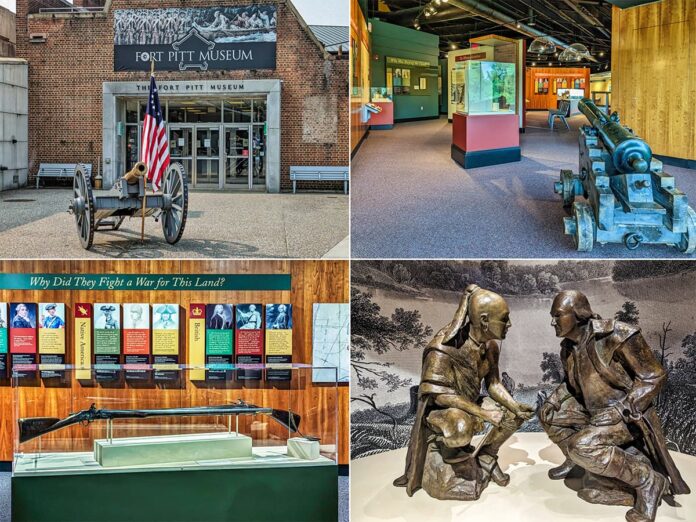
A photo collage from the Fort Pitt Museum in Pittsburgh, Pennsylvania, featuring (from top left to bottom right): the museum entrance with an American flag and cannon, the interior with exhibits and a cannon on display, an informational panel about the significance of the land, and a sculpture of two historical figures in discussion.

In the heart of Pittsburgh, at the confluence of three rivers, the Fort Pitt Museum stands as a beacon of American history.
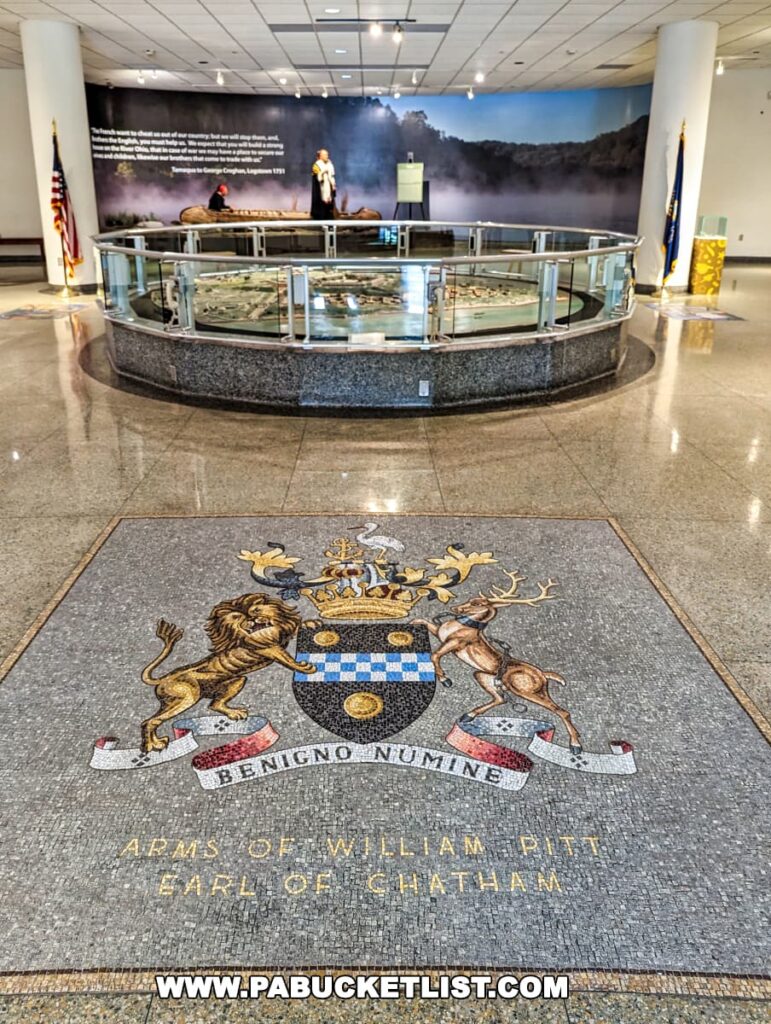
Inside the Fort Pitt Museum in Pittsburgh, Pennsylvania, showcasing a mosaic of the coat of arms of William Pitt, Earl of Chatham, embedded in the floor, with a diorama exhibit and flags in the background, including the American flag and the Pennsylvania state flag.
William Pitt’s Coat of Arms.

Renowned for its in-depth portrayal of pivotal moments in the region’s history, the museum has gained acclaim for its extensive exhibits, including a significant focus on the French and Indian War.
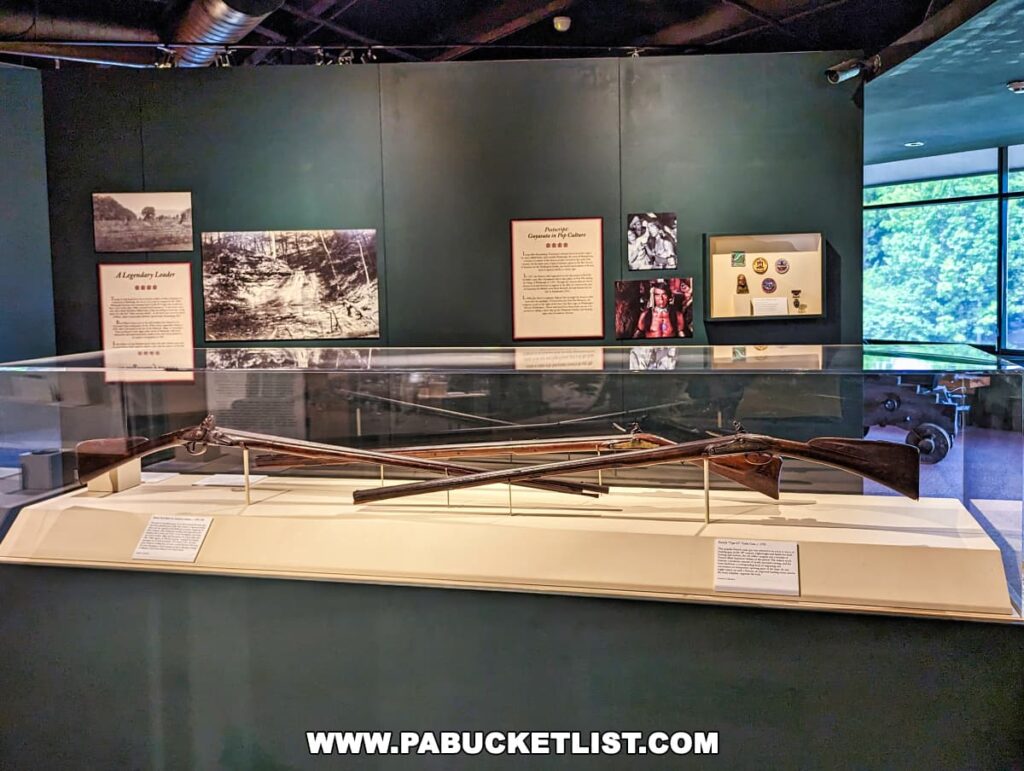
An exhibit at the Fort Pitt Museum in Pittsburgh, Pennsylvania, displaying two historical rifles placed on a stand, with informational panels and photographs in the background that provide context on the weaponry and its use during the time period.
The French and Indian War is a major focus of the museum.

The Fort Pitt Museum, administered by the Senator John Heinz History Center, is surrounded by Point State Park, named for the geographically and historically significant “point” where the Allegheny and Monongahela rivers converge to form the Ohio River.
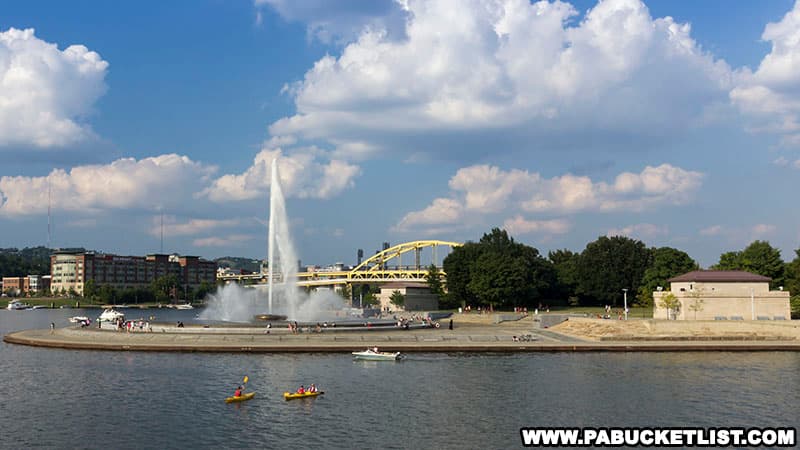
A view of Point State Park in Pittsburgh from the Gateway Clipper.
A view of Point State Park from the Gateway Clipper, with the Fort Pitt Museum on the right side of the photo.

Today, this 12,000-square-foot facility is a treasure trove of artifacts and exhibits related to the formative years of Pittsburgh, helping visitors unravel the intricate tapestry of the city’s past.
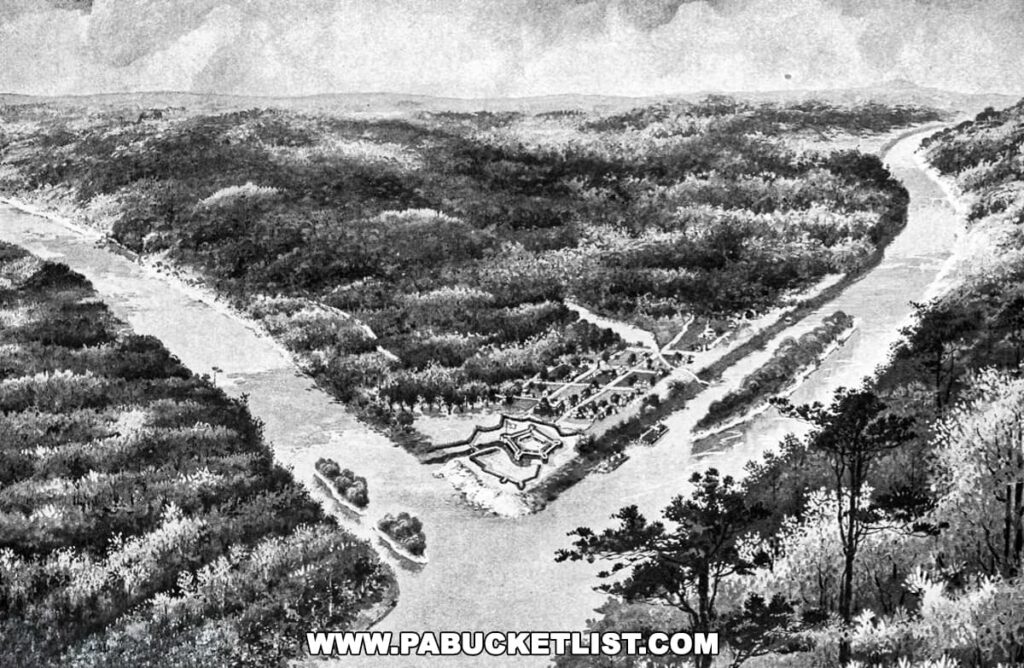
Artist's black and white rendition of Fort Pitt, located in present-day Pittsburgh, Pennsylvania, showing the historical fortifications from an aerial perspective surrounded by lush foliage along a river.
An early rendering of Fort Pitt and the settlement that would become Pittsburgh.

Directions | Hours | Admission Fees

The Fort Pitt Museum is located at 601 Commonwealth Place, Pittsburgh, PA 15222.


The museum has no onsite parking – there are a number of metered lots and parking garages nearby and the museum’s OFFICIAL WEBSITE lists them all.

The Portal Bridge and reflecting pool at Point State Park in Pittsburgh Pennsylvania.
The Fort Pitt Museum is most accessible by parking downtown and walking under the portal bridge near the entrance to Point State Park.

The Fort Pitt Museum is open daily from 10 a.m. to 5 p.m. (closed on New Year’s Day, Easter, Thanksgiving, and Christmas).
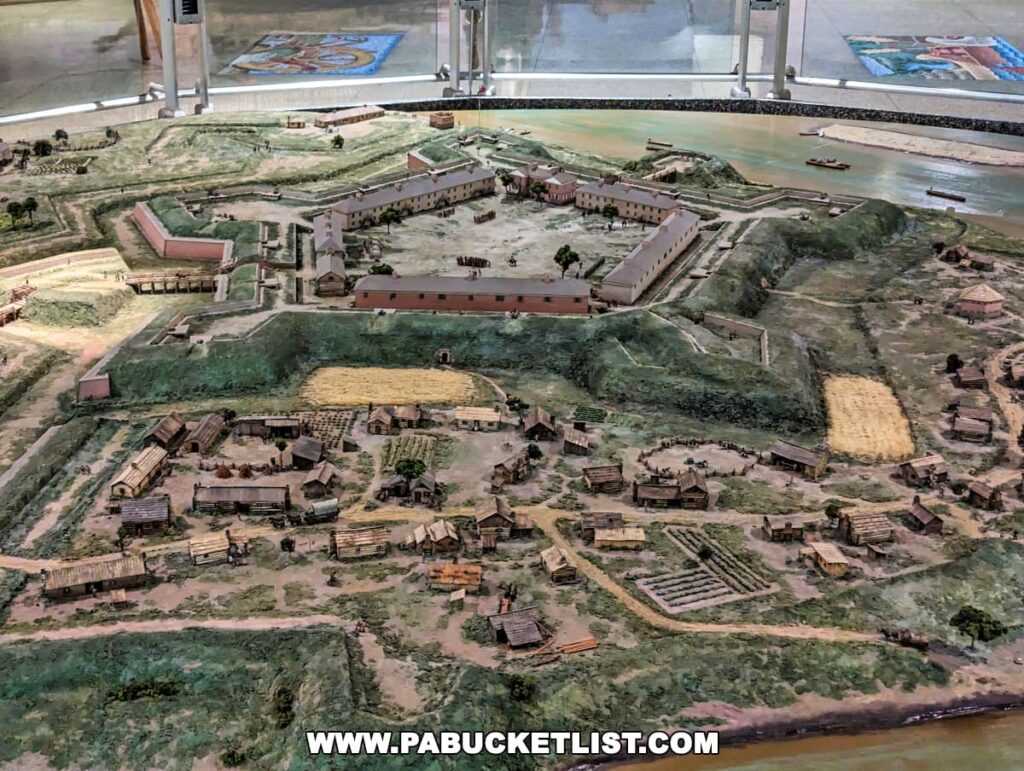
A detailed diorama at the Fort Pitt Museum in Pittsburgh, Pennsylvania, depicting the historical Fort Pitt complex with its multiple buildings, defensive walls, and surrounding landscape, including representations of the rivers and boats from the period.
Diorama of Fort Pitt at the museum.

Admission fees as of 2023 are: Adults $10 | Senior Citizens (65+) $8 | Students with a valid school ID $6 | Children ages 6-17 $8 |Children ages 5 and under Free.

Merchandise display at the Fort Pitt Museum gift shop in Pittsburgh, Pennsylvania, featuring a variety of themed t-shirts with slogans and images related to Fort Pitt and Point State Park, as well as a yellow pennant with 'Fort Pitt est. 1759' written on it.
Museum gift shop.

The Museum Setting

The museum is housed in a recreated bastion of Fort Pitt, which was originally built in 1758 by the British.
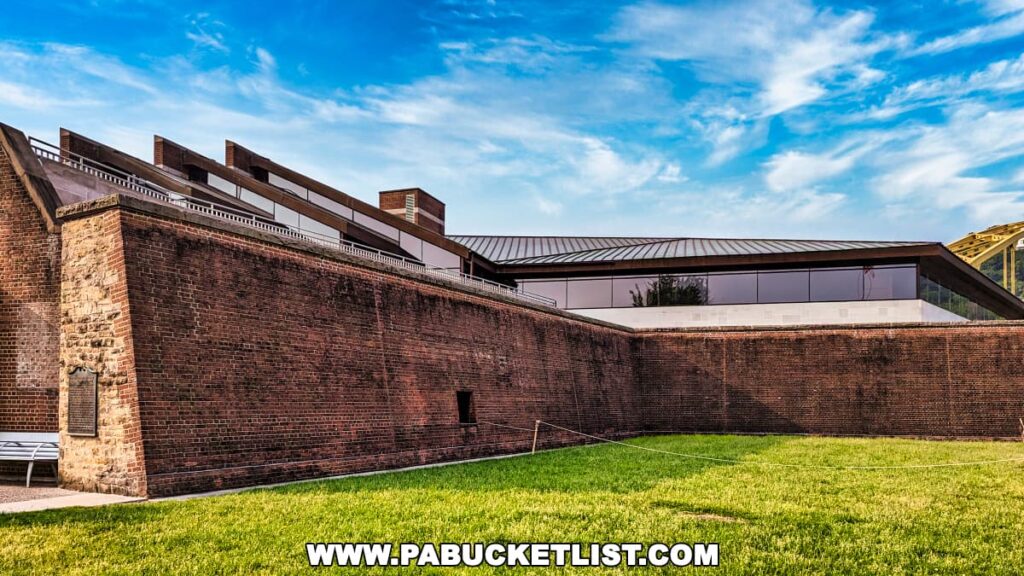
Side view of the Fort Pitt Museum in Pittsburgh, Pennsylvania, displaying the replica brick bastion walls with a modern museum building on top.
Side view of the museum, housed in a replica bastion of the original Fort Pitt.

The original Fort Pitt had 5 such bastions, to give you a sense of how much of the Point it took up.
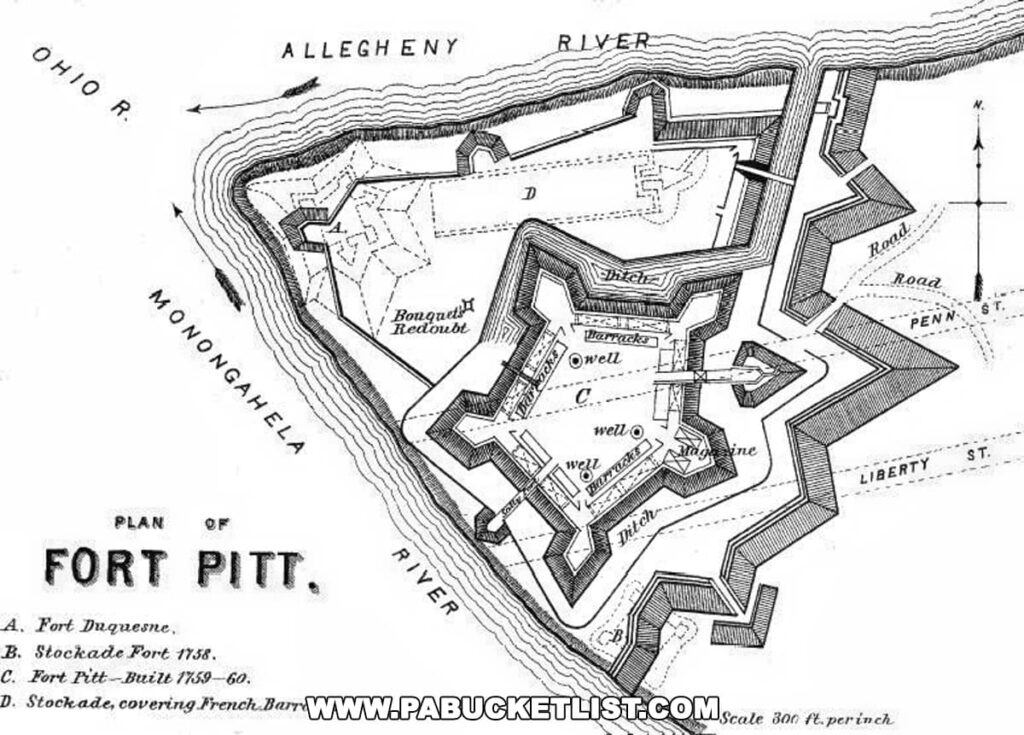
Historical map of Fort Pitt, detailed with the fort's layout and surrounding geographical features like the Ohio River, Allegheny River, and Monongahela River. The diagram labels various parts of the fort, including Fort Duquesne, the stockade from 1758, and other key structures, providing a glimpse into the fort's strategic design during the 18th century.
Diagram of Fort Pitt.

A concrete outline of Fort Duquesne, the French Fort that preceded Fort Pitt, is located nearby, closer to the tip of the Point.
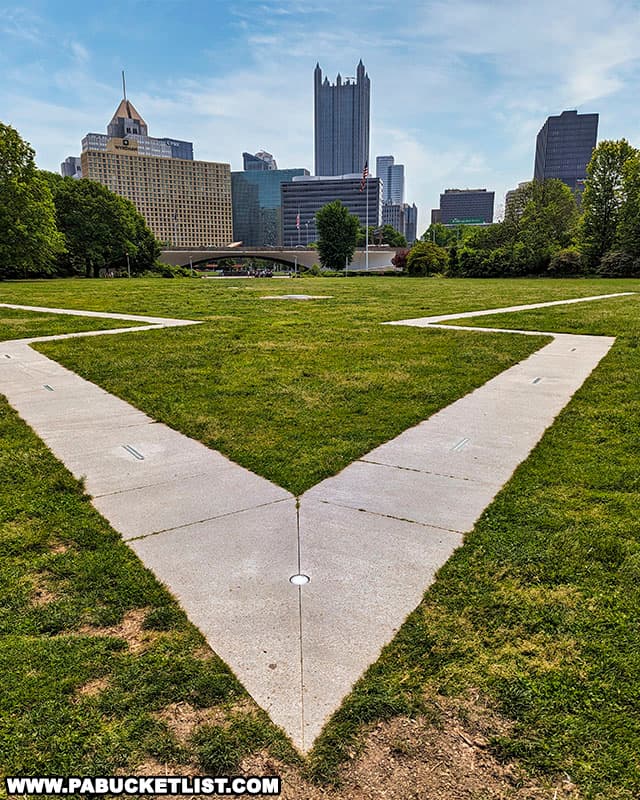
The concrete tracery marking the original outline of Fort Duquesne at Point State Park in Pittsburgh Pennsylvania.
The concrete tracery marking the original outline of Fort Duquesne.

Overview of the Exhibits

The museum’s two floors are a repository of history, each section meticulously curated to showcase different facets of the region’s past.
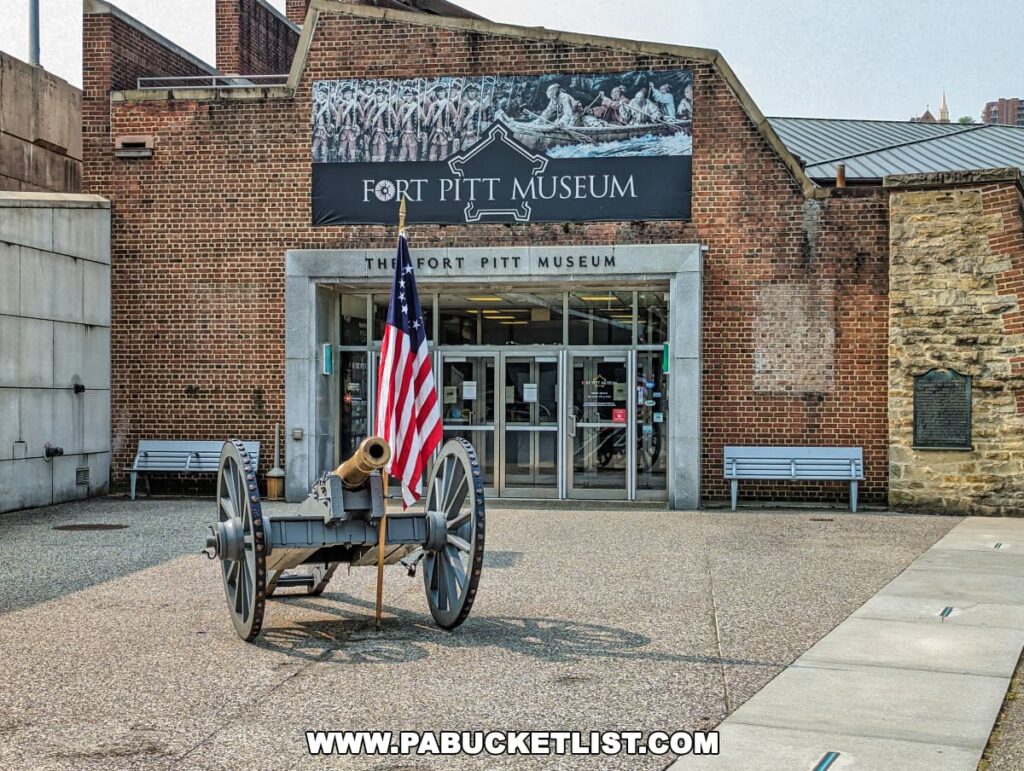
The entrance of the Fort Pitt Museum in Pittsburgh, Pennsylvania, with an antique cannon in the foreground displaying the American flag. The museum's facade features a brick wall and a banner with an image of colonial figures, welcoming visitors to explore the historical site.
Museum entrance.

The French and Indian War: This exhibit delves into the complex dynamics of this period, with models and multimedia presentations vividly depicting the conflict.
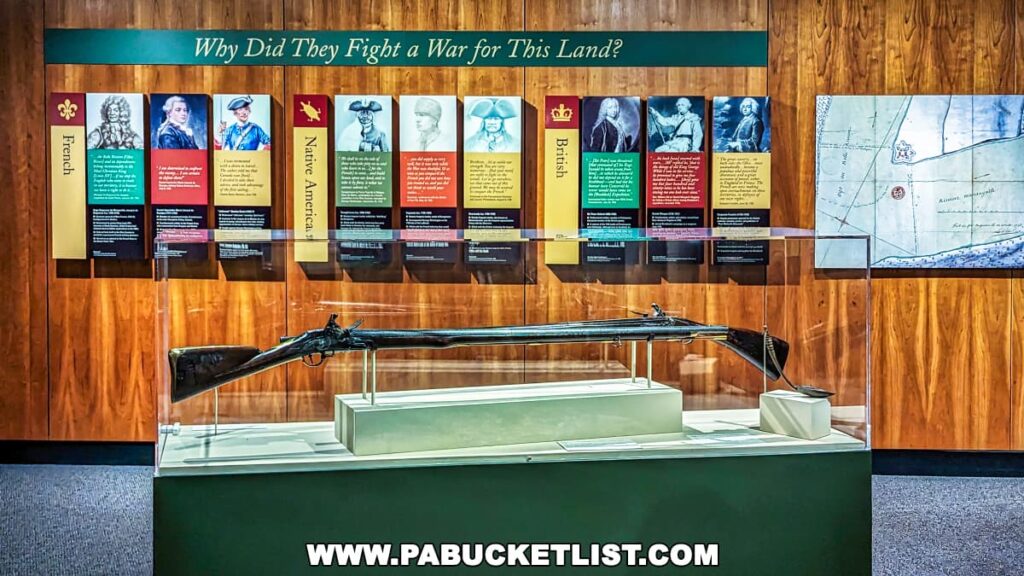
An educational exhibit at the Fort Pitt Museum in Pittsburgh, Pennsylvania, titled 'Why Did They Fight a War for This Land?' featuring a display of a historical rifle and a series of panels with narratives from French, Native American, and British perspectives, along with a map showing strategic locations.
Many parties had a stake in the outcome of the French and Indian War.

Daily Life in the 18th Century: Authentic artifacts from this era, including tools, clothing, and household items, paint a picture of everyday challenges faced by settlers and Native Americans.
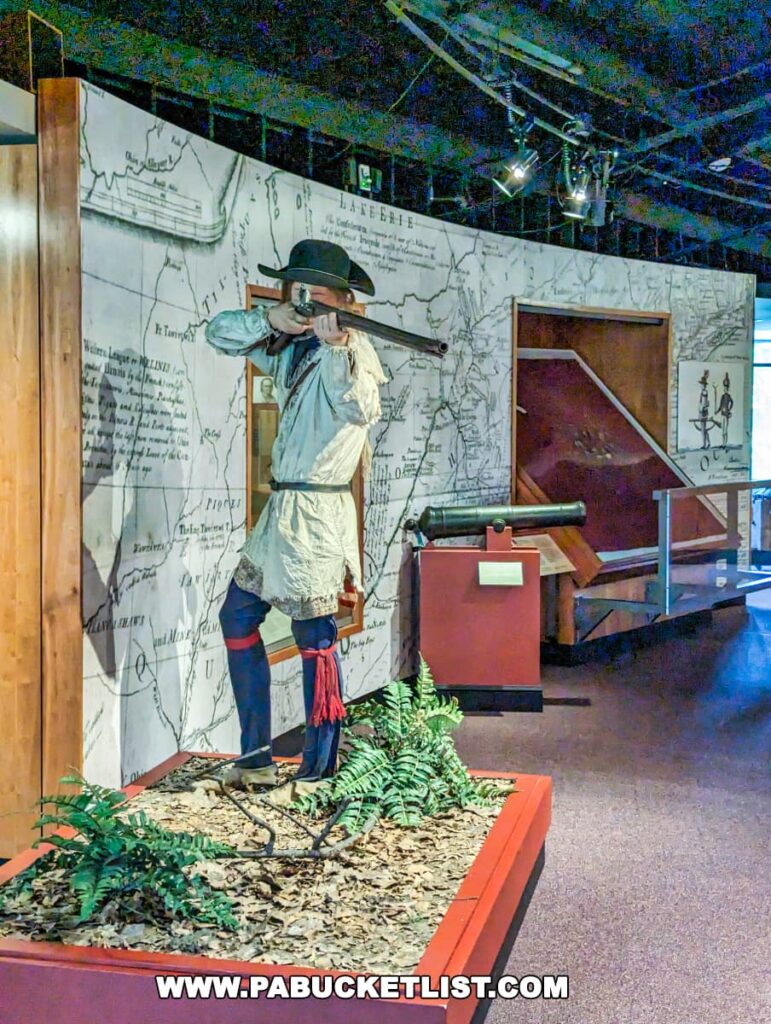
A museum exhibit at the Fort Pitt Museum in Pittsburgh, Pennsylvania, depicting an early settler aiming a long rifle. The life-size mannequin is set against a backdrop of a large historical map, illustrating the terrain and waterways of the region. The exhibit includes native flora to enhance the realism of the settler's environment.
Frontiersman.

The American Revolution: Highlighting Pittsburgh’s strategic role, this section features military artifacts, strategic maps, and personal letters from the era.
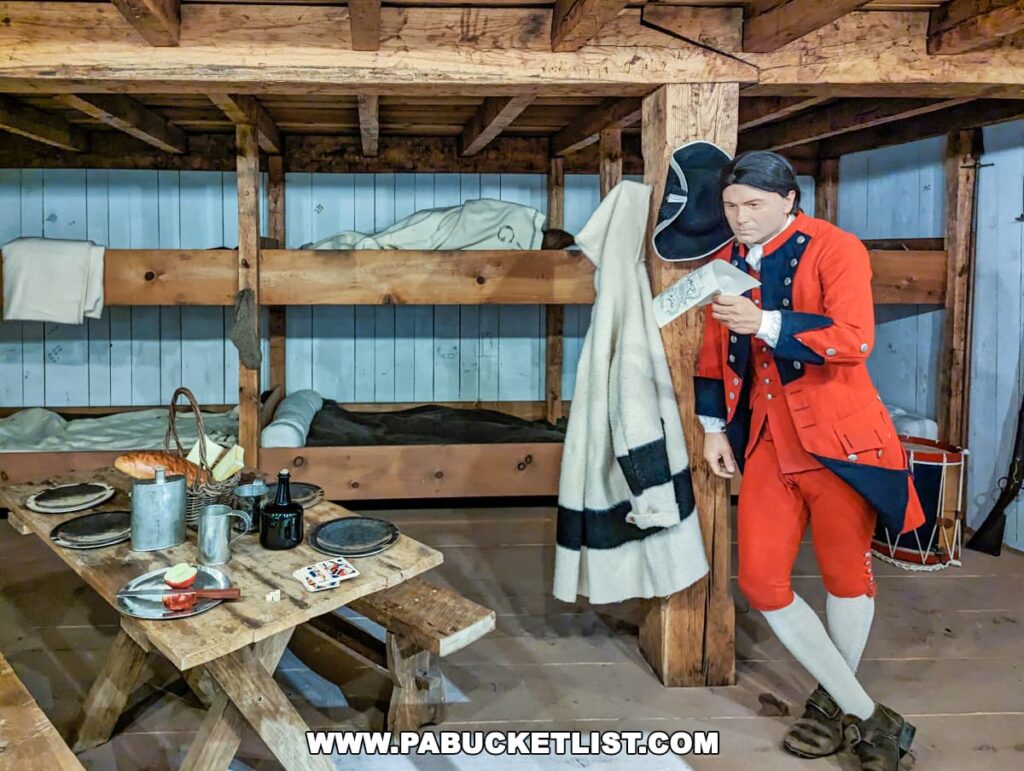
A lifelike diorama within the Fort Pitt Museum in Pittsburgh, Pennsylvania, featuring a mannequin dressed in a red colonial military uniform reading a letter. The setting includes wooden bunk beds, a rustic table set with period-appropriate utensils, bread, and a jug, creating an immersive depiction of barracks life during the colonial era.
Barracks life at Fort Pitt.

Pontiac’s War: A dedicated exhibit on Pontiac’s War provides a comprehensive view of this often-overlooked conflict.

An exhibit panel titled 'Broken Promises' at the Fort Pitt Museum in Pittsburgh, Pennsylvania, describing the aftermath of war where Native Americans realized treaty terms would not be honored. It highlights the response of Neolin, a Delaware prophet, and Pontiac, an Ottawa leader, who urged the return to traditional ways and rallied warriors to oppose British forces.
Pontiac’s War followed the French and Indian War.

Artifacts, documents, and interactive displays explore the causes, key figures, and significant battles of the war, emphasizing the Native American perspective and their struggle against British expansion.
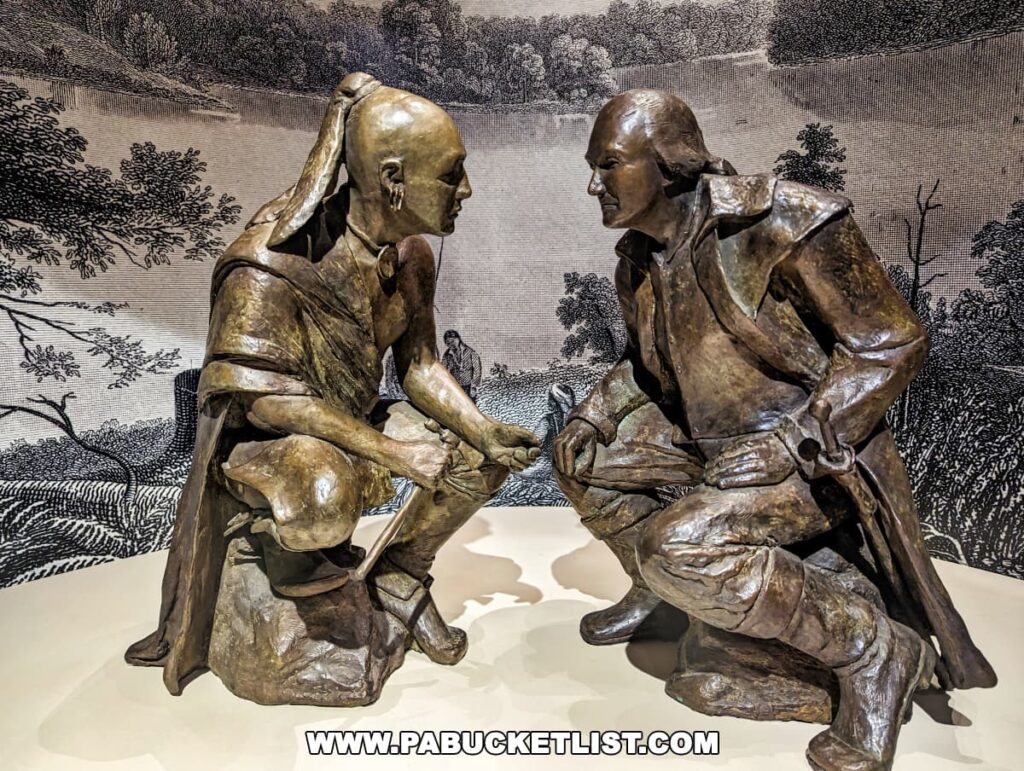
A bronze sculpture at the Fort Pitt Museum in Pittsburgh, Pennsylvania, depicting a meeting between Guyasuta, a Native American leader, and George Washington. They are portrayed in a moment of discussion, kneeling and facing each other against a backdrop with a printed landscape.
George Washington made several trips to “The Point” during his lifetime.

The Fort Pitt Blockhouse: Outside, the Blockhouse, part of the original fortification, offers insights into military strategies of the 18th century.
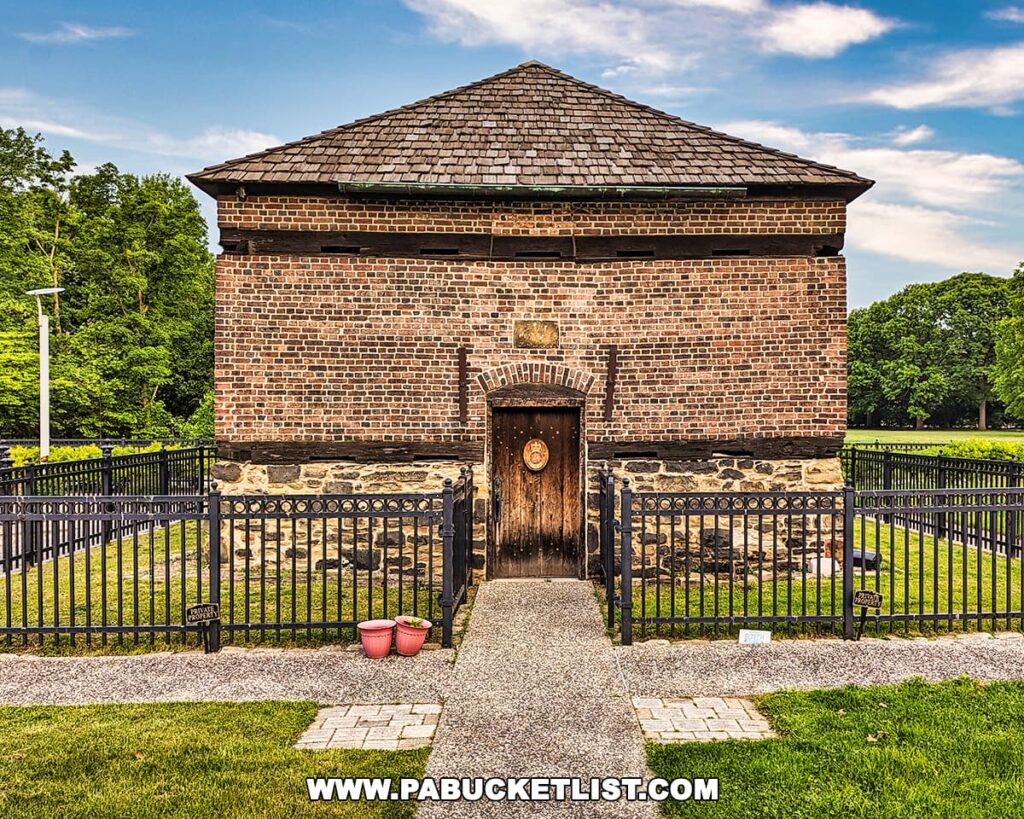
Front view of the Fort Pitt Blockhouse, the oldest architectural landmark in Pittsburgh, Pennsylvania, with its sturdy brick walls and wooden door. The structure is encircled by a black iron fence, and the scene is set against a vibrant green lawn and clear blue sky.
The Fort Pitt Blockhouse.

Erected in 1764, the Blockhouse is believed to be the oldest building, not only in Pittsburgh but in western Pennsylvania.
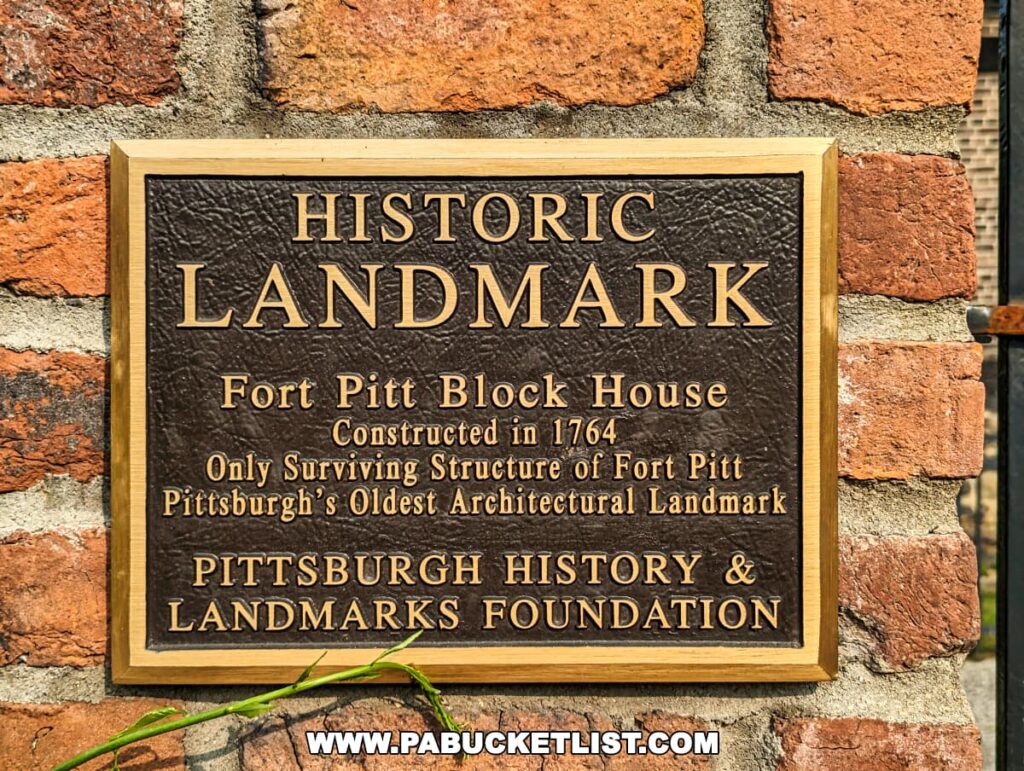
A commemorative plaque on a red brick wall at the Fort Pitt Museum, Pittsburgh, Pennsylvania, marking the Fort Pitt Blockhouse as a 'Historic Landmark'. The text on the plaque notes the blockhouse as the only surviving structure of Fort Pitt and Pittsburgh's oldest architectural landmark, constructed in 1764, presented by the Pittsburgh History & Landmarks Foundation.
The Blockhouse is believed to be the oldest surviving structure west of the Allegheny Mountains.

Throughout the museum you’ll encounter life-sized figures frozen in time, meticulously crafted to reflect the diverse tapestry of people who shaped Pittsburgh’s destiny.

A diorama at the Fort Pitt Museum in Pittsburgh, Pennsylvania, featuring two life-size figures representing historical characters from the 18th century near a traditional canoe. The background is a quote from Tamaqua to George Croghan, expressing the need for a stronghold on the River Ohio to secure their families and trade.
One of many life-size dioramas at the museum.

As you make your way through the museum’s informative displays, you’ll witness the remarkable transformation of a frontier outpost into a bustling city.
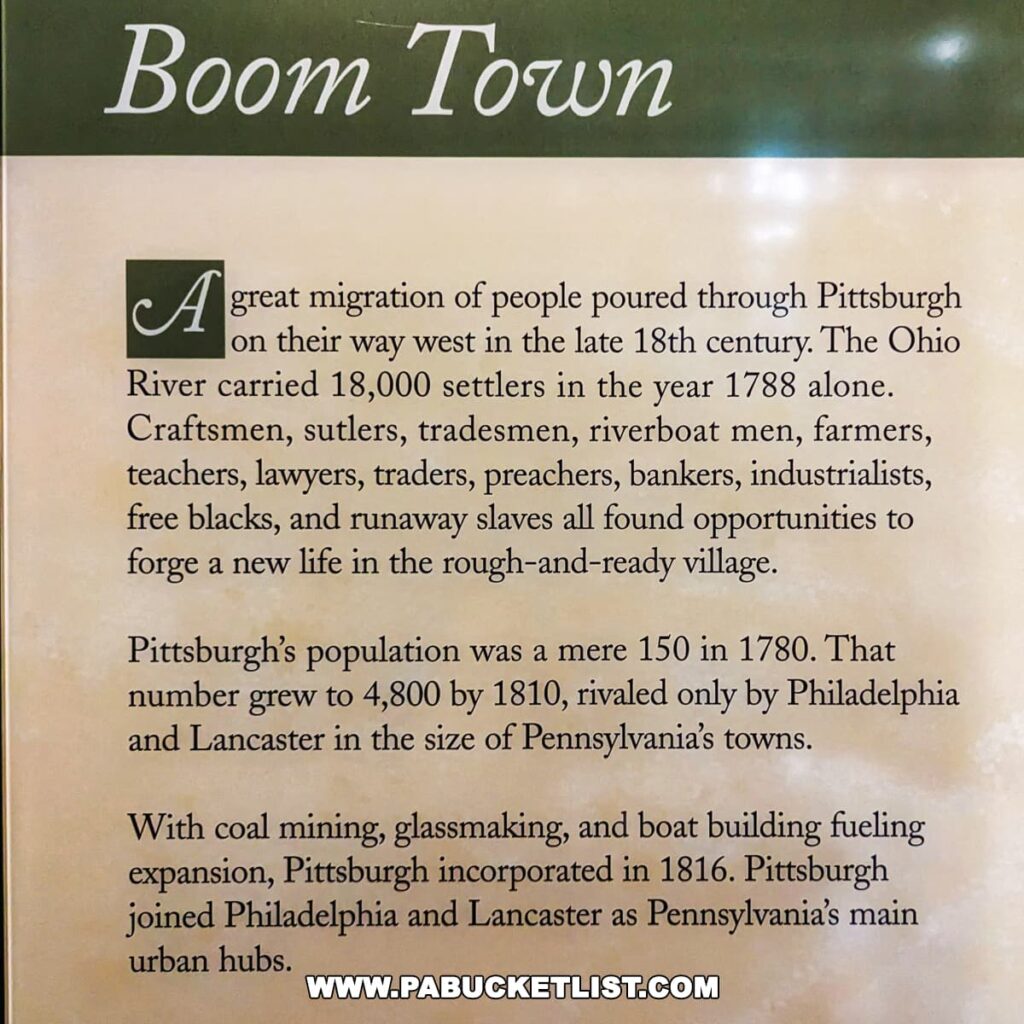
An informational exhibit panel titled 'Boom Town' at the Fort Pitt Museum in Pittsburgh, Pennsylvania. The text discusses the significant migration of people through Pittsburgh going west in the late 18th century, with the Ohio River carrying 18,000 settlers in 1788. It details the diverse group of people including craftsmen, tradesmen, and farmers, among others, who helped grow Pittsburgh’s population from 150 in 1780 to 4,800 by 1810.
Pittsburgh became a boomtown in the 1800s.

Final Thoughts

The Fort Pitt Museum offers a captivating blend of historical exhibits, interactive displays, and scenic surroundings, making it an ideal daytrip destination for those seeking to immerse themselves in the rich tapestry of Pennsylvania’s colonial and Revolutionary War history.
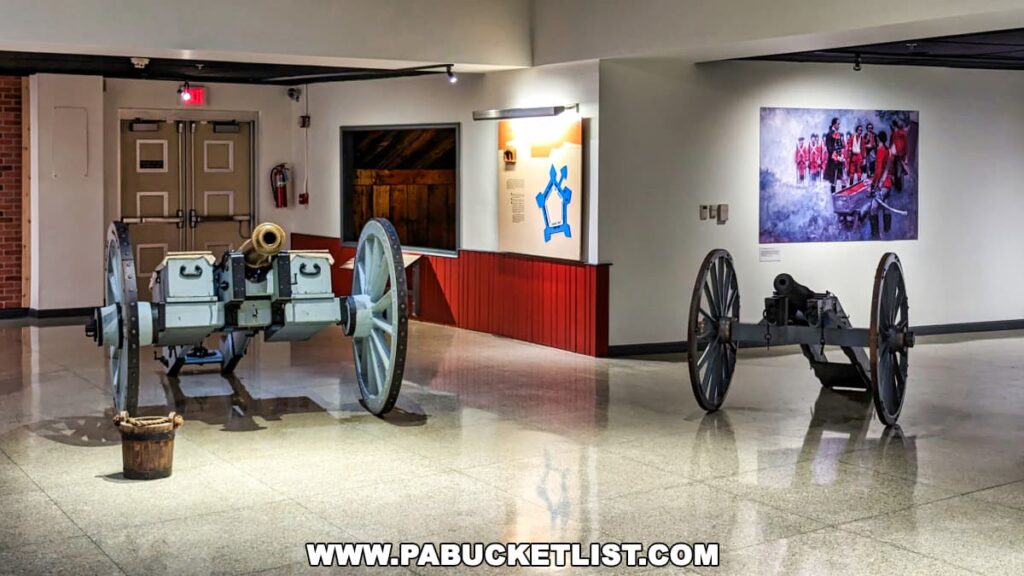
Two historical cannons prominently displayed on the polished floor at he Fort Pitt Museum. In the background, there's a colorful painting depicting colonial figures and explanatory exhibits lining the walls, providing context to the artifacts and the history of the region.
Fort Pitt played a pivotal role in world history.

Whether you’re a seasoned history buff or simply curious about the Pittsburgh’s vibrant past, the Fort Pitt Museum makes for a great daytrip destination!
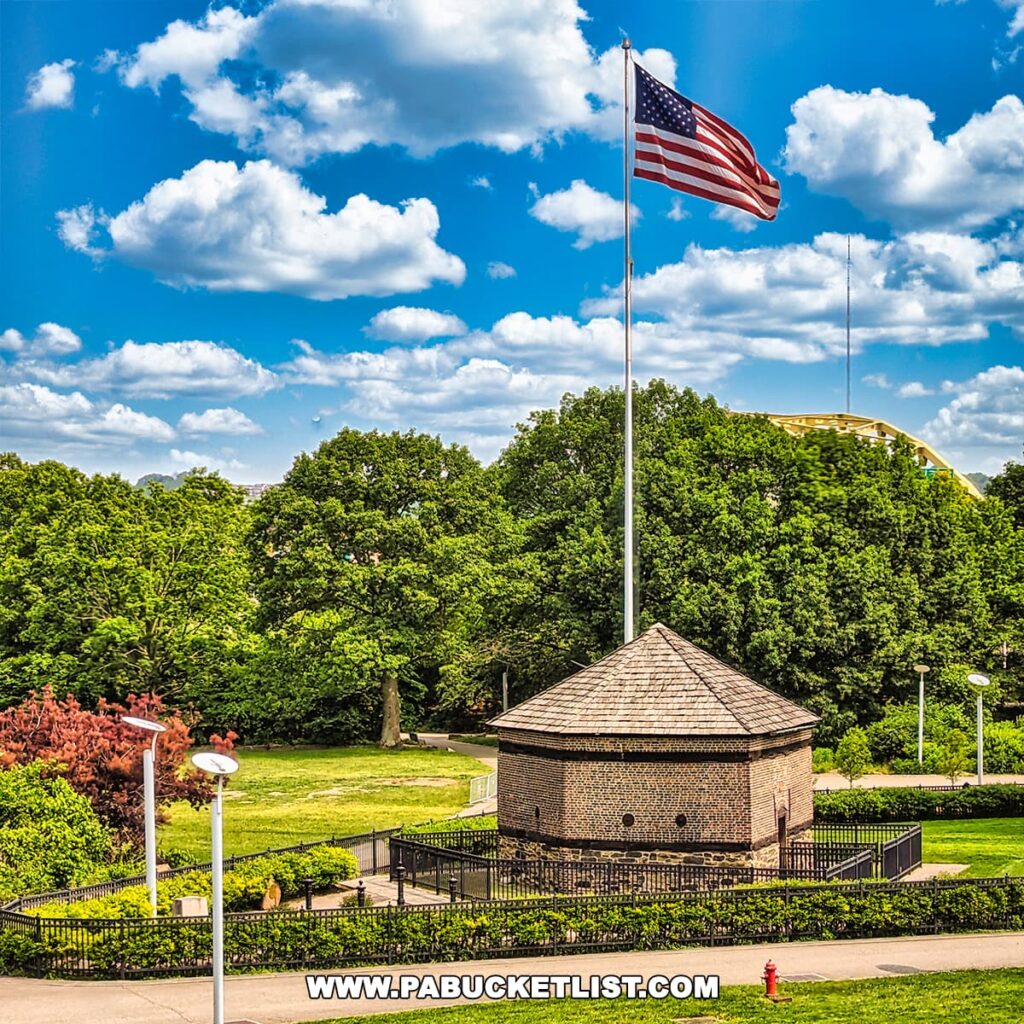
The Fort Pitt Blockhouse, a historic defensive structure, standing in a park-like setting with lush green trees surrounding it, in Pittsburgh, Pennsylvania. The American flag is proudly flying atop a tall flagpole against a backdrop of white clouds and blue sky.
The Fort Pitt Museum offers a deep dive into the formative years of American history

PA’s Best Military-Themed Attractions highlights some of Pennsylvania’s most fascinating battlefields, forts, military museums, and historic sites, all based on my firsthand visits across the Keystone State.
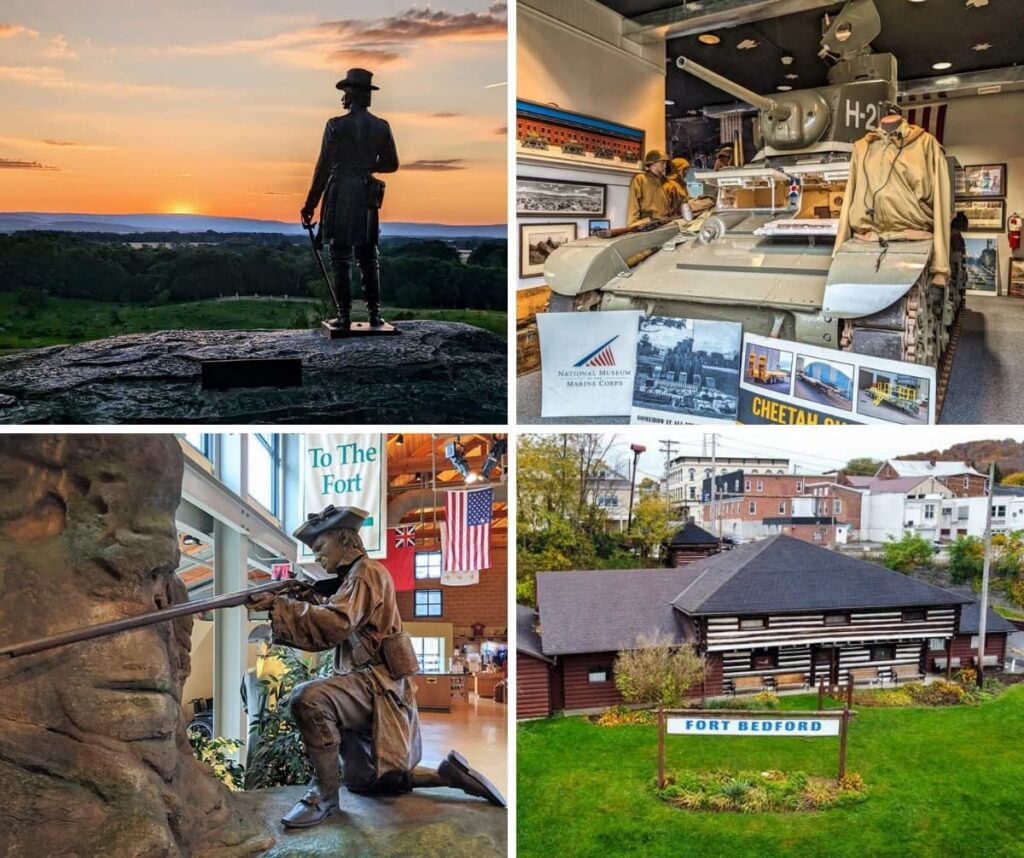
A collage of 4 images from some of Pennsylvanias best military themed attractions.

Nearby Attractions

33 Must-See Attractions in Allegheny County showcases more remarkable sights and experiences near the Fort Pitt Museum.

A collage of four images showcasing attractions in Allegheny County, Pennsylvania: Top left shows a dinosaur skeleton exhibit at the Carnegie Museum of Natural History; top right displays a creative arrangement of Heinz ketchup bottles in the shape of a larger bottle at the Heinz History Center; bottom left features three elephants near a watering hole at the Pittsburgh Zoo; and bottom right is an aerial view of PNC Park during a baseball game with the city skyline in the background.

A Smarter Way to Explore Pennsylvania

Explore Pennsylvania like a pro with the interactive PA Bucket List Travel Map, showcasing over 1,000 memorable destinations I’ve personally visited across the Keystone State.


Did you enjoy this article?

If so, be sure to like and follow PA Bucket List on Facebook, Instagram, and/or Pinterest to learn more about the best things to see and do in Pennsylvania!

Click on any of the icons below to get connected to PA Bucket List on social media.


PA Bucket List 2022 Sasquatch Logo

Pennsylvania’s Best Travel Blog!

Rusty Glessner
Rusty Glessner is a professional photographer, lifelong Pennsylvanian, and a frequently-cited authority on PA's best travel destinations.