

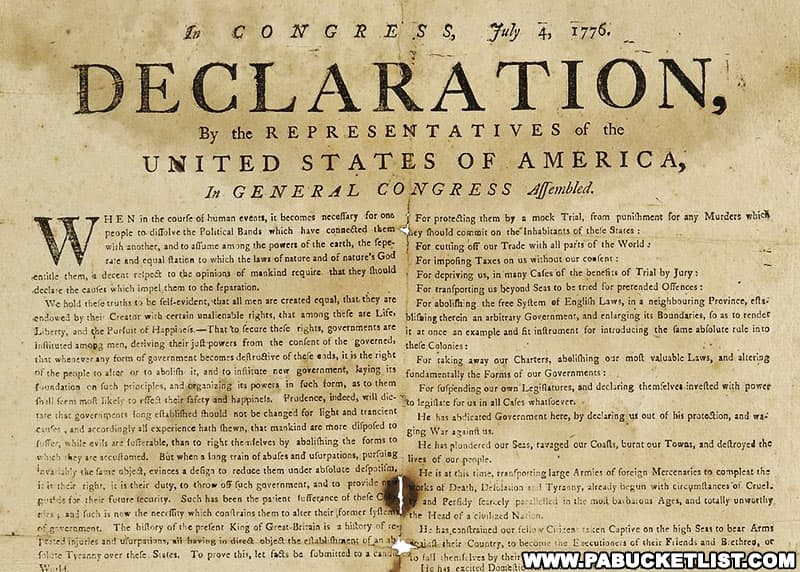
America 250 commemorates the 250th anniversary of the formal adoption of the Declaration of Independence on July 4, 1776 – a pivotal moment that launched the United States and its ideals of liberty, democracy, and self-government.
In honor of this historic milestone, I’ve created a curated guide to Pennsylvania’s top America 250 historic sites—landmarks directly connected to the Declaration of Independence and the Revolutionary War.
As Pennsylvanians, we have special reason to celebrate, since the Declaration was debated, drafted, and signed in Philadelphia, making the Keystone State the birthplace of the nation’s bold decision to seek independence.
Essential America 250 Sites to Visit in PA
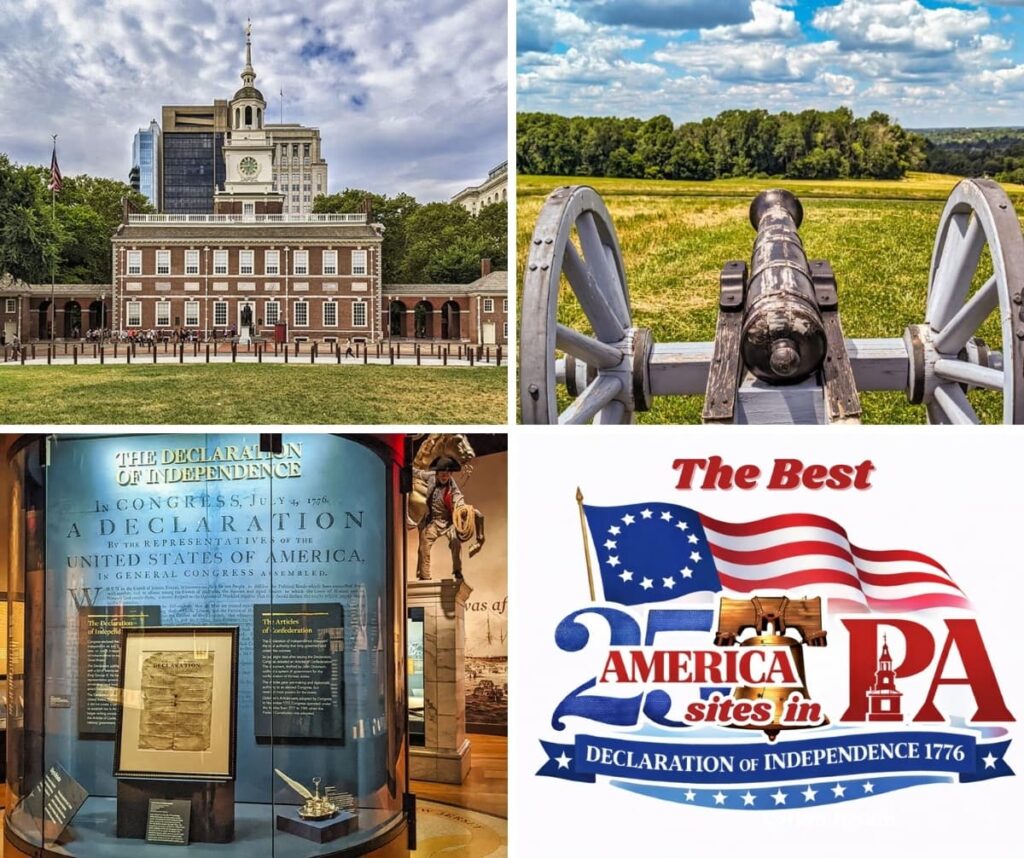
What follows is a list of the top America 250 sites to visit in Pennsylvania—places directly connected to the Declaration of Independence and the struggle that turned those words into a new nation.
Simply click on the blue text links on the map above or in the descriptions below to read more in-depth information about each destination.
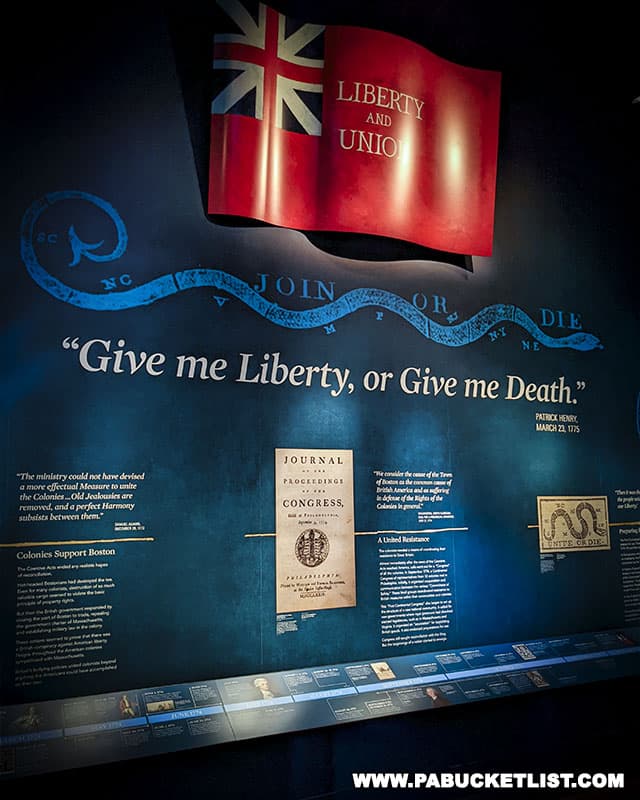
1. Independence Hall
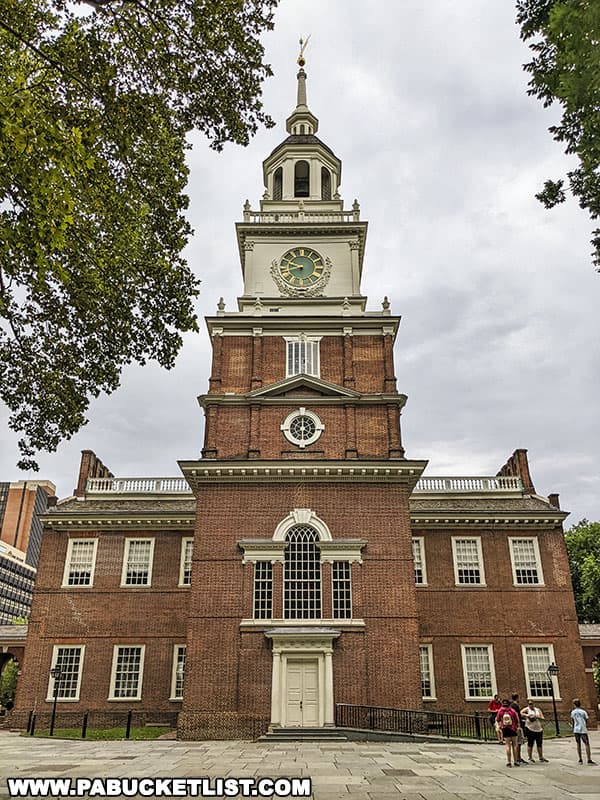
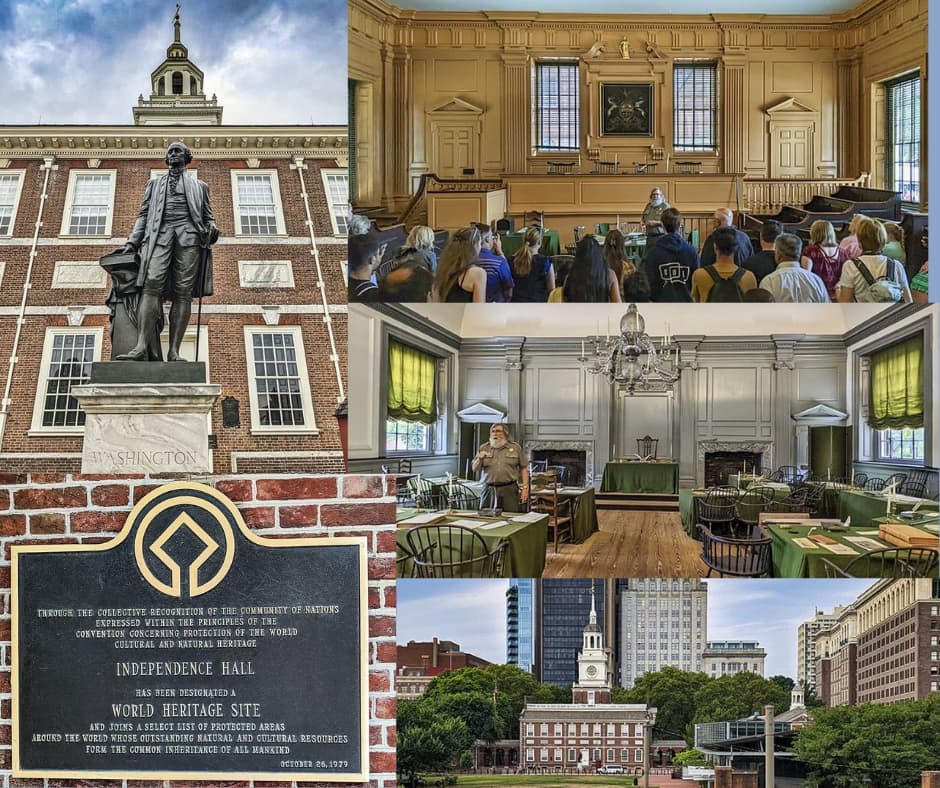
Independence Hall in Philadelphia stands at the heart of America’s founding, where the Second Continental Congress met in 1776 to debate and approve the Declaration of Independence.
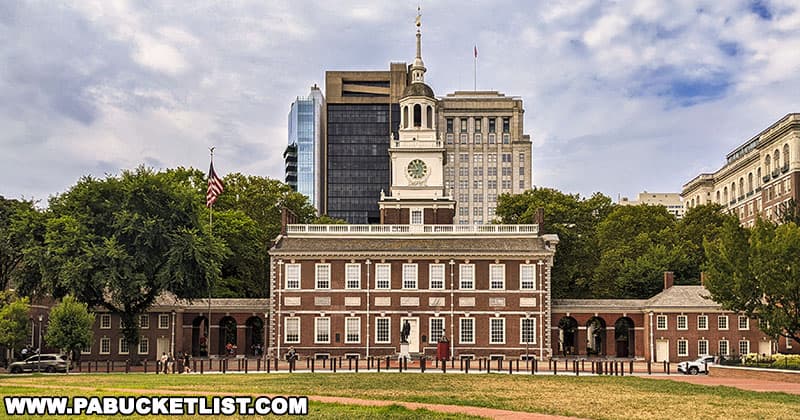
Today, this UNESCO World Heritage Site and centerpiece of Independence National Historical Park is operated by the National Park Service and plays a central role in Pennsylvania’s America 250 celebration of the nation’s 250th anniversary.
2. The Liberty Bell Center
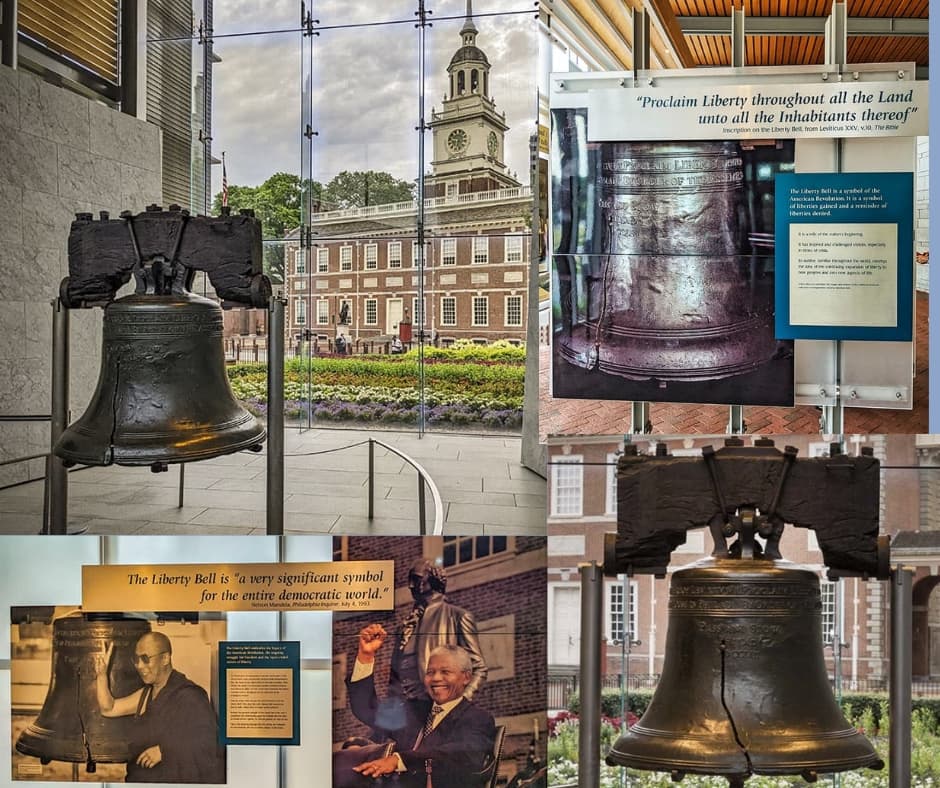
The Liberty Bell Center, located just outside Independence Hall, preserves one of the most iconic symbols of freedom in the world and tells the story of its powerful role in American history.
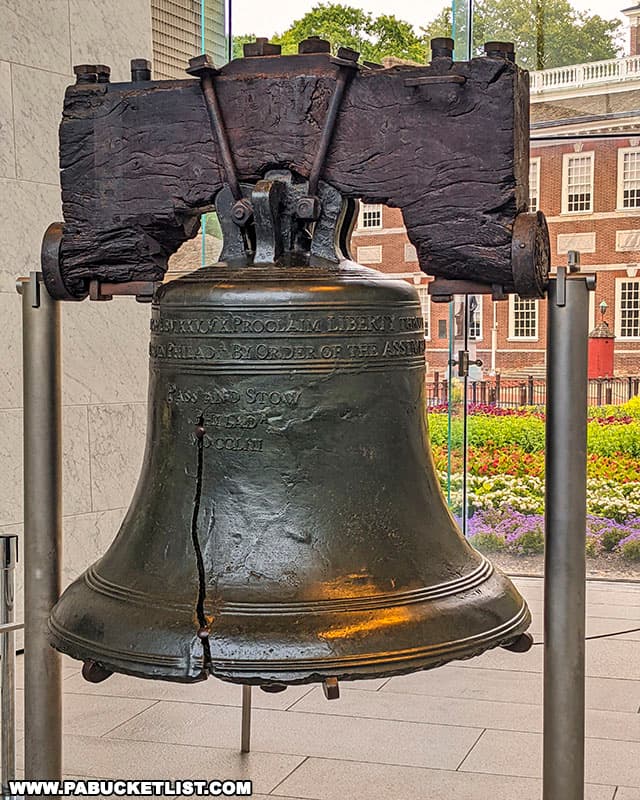
Free to visit and open on a first-come, first-served basis, the center is a key stop during Pennsylvania’s America 250 celebration, offering exhibits that explore the bell’s lasting connection to independence and liberty.
3. Betsy Ross House
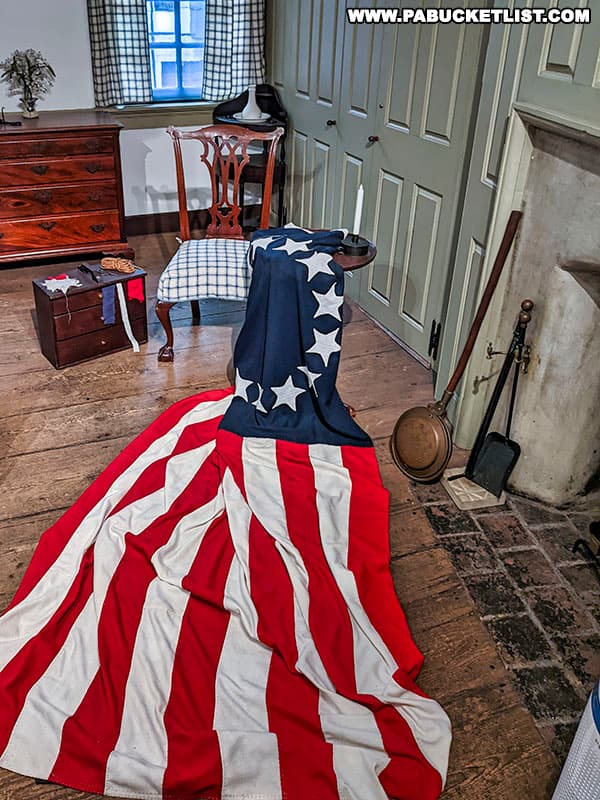
The Betsy Ross House is one of Philadelphia’s most visited historic attractions and is traditionally associated with the story that Betsy Ross sewed the first American flag in 1776.
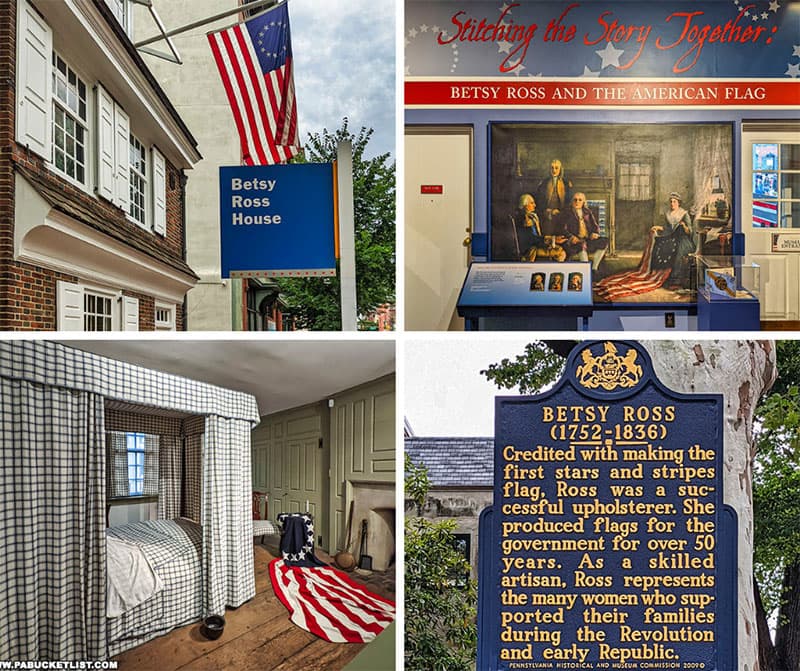
Although historians debate the legend, her role in early American history was formally recognized by the Pennsylvania Historical and Museum Commission in 2009, making the site a meaningful stop during Pennsylvania’s America 250 celebration of the nation’s founding.
4. Museum of the American Revolution
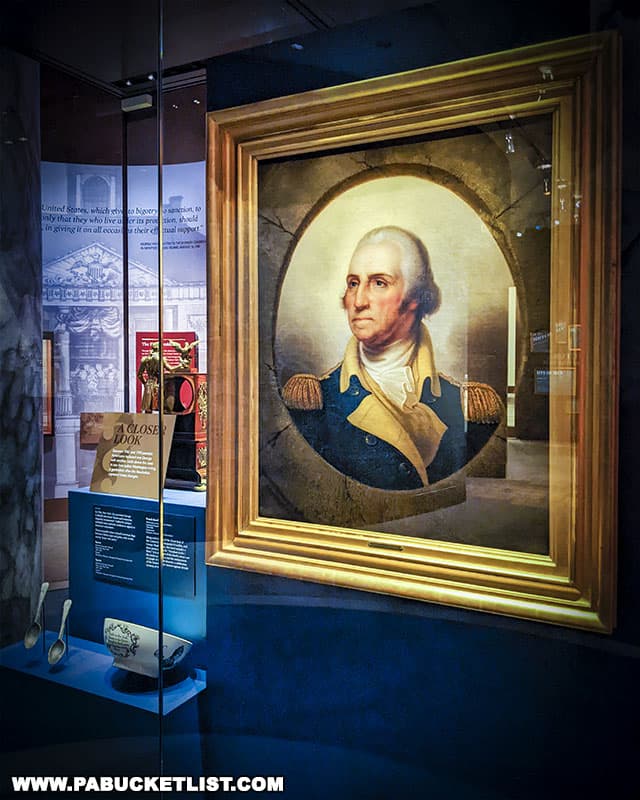
The Museum of the American Revolution in Philadelphia brings the story of the nation’s founding to life through immersive exhibits featuring historic artifacts, dioramas, films, and artwork from the Revolutionary War era.
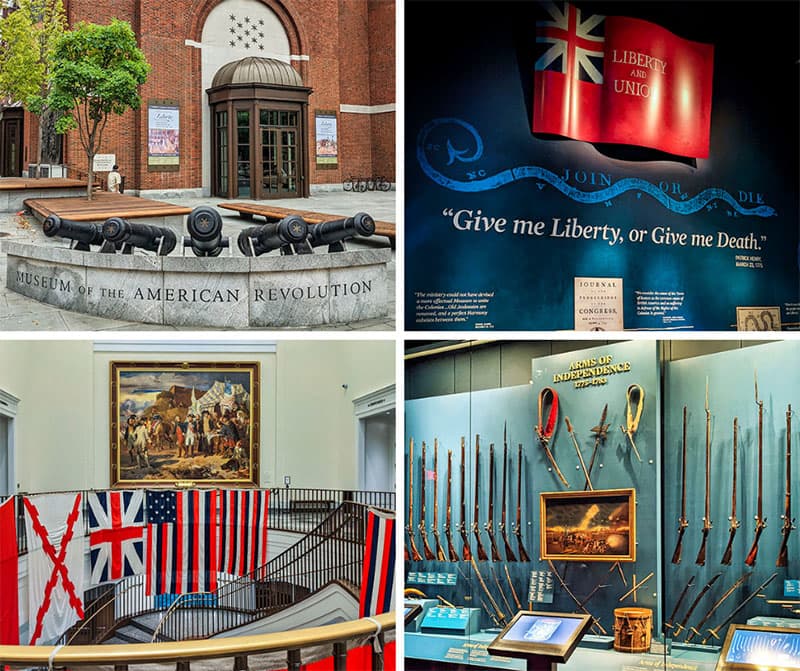
Opened in 2017 and located just steps from Independence Hall and the Liberty Bell, the museum is a natural centerpiece of Pennsylvania’s America 250 celebration.
5. Washington Square Park
Washington Square Park, located just steps from Independence Hall, is one of William Penn’s original public squares and today offers shaded walkways, a fountain, and a peaceful place to pause amid the city’s historic district.
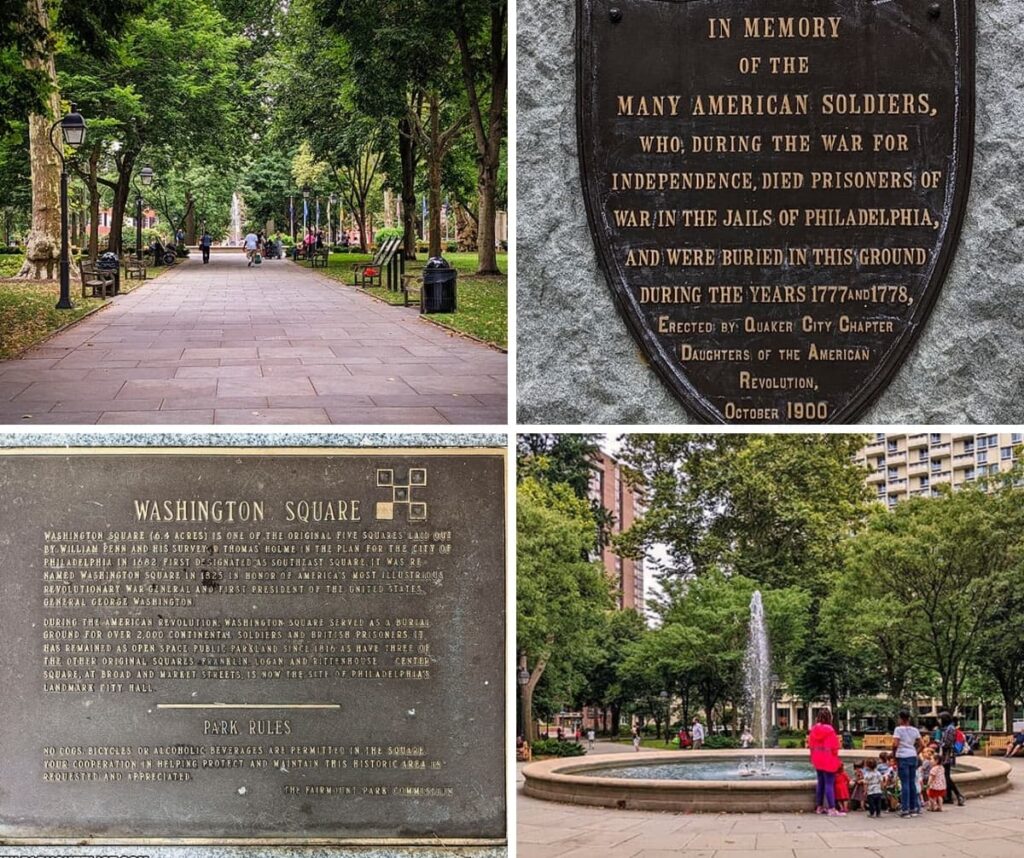
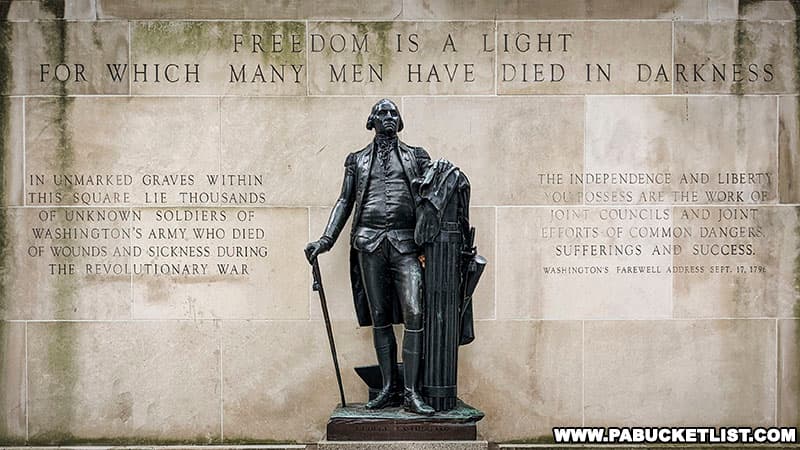
Beneath its tranquil surface lies a powerful Revolutionary War legacy, as nearly 2,000 American soldiers and prisoners of war were buried here, making the park and its memorials an important site of remembrance during the America 250 celebration.
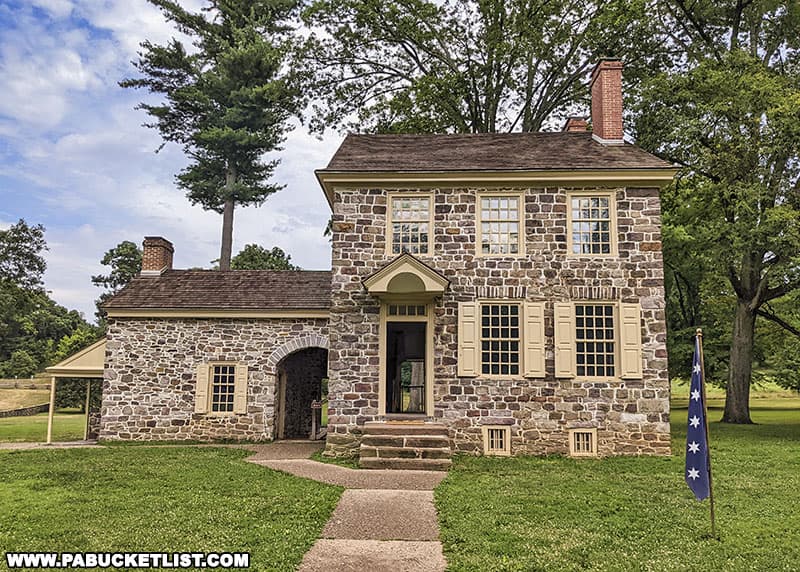
6. Washington Crossing Historic Park
Washington Crossing Historic Park preserves the site where George Washington led his army across the Delaware River in 1776, a daring move that helped turn the tide of the Revolutionary War and makes the park a powerful place to experience the spirit of independence during the America 250 celebration.

7. Fort Mifflin
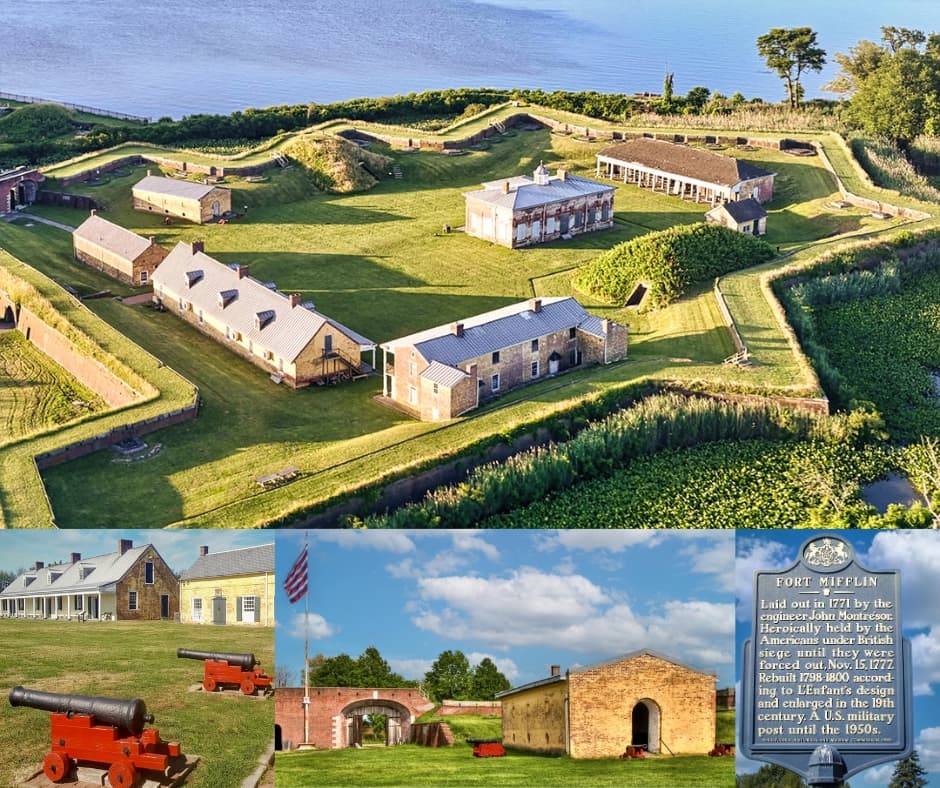
Fort Mifflin in Philadelphia is a well-preserved Revolutionary War fort that helped defend the Delaware River against British forces, making it a powerful symbol of Pennsylvania’s role in the fight for independence and a fitting site to explore during the America 250 celebration.
8. Brandywine Battlefield Park
Brandywine Battlefield Park in Delaware County preserves the site of the Battle of Brandywine, the largest and longest single-day land battle of the American Revolution, fought in 1777 between British and Continental forces.
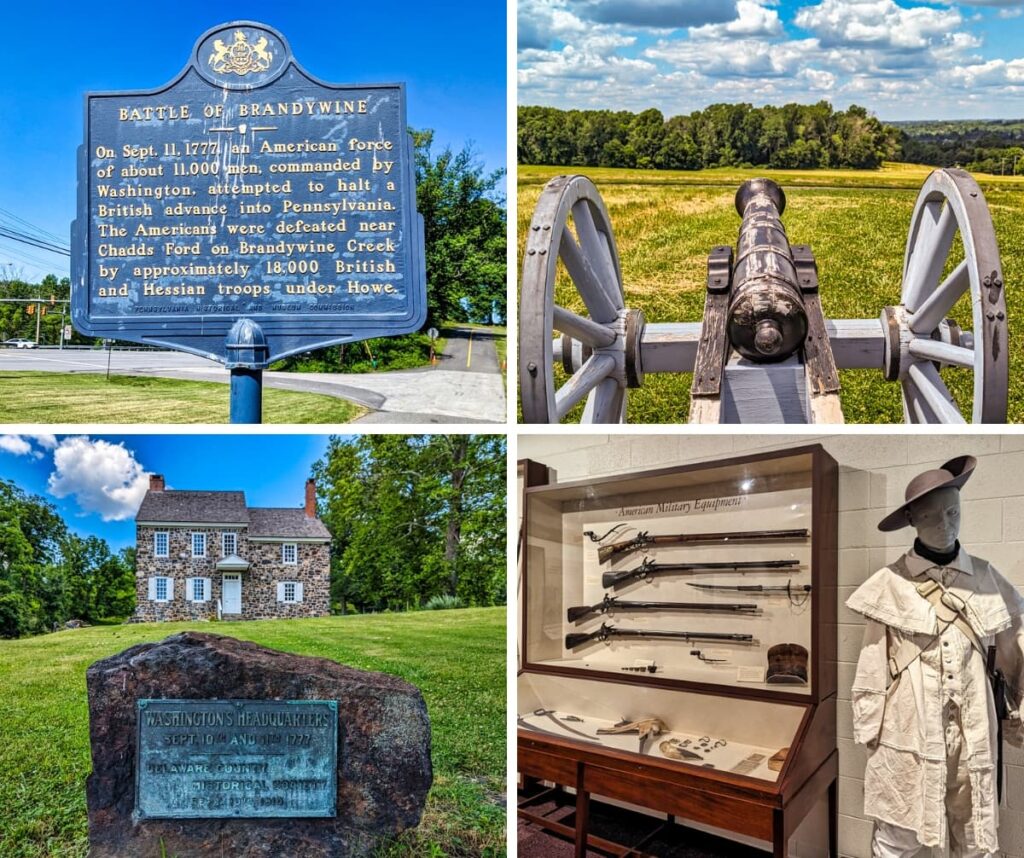
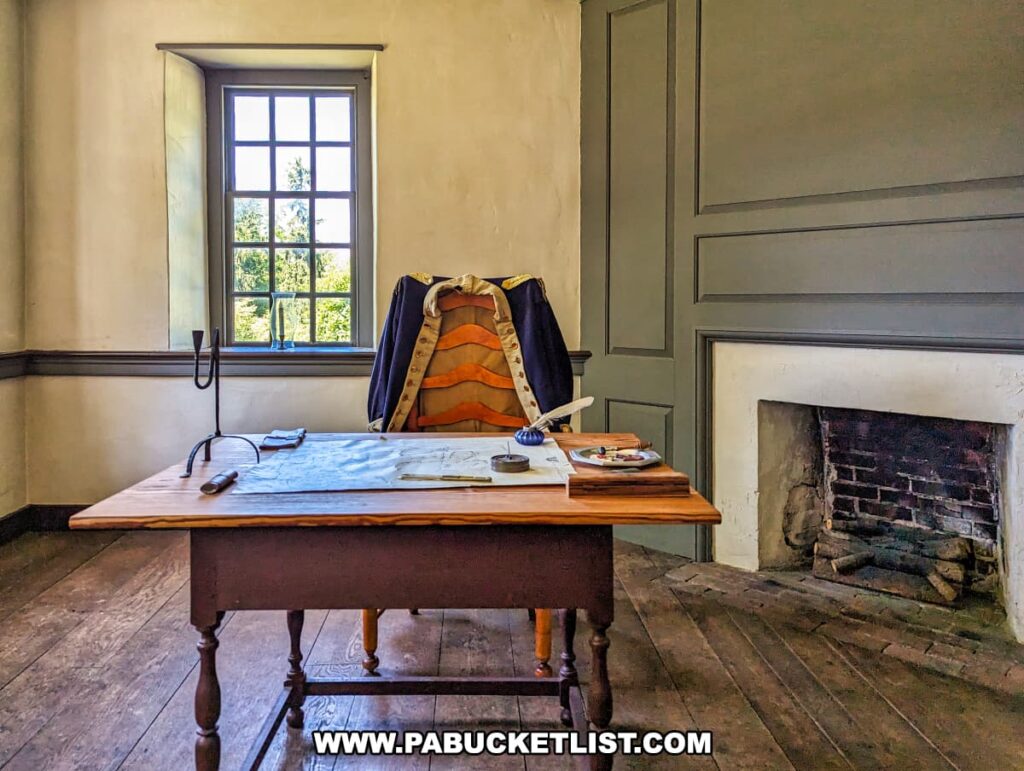
Set on 52 acres that once served as George Washington’s headquarters and featuring a visitor center, museum, and historic buildings, the park is a meaningful place to reflect on Pennsylvania’s role in the struggle for independence during the America 250 celebration.
9. Valley Forge National Historical Park
Valley Forge National Historical Park near Philadelphia commemorates the winter encampment of George Washington and the Continental Army during 1777–1778, when hardship and training transformed the struggling force into a unified army capable of defeating the British.
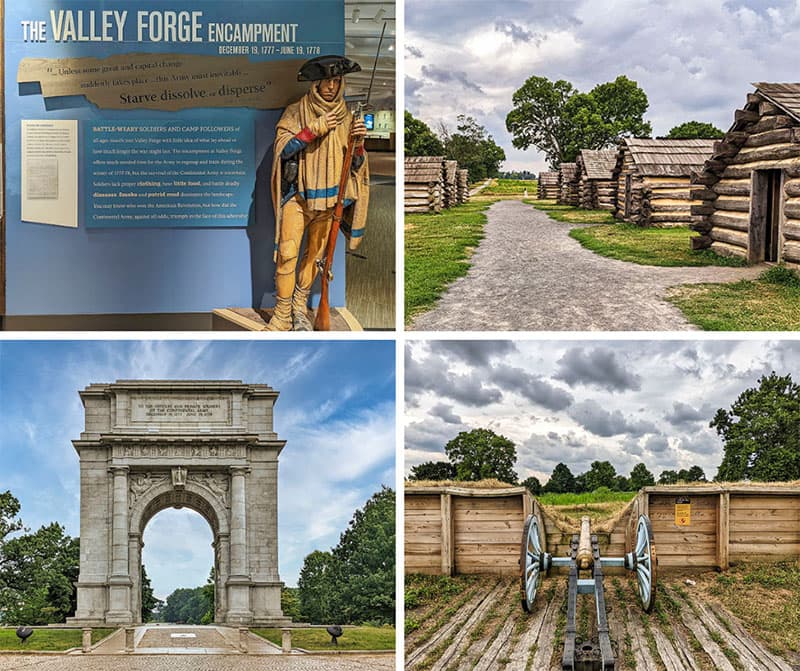
Spanning more than 3,500 acres of historic landscapes filled with monuments, fortifications, and trails, the park stands as a powerful symbol of perseverance and is a cornerstone site for Pennsylvania’s America 250 celebration.
10. The Colonial Complex in York
The Colonial Complex in York commemorates the extraordinary nine months when York served as the nation’s temporary capital after the Second Continental Congress fled British-occupied Philadelphia in 1777.
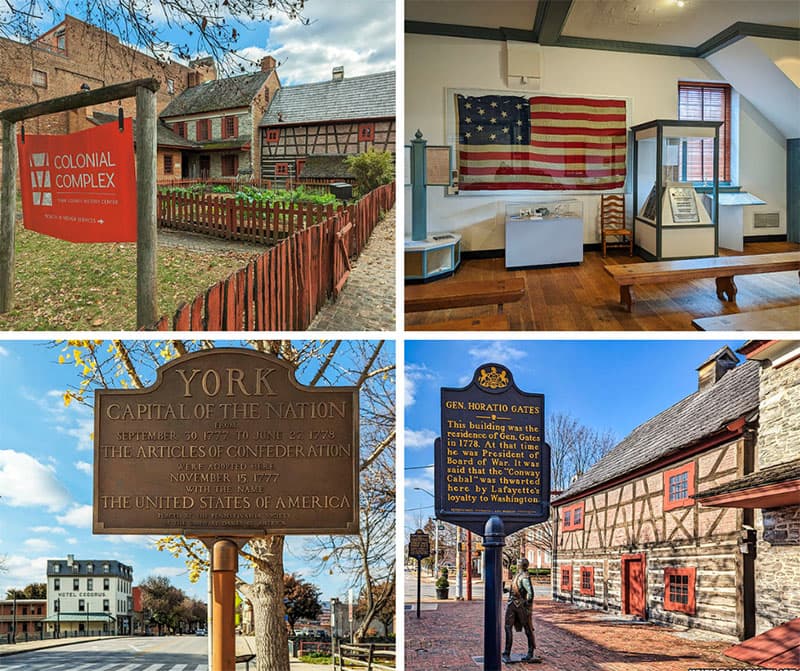
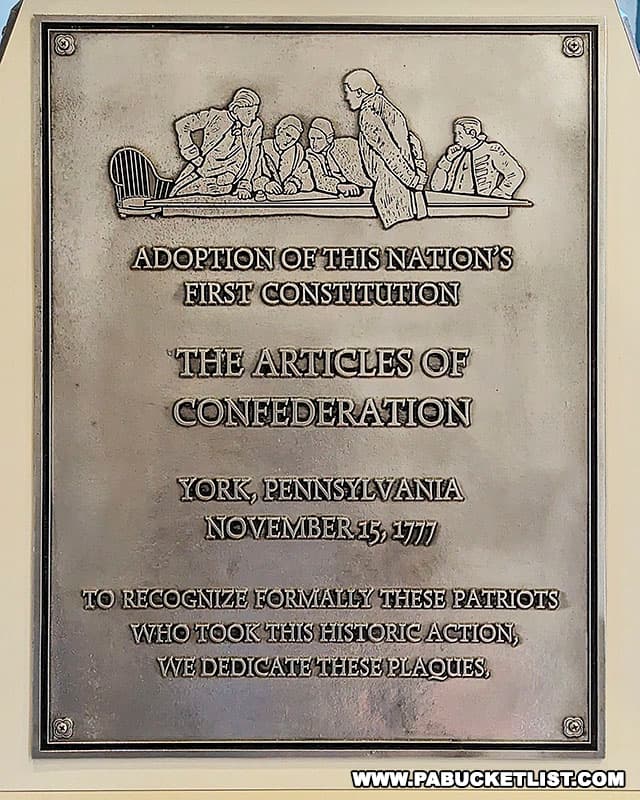
While meeting here, Congress officially adopted the Articles of Confederation—the first constitution of the United States—making York a vital chapter in the nation’s founding and a key stop in Pennsylvania’s America 250 celebration.
11. Molly Pitcher Monument and Gravesite in Carlisle
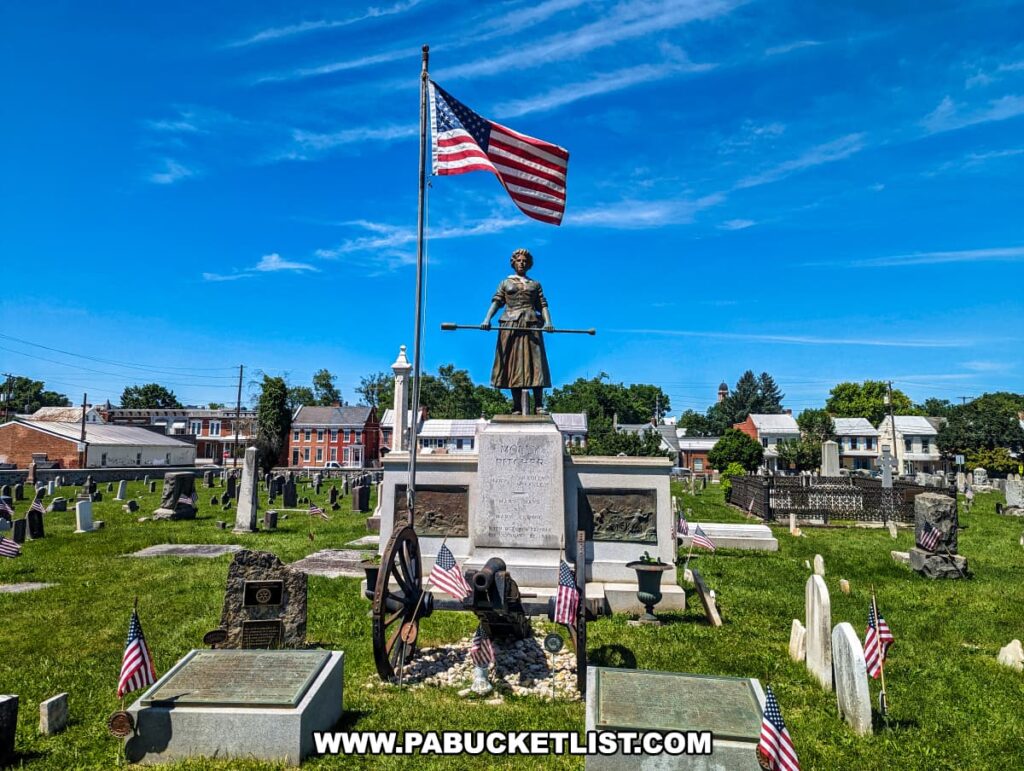
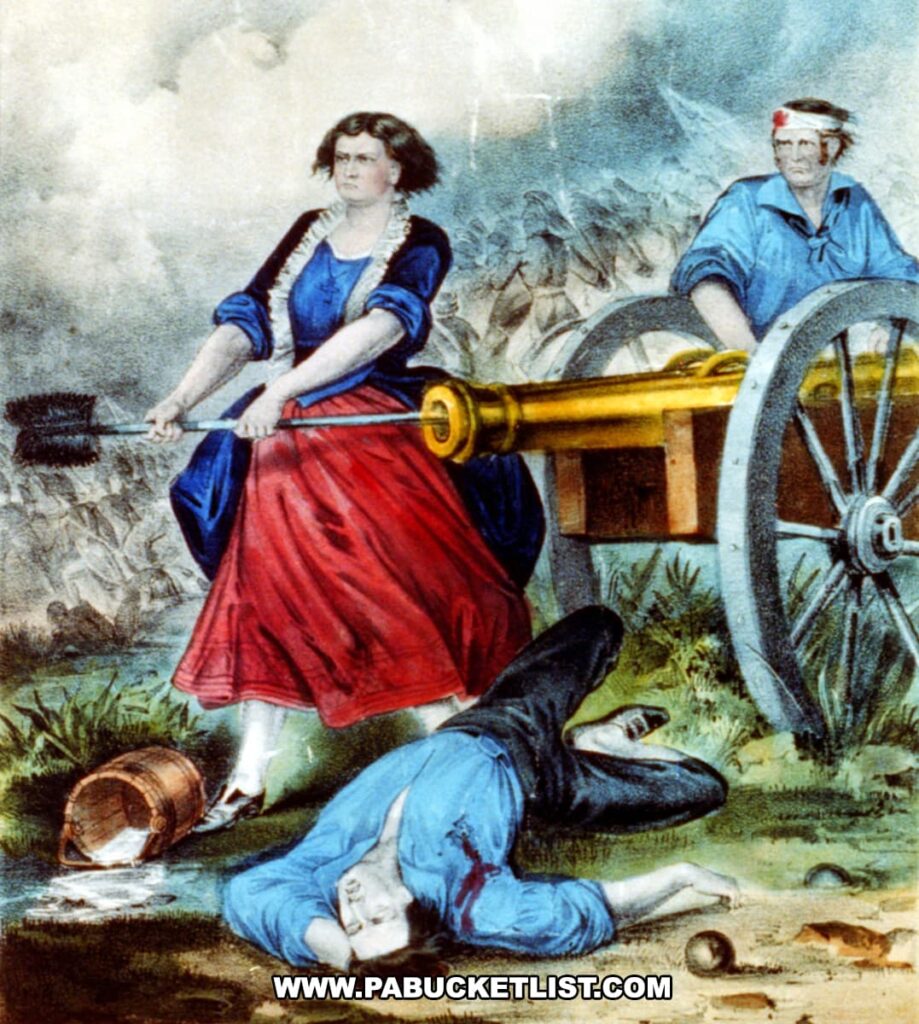
The Molly Pitcher Monument and Gravesite in Carlisle is an essential America 250 destination, offering a poignant glimpse into the life of one of the Revolutionary War’s most celebrated heroines and a powerful reminder of the courage displayed on the path to independence.
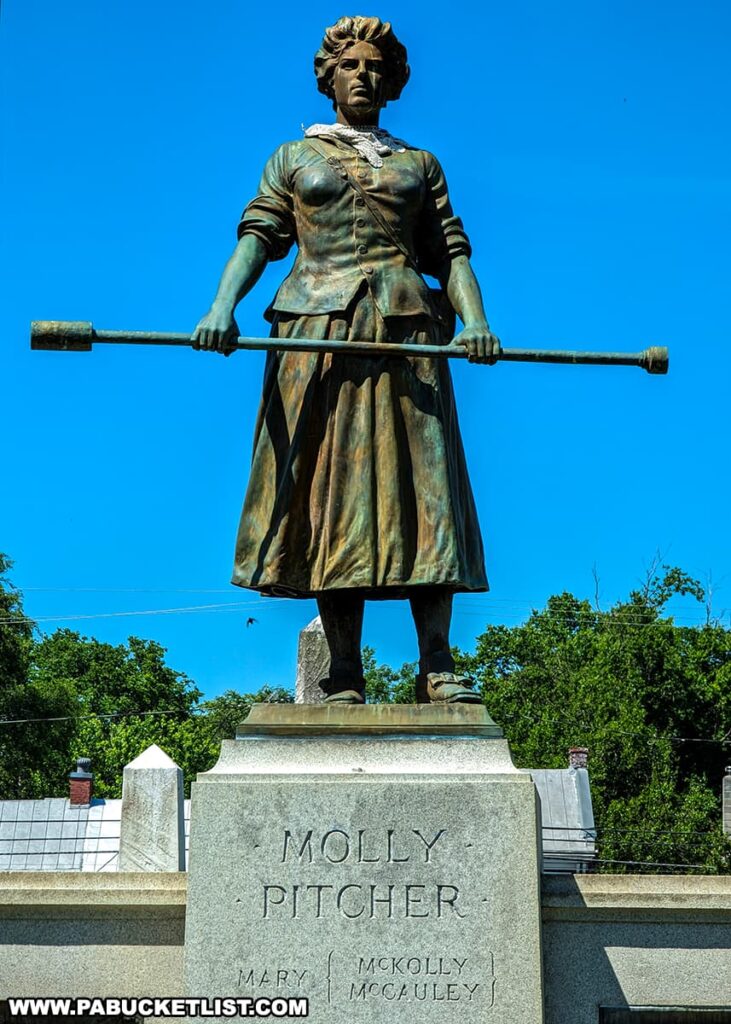
As Pennsylvania marks 250 years of American freedom, this site stands as a tribute to the vital roles women played in securing that liberty and invites visitors to reflect on the enduring legacy of their contributions to the nation’s founding.
12. The State Museum of Pennsylvania
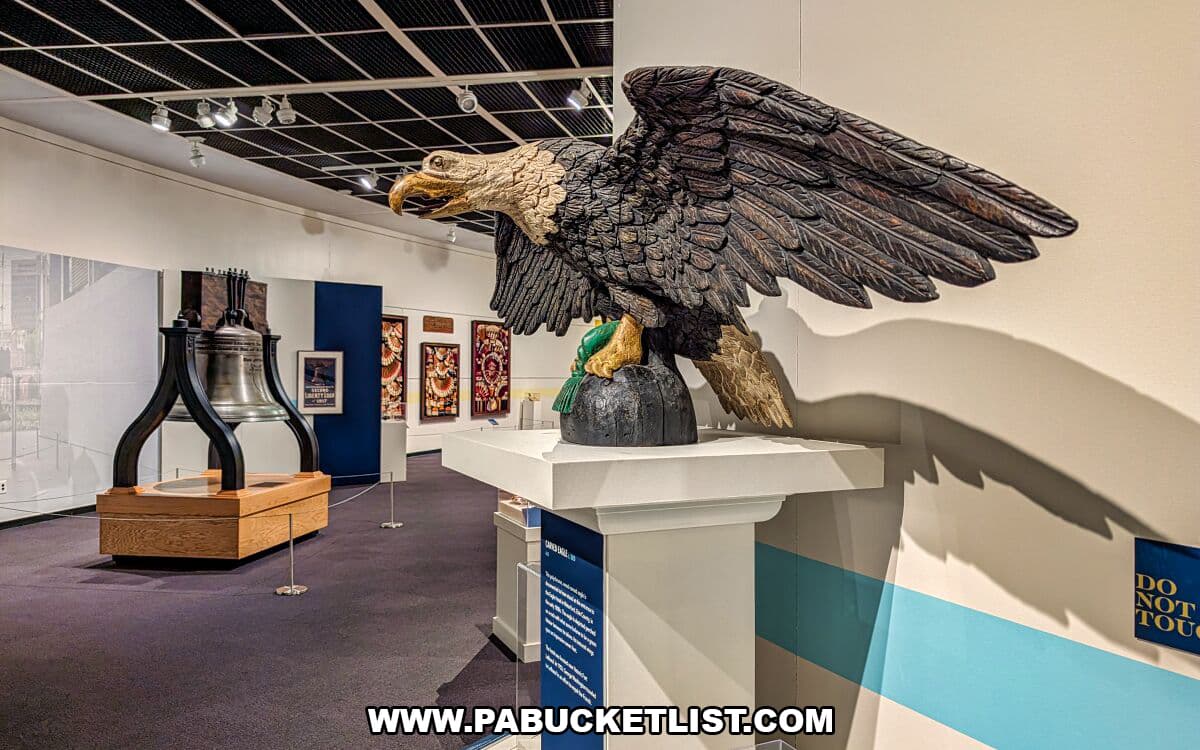
The State Museum of Pennsylvania in Harrisburg plays a key role in the America 250 celebration through its first-floor Revolutionary Things exhibit, which highlights the Commonwealth’s central place in the American Revolution.
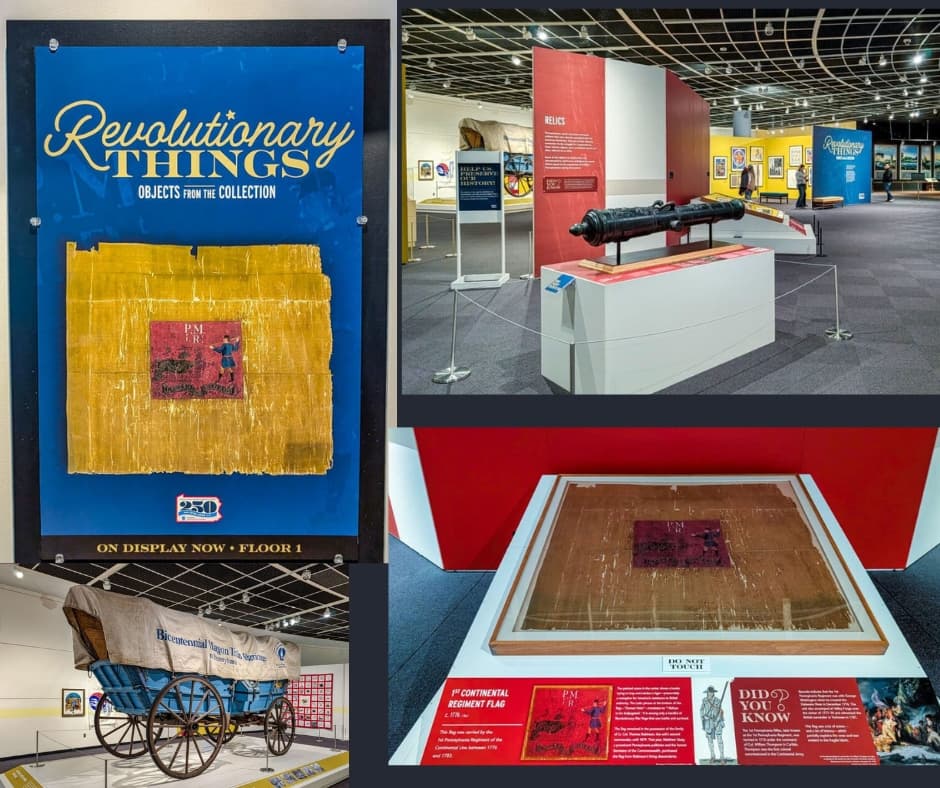
Created for the nation’s 250th anniversary, the exhibit features rare artifacts such as military flags, weapons, cannons, and symbolic objects, alongside artwork and displays showing how later generations remembered and honored the nation’s founding.
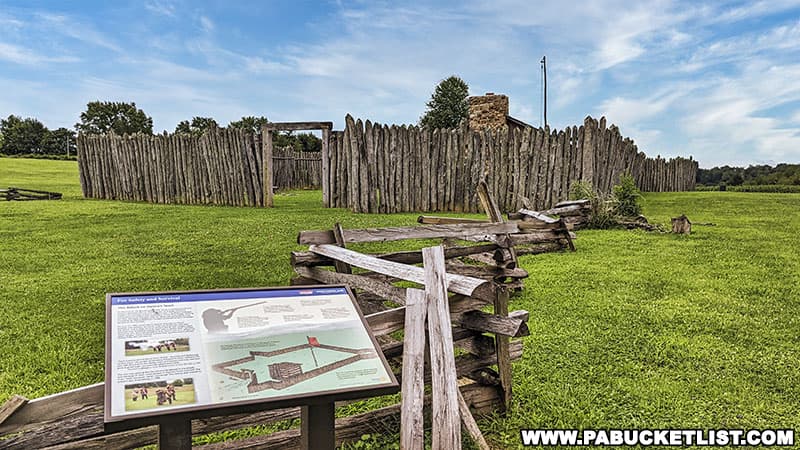
13. Fort Roberdeau
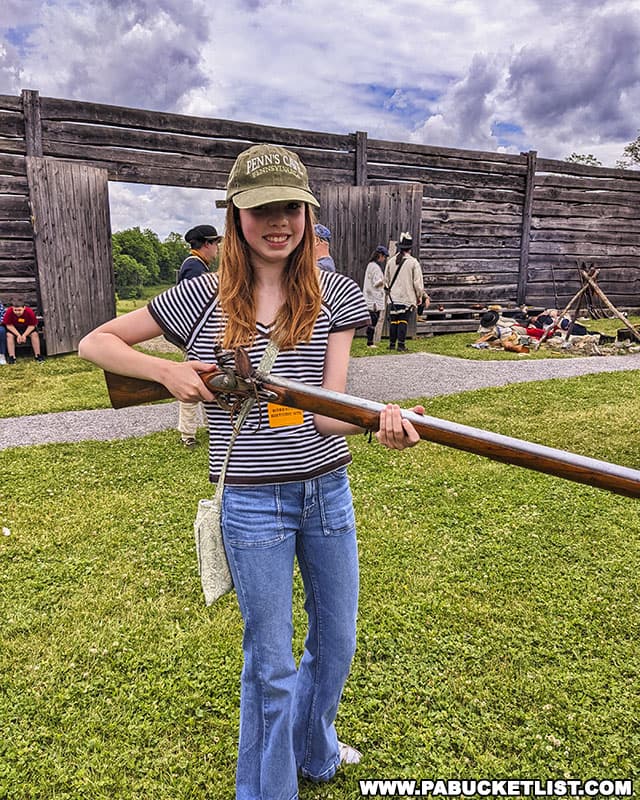
Fort Roberdeau in Blair County was built in 1778 to protect vital lead mining operations from British loyalists and their Native American allies, serving as a small but important frontier defense during the Revolutionary War.
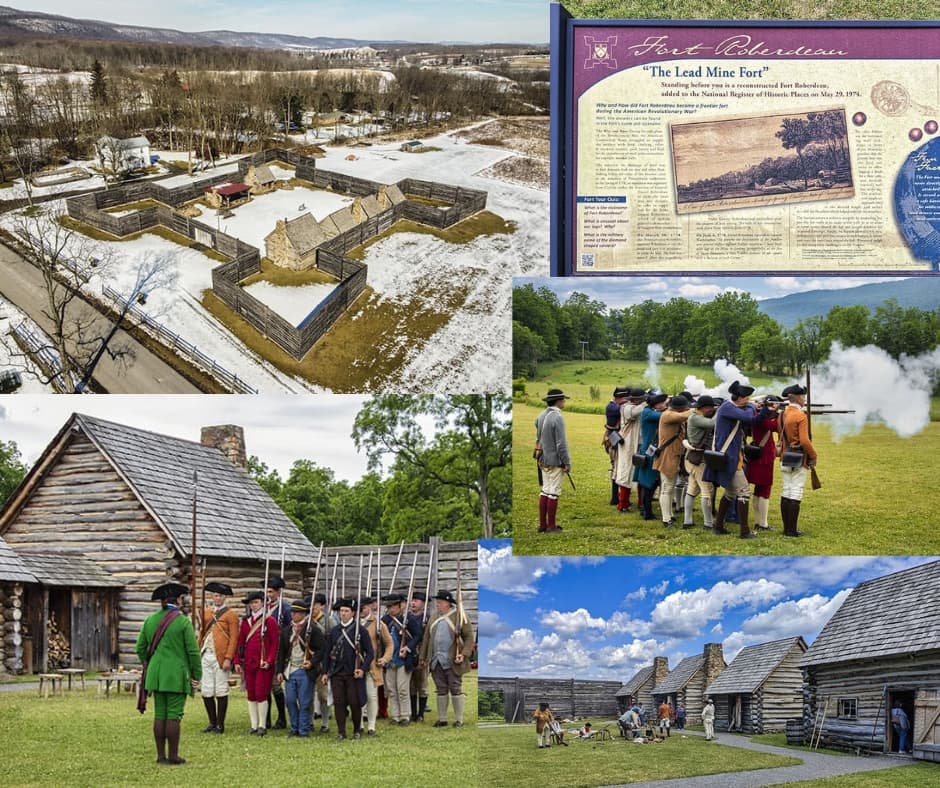
Reconstructed for the nation’s Bicentennial in 1975–76 and now operated as a public historic site, the fort offers visitors a tangible link to Pennsylvania’s wartime struggles and its role in the America 250 celebration.
14. Captain Phillips’ Rangers Memorial
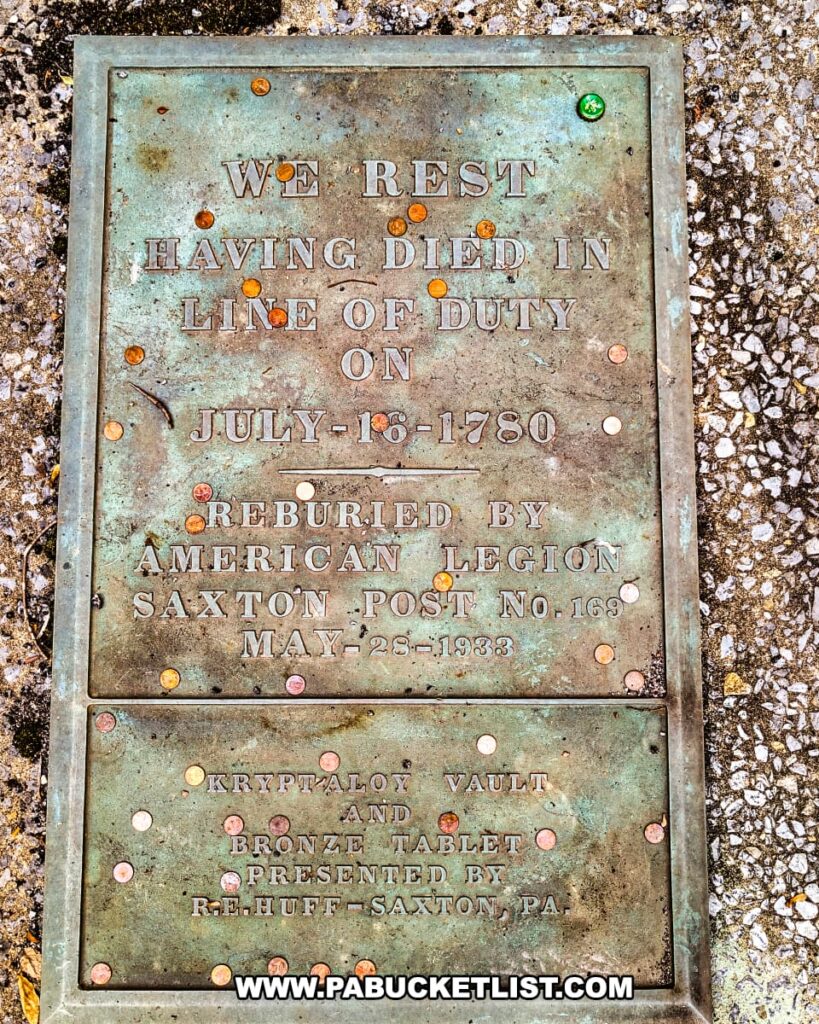
The Captain Phillips’ Rangers Memorial in Bedford County marks the site of a tragic Revolutionary War skirmish where Captain William Phillips and his frontier rangers were attacked in 1780 while protecting settlers from British-allied Seneca warriors.
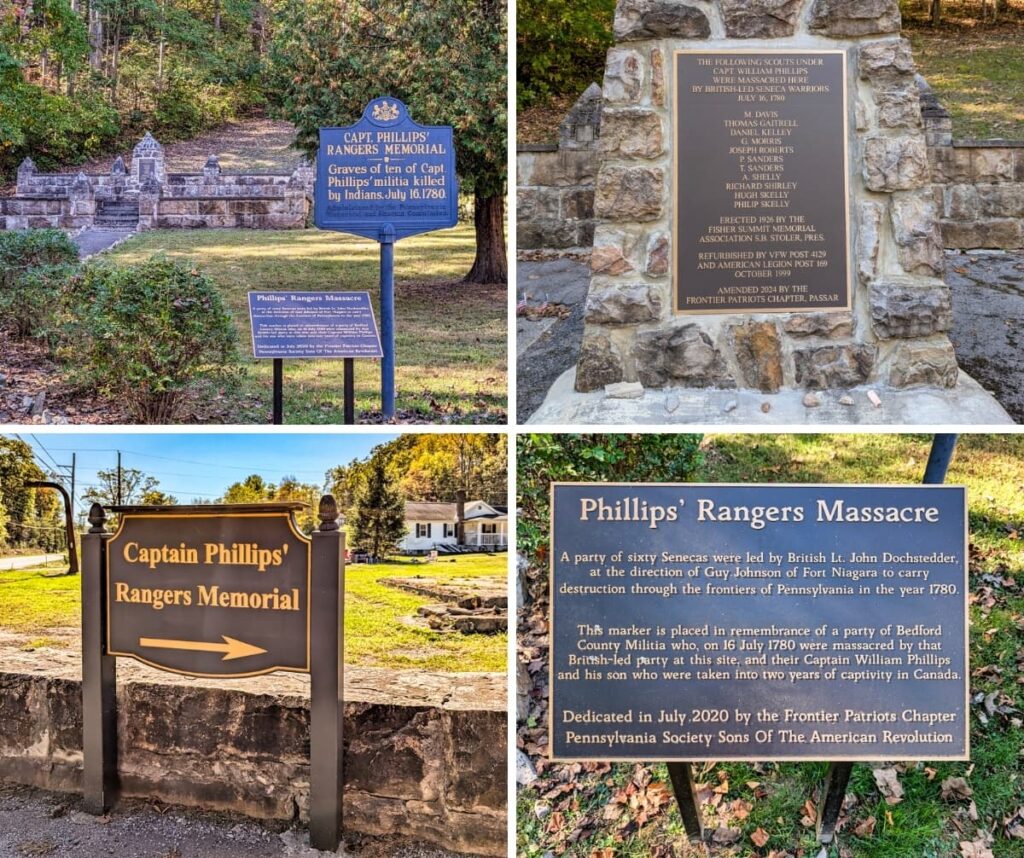
Surrounded today by quiet woods and a stone monument honoring the fallen, the site serves as a solemn reminder of the dangers faced on Pennsylvania’s frontier and a meaningful place of reflection during the America 250 commemoration of the nation’s fight for independence.
15. The Tiadaghton Elm
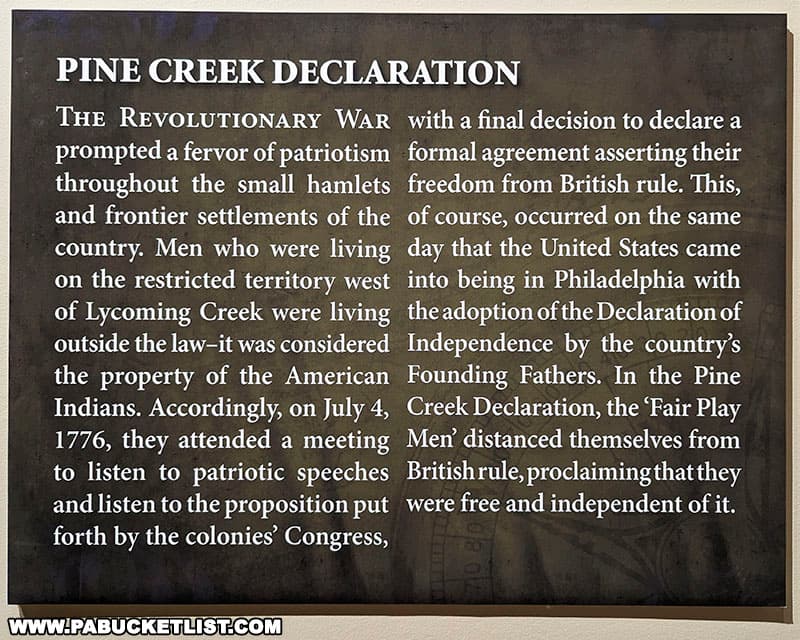
The Tiadaghton Elm is remembered as the site where frontier settlers known as the Fair Play Men signed the Pine Creek Declaration of Independence on July 4, 1776, declaring themselves free from British rule along Pine Creek in present-day Clinton County.
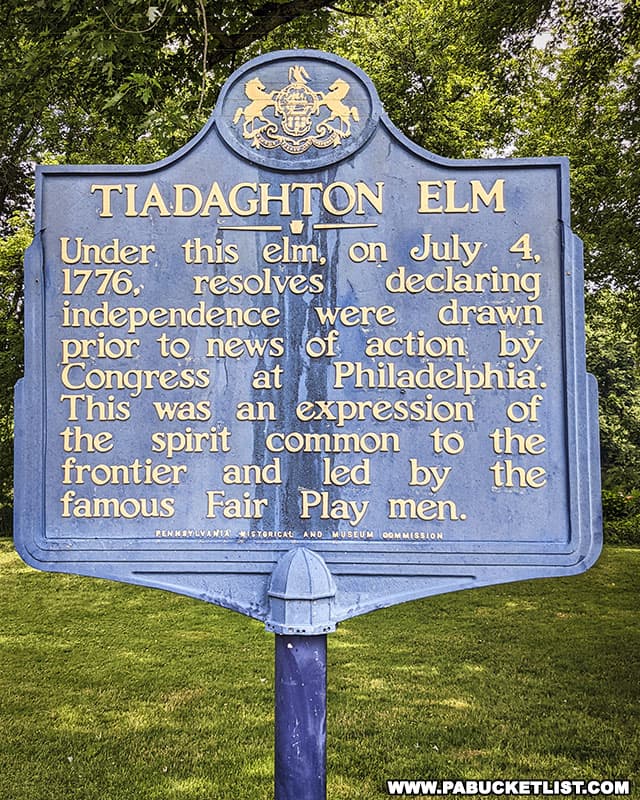
Though no copy of their document survives, state historical markers commemorate this remarkable moment that occurred independently of the Continental Congress in Philadelphia, making it a uniquely Pennsylvanian chapter of the independence story celebrated during America 250.
16. Historic Hanna’s Town
Historic Hanna’s Town, established in 1773 as the first county seat of Westmoreland County, was a frontier center of law, resistance, and Revolutionary fervor, hosting the first English courts west of the Allegheny Mountains and issuing the bold Hanna’s Town Resolves in 1775—more than a year before the Declaration of Independence.
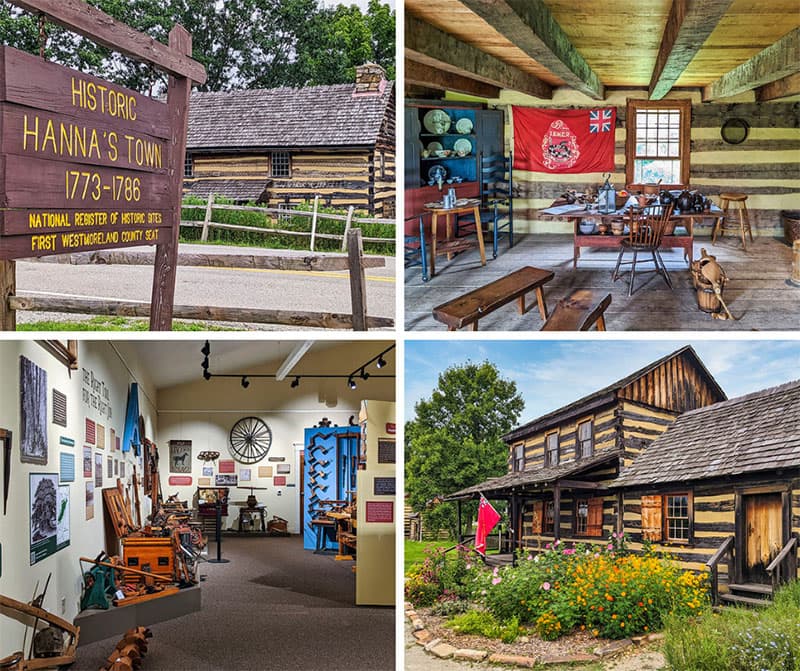
As an America250 site, it powerfully commemorates Pennsylvania’s early stand for independence, its role in raising militia and Continental troops, and the dramatic burning of the town in 1782, now interpreted through reconstructed buildings that bring this pivotal Revolutionary story to life.
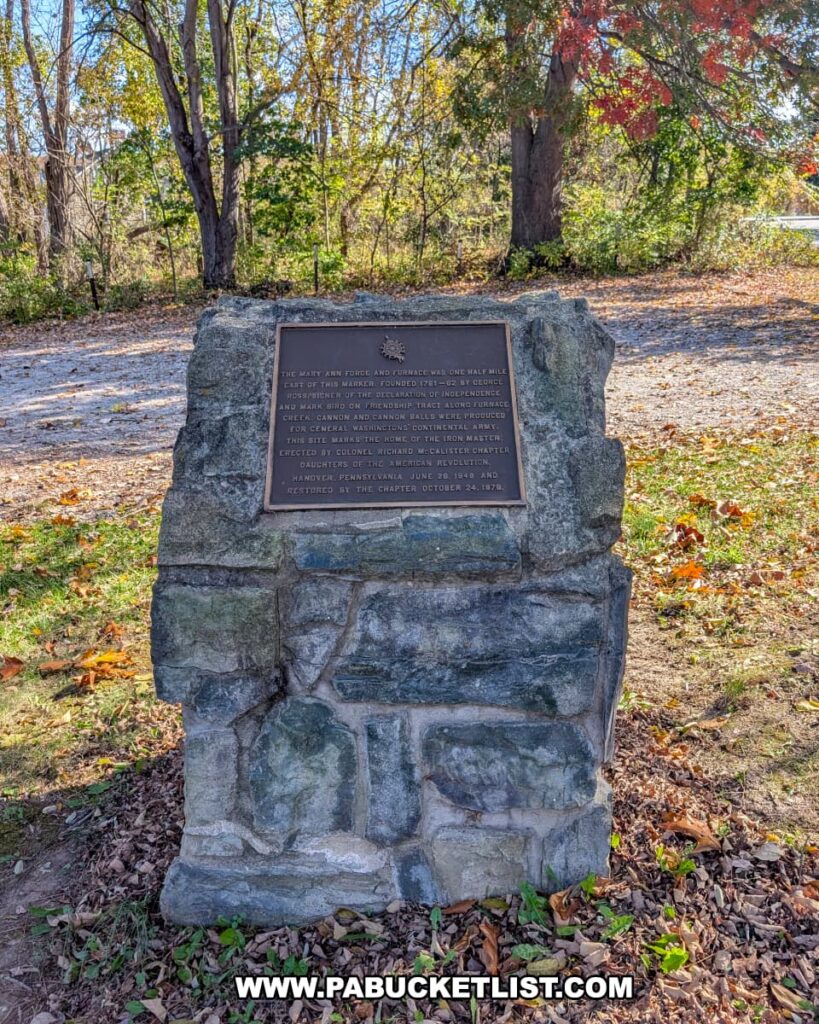
17. Mary Ann Furnace Historical Marker
The Mary Ann Furnace Historical Marker in York County commemorates the site of a 1762 ironworks that produced household goods and also supplied cannonballs and grapeshot to the Continental Army during the Revolutionary War.
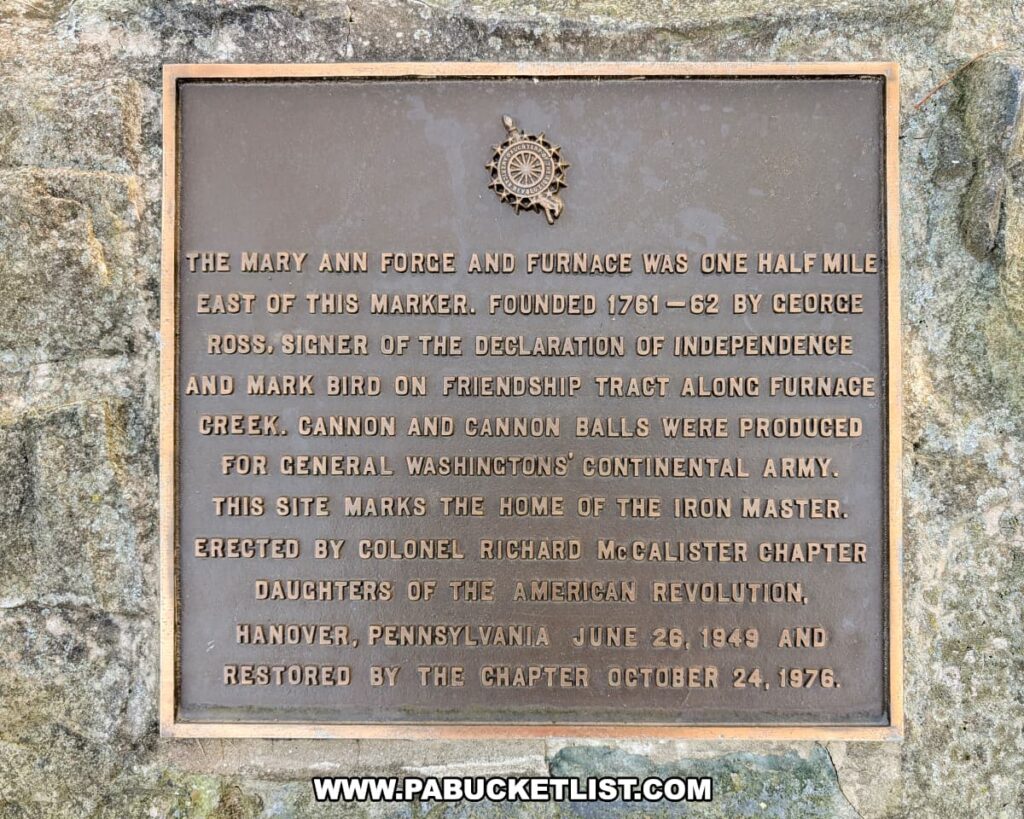
Now marked by a stone monument in Codorus State Park, this site is an often overlooked footnote in the fight for American independence and a reminder of Pennsylvania’s vital industrial role in the cause.
Related Attractions
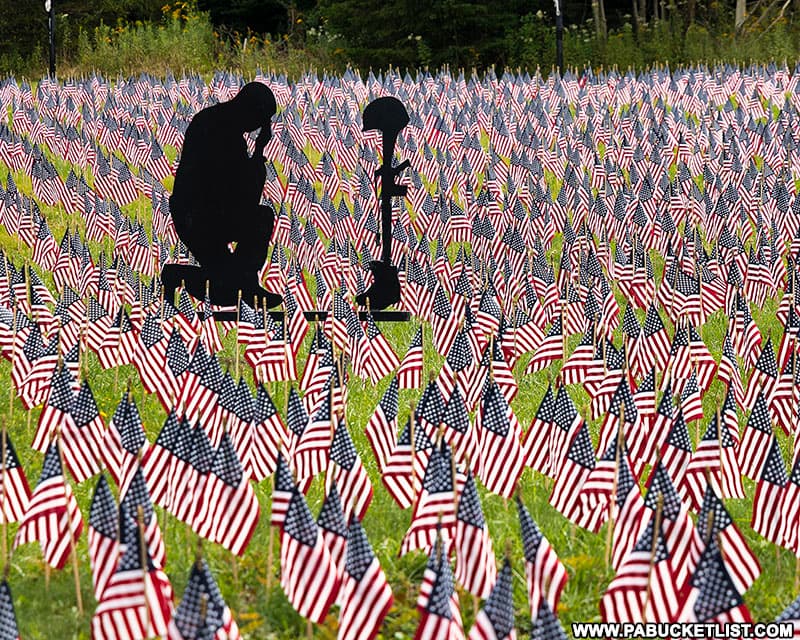
If military history is your passion, you’ll want to explore my interactive guide, PA’s Best Military-Themed Attractions, which highlights some of Pennsylvania’s most fascinating battlefields, forts, military museums, and related sites.
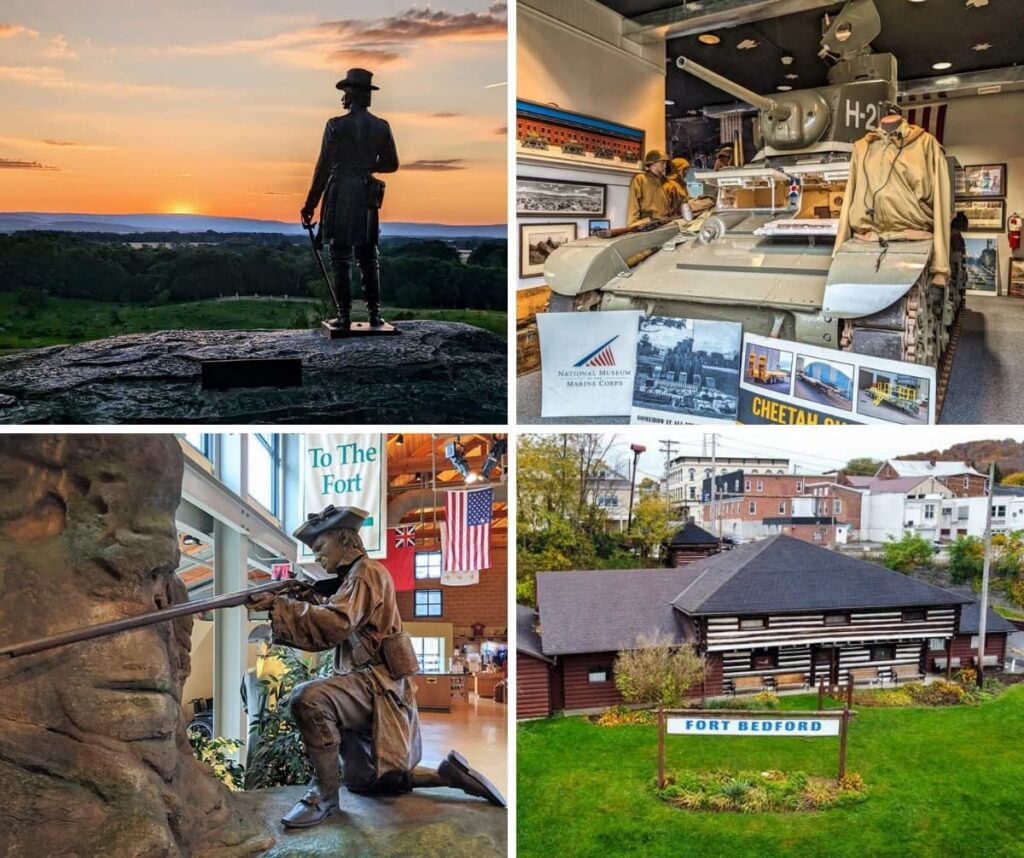
The guide is organized chronologically, beginning with the French and Indian War and continuing through the modern-day Global War on Terrorism.
A Smarter Way to Explore Pennsylvania
Explore Pennsylvania like a pro with the interactive PA Bucket List Travel Map, showcasing over 1,000 memorable destinations I’ve personally visited across the Keystone State.
Did you enjoy this article?
If so, be sure to like and follow PA Bucket List on Facebook, Instagram, and/or Pinterest to learn more about the best things to see and do in Pennsylvania!
Click on any of the icons below to connect with PA Bucket List on social media.